
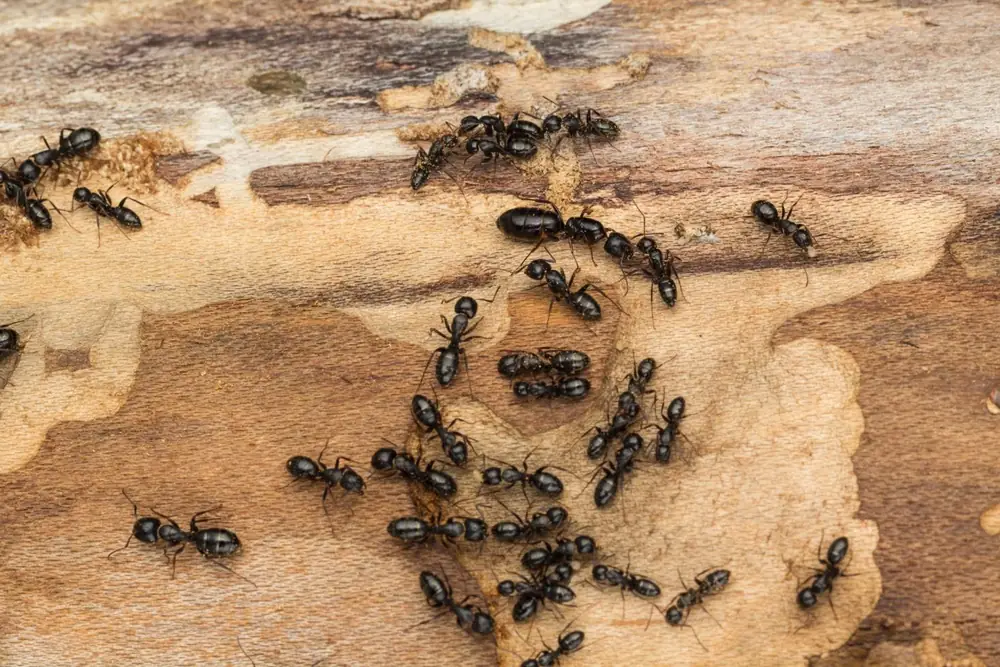
Ant control in Roodepoort works when you treat the nest, not the trail. We identify the ant, find where it's nesting, and use baits the workers carry home to the queen and the colony. Where ants are coming in from the garden or under paving, we add a targeted outdoor treatment so new trails don't form.
Why ants are worse before the rain
Roodepoort gets its rain in summer, mostly in afternoon thunderstorms. Ants sense the change in pressure and humidity before a storm, and colonies move food and brood to higher, drier ground, which often means your kitchen. The same thing happens when a garden is flooded by irrigation. That's why so many of our ant calls come in October and November, right when the first storms arrive, and again after heavy downpours in January and February.
The ants we find in Roodepoort
- Brown house ants: tiny, light brown ants that form long trails to sweet and greasy food. They nest under paving, in walls and in pot plants, and their colonies have many queens, so spraying tends to split them into more nests.
- Argentine ants: small dark ants that build huge, cooperating colonies through gardens and into houses, often along skirting boards and electrical points.
- Pugnacious ants: the larger ants that throw up mounds of sand between pavers and in lawns, especially in sunny, sandy beds. They bite, and they farm sap-sucking insects on garden plants.
- Sugar ants: big, often black and orange ants that come out at night, usually nesting in old timber, hollow walls or roof spaces.
Ants or termites?
Every summer, people call about "flying ants" that turn out to be termites. Ants have bent antennae, a pinched waist and front wings longer than the back ones. A termite's antennae are straight, its body has no obvious waist, and its four wings match in length. If you find shed wings near a window or door after a storm, look at a few closely, and if they're termites, our page on termite inspections and treatment in Roodepoort explains the next step.
How we treat ants
First we follow the trail back to where it's coming from: a crack in the slab, a gap under a skirting board, a planter box, the edge of the paving. We identify the species, because some prefer sweet baits and others want protein or fat. Then we place professional ant baits on the trails and near the nest. Workers eat the bait and carry it back, sharing it with the colony and the queens. Activity usually rises for a day or two as more workers find the bait, then drops sharply.
For colonies outdoors, under paving or around the foundations, we may add an odourless, non-staining barrier treatment around the house so ants don't simply walk back in from a neighbouring nest. We avoid spraying the trail itself, because that kills the foragers and leaves the nest untouched.
Ants under paving and in lawns
Pugnacious ants and brown house ants push sand up between pavers in sunny driveways and patios, and over time they can loosen the bedding sand so pavers sink. In lawns, their mounds smother grass. These colonies are treated outdoors with baits and targeted applications into the nest openings. Re-sanding the joints once the colony is dead keeps the paving firm.
The common mistake
Spraying the trail with a can of insect killer. It looks like it works because the line disappears, but the colony loses only its foragers and sends out more the next day, often by a different route. With multi-queen ants, spraying can even split a colony into several new nests, so you end up with more ants, not fewer.
A Roodepoort tip
Before the first storms in spring, walk round the house and check where garden beds, pot plants and mulch touch the walls. Pull them back a hand's width and keep that strip bare. Ants use plant material against the house as a bridge, and the gap makes any barrier treatment last much longer.
What ant control costs, and why
The cost depends on how many colonies are involved, whether they're indoors or under paving and lawns, and the size of the property. A single trail into a townhouse kitchen is a small job, and sometimes a good shop-bought bait placed correctly will sort it out, which we'll tell you honestly. Larger gardens, paving colonies and businesses take more. The guide "from" price for ant work is shown on this page, and you'll find others on our price list for Johannesburg pest control.
More help
Kitchens with ants often have cockroaches too: see our Roodepoort cockroach service. For a closer look at trails and nests, read our guide to identifying ant activity. Florida homeowners can see the pest control in Florida page, and across the ridge we cover ant problems in Northcliff. Johannesburg-wide, see ant control in Johannesburg.
Owner and operator Jason van Heerden has worked in pest control for 25 years, and every ant job is done to the same standard. Combat is SAPCA registered and registered under Act 36 of 1947 with the Department of Agriculture. We offer service within 24 hours and guarantee ant treatments for three months. Ring 084 200 2700, or WhatsApp a close-up of the ants so we can identify them before we arrive.
Questions we get asked
How much does it cost to get rid of ants?
It depends on the number of colonies, whether they're inside or under paving and lawns, and the size of the property. A single kitchen trail is a small job; we quote once we know what we're dealing with.
Why do ants come inside just before it rains?
Colonies sense the coming storm and move food and young to drier, higher places. A kitchen is often the closest dry spot.
Will the ants disappear straight away?
No, and that's a good sign. You'll often see more ants for a day or two as they feed on the bait, then numbers drop quickly as the colony dies.
Is ant bait safe around my pets?
Yes. Baits are placed in small amounts on trails and in cracks, away from pet bowls and where animals don't normally reach.
Can ants damage my paving?
Yes, over time. Ants nesting under pavers remove bedding sand, so the paving can sink or loosen. Treating the colony and re-sanding the joints fixes it.
Should I clean the ant trail before you arrive?
Please don't. Leaving the trail helps us follow it to the nest. Just don't spray it.