
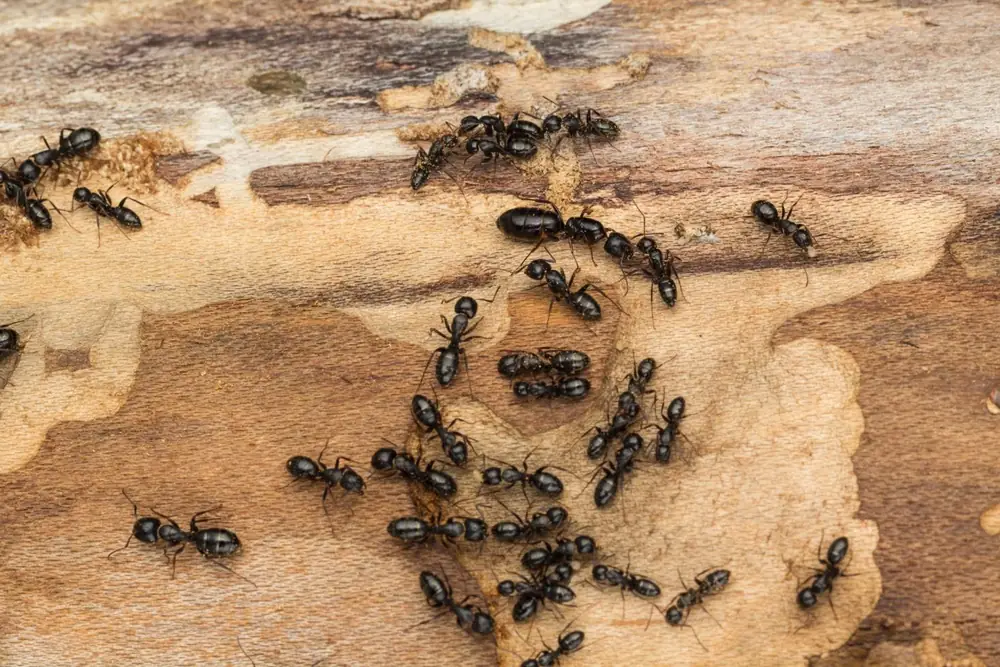
Ant control in Midrand works when the treatment reaches the nest, not just the trail on your counter. We identify the ant, place baits the workers carry back to the colony, treat nests in paving, walls and electrical boxes, and add a barrier treatment where ants keep coming in from the garden.
What sets Midrand ants marching
Ant calls in Midrand climb sharply in spring and early summer. As the ground warms up and the first storms build in the afternoons, colonies grow, send out more foragers and often move house. A trail that was a few ants on the patio in September can be a column through the kitchen by November. Then, after a heavy downpour floods their nests in the lawn and under paving, ants head indoors in large numbers looking for dry ground.
The way Midrand is built plays into this. Estates and complexes have long runs of paving laid on sand, which ants nest under easily. Irrigated lawns and flowerbeds keep the soil moist through winter. And the pre-cast walls, expansion joints and conduits of newer homes give ants dozens of hidden routes from outside into kitchens, bathrooms and bedrooms.
The ants we meet most
Small brown house ants
Tiny, light brown ants that form long trails to sugar, pet food and fruit. Colonies have many queens and split easily, which is why spraying a trail often seems to create two new ones.
Pugnacious ants
Large, aggressive black ants that sting and bite. They nest in lawns and under paving, and in Midrand gardens they are often the reason children and dogs avoid one corner of the yard.
Ants in electrical boxes
Gate motors, distribution boards, pool pump covers and alarm panels are warm and dry, and ants pack them with soil and nest material. We regularly find gate motors on Midrand estates that have stopped working because of ants.
Ants farming garden insects
Ants protect aphids and mealybugs on roses, citrus and shrubs to collect the honeydew. If your plants are covered in sticky sap and ants, the ants are part of the problem.
Flying ants or flying termites?
After the first good rain, many people see winged insects pour out of the ground and assume they are flying ants. Often they are termites. Ants have a pinched waist and bent antennae, and their back wings are shorter than the front ones. Termites have a thick waist, straight antennae and four wings of equal length that drop off easily. If you find shed wings on the window sill, have a look at our page on termites in Midrand homes and lawns, because that is a much bigger issue.
How we treat ants
- Identify and trace. We follow trails back to where they come from, inside and outside, and work out which ant it is.
- Bait first. Ant baits are placed on or near the trails. Workers carry the bait back and share it, so it reaches the queens and the brood.
- Treat nests directly in paving, lawns and electrical boxes where they can be found.
- Barrier treatment with an odourless, non-staining residual product around the outside of the house, entry points and expansion joints, where ants keep returning.
- Follow-up if large colonies or several species are involved.
Our article on reading ant activity around your home explains how to tell where a trail is coming from.
The mistake that splits colonies
Spraying the trail with insect spray or wiping it with bleach. You kill the foragers you can see, the colony feels the loss and, with house ants in particular, may split into several smaller colonies that move to new spots. A few days later you have trails in three places instead of one. Let baits do the work, and resist the urge to spray where bait has been placed.
A Midrand tip
Ask your landscaper to brush fine dry sand or a jointing compound into the gaps between pavers next to the house. Ant colonies under paving are the most common source of indoor trails on Midrand estates, and tighter joints make it much harder for them to nest right against the walls.
What ant control costs, and why
The size of the property, how many colonies are active, whether we need to treat outside barriers or electrical boxes, and whether the job needs a follow-up visit all affect the price. A single trail into a kitchen is a small job. A large garden with several species and ants in the gate motor takes longer. Our prices for ant and other treatments give a starting point, alongside the "from" figure on this page. If it is one small trail to a sugar bowl, a shop-bought bait station placed on the trail may sort it out, and we will say so.
Ant pressure is especially high in estates around Carlswald, where paving and irrigated gardens are everywhere. We take the same approach with ant control in Fourways, and the broader method is set out on ant treatments in Johannesburg. For all our local services, see Midrand pest control.
Combat Pest Control has 25 years of experience under owner Jason van Heerden, and we are registered with SAPCA and with the Department of Agriculture under Act 36. Expect service within 24 hours and a 3-month guarantee on ant treatments. Call 084 200 2700, or WhatsApp us a close-up photo of the ants.
Questions we get asked
How much does ant treatment cost?
It depends on the size of the property, the number of colonies and whether outside barriers or electrical boxes need treating. A single kitchen trail costs much less than a large garden with several species. We quote after looking.
Why do ants come inside after rain?
Heavy rain floods nests in lawns and under paving, so ants move to dry ground, which is often inside your house or under your floors.
Can ants damage my gate motor?
Yes. Ants nest in gate motors and electrical boxes, packing them with soil, and can cause them to stop working. We clean out and treat the nest.
How long does ant bait take to work?
You should see trails drop within a few days, as workers carry bait back to the colony. Large or multiple colonies can take a couple of weeks.
Is ant treatment safe for my pets?
Yes. Baits are placed in small amounts where pets cannot easily reach them, and barrier treatments are kept off areas until dry.
Why do I still see ants right after treatment?
Ants feeding on the bait are a good sign. They are carrying it back to the nest. Leave them alone and do not spray them.