
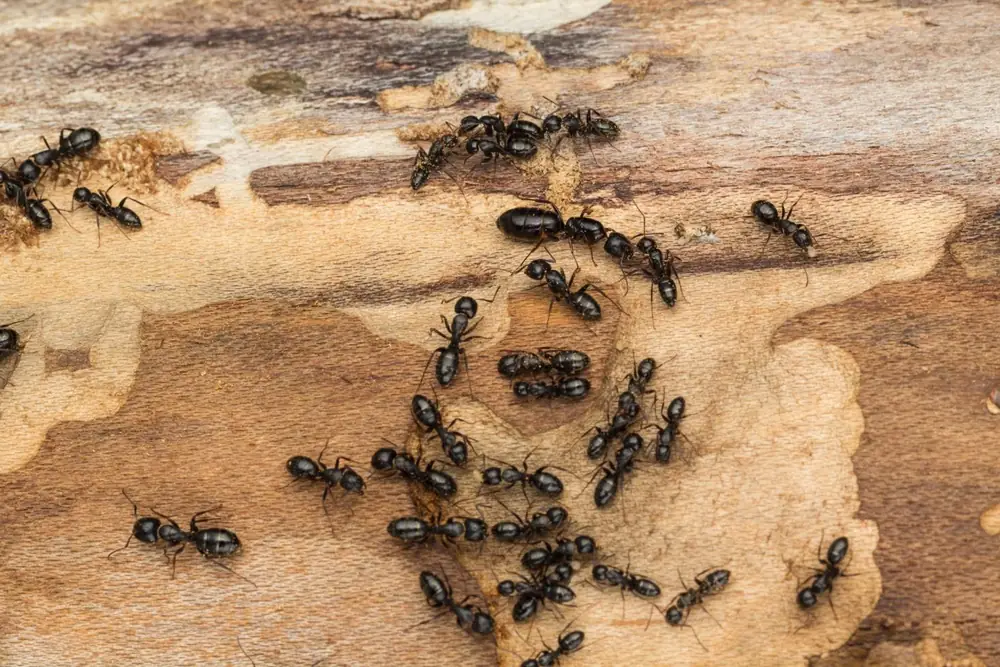
Ant control in Northcliff works best when the nest is targeted rather than the trail. Ants here nest under paving, in rock gardens and in the gaps of retaining walls, then forage indoors for sugar, fat and water. We identify the species, place baits that workers carry back to the colony, and add a perimeter treatment where it helps.
Why ants are so persistent on the ridge
A rocky, terraced suburb is full of ideal ant nesting sites. Every dry-packed stone wall, every paved path laid on sand, every rockery and every gap where a terrace meets the house gives a colony shelter that stays warm in the sun and dry in the rain. Some colonies have several nests linked together, so you might be looking at ants from different spots around the garden all heading for the same kitchen.
Timing matters too. Ant activity jumps just before and after the first summer storms, when colonies move, expand and send out winged ants. In winter, indoor trails often ease off, but colonies are still active under paving.
Which ants we see here
- Small brown house ants: the ones that appear in long trails along skirtings and counters, after sugar, fat and pet food. Colonies are big and can have multiple queens.
- Black sugar ants: larger, often active in the evening, nesting in wall cavities, wooden window frames and under paving.
- Pugnacious ants: the black ants that swarm out of lawns and sandy beds and bite when disturbed. Common in Highveld gardens and the reason children won't sit on the grass.
- Ants pushing up sand: small heaps of fine sand between paving bricks, a sign of a colony underneath that can eventually loosen the paving.
If you're not sure what you're looking at, our article on reading the signs of ant activity walks through the clues.
Why spraying the trail doesn't work
Spraying a trail kills the workers on it, which is only a tiny part of the colony. The queens and brood underground carry on, and with some species the colony responds by splitting into several smaller colonies, so you end up with more nests than before. Spray residue along the trail also teaches the next wave of workers to avoid that route, and they find another way in that you haven't noticed yet.
How we treat ants
- Follow the trail. We trace it back as far as possible, often outside and down the garden, to find nest entrances and identify the species.
- Bait to the colony. We use baits matched to what that ant is feeding on, placed along the trail and near nest entrances. Workers carry it back and share it through the colony, including the queens.
- Perimeter and nest treatments. Around the base of the house and at active nests in paving or walls, an odourless residual treatment helps stop new trails forming.
- Lawn treatment for biting ants. For pugnacious ants in lawns, the active nest areas are treated directly.
- Follow-up. Large colonies sometimes need a second round of baiting.
Give bait a few days. It's normal to see more ants feeding on it at first; that's the bait being carried home.
Before we arrive
Leave the trail alone for a day or two if you can stand it. A live trail shows us exactly where the ants are coming from, while a wiped and sprayed counter leaves us guessing. Wipe up spills and put sugar, honey and pet food into sealed containers, but don't clean away the ants themselves. Note the times you see them too: some species forage mainly at night, and that changes where we place bait.
A Northcliff tip
Look where your retaining walls and terraces meet the house. That joint is the favourite entry point on a sloping property: ants nest in the wall, cross the shortest gap and come in under a door frame or through a crack in the skirting. Sealing that crack and keeping soil and mulch back from the wall cuts down the traffic noticeably.
What ant control costs, and why
The cost is driven by the size of the property, how many colonies are involved, whether the lawn also needs treating and whether a second visit is needed. A single kitchen trail from one nest is a small job. A big terraced garden with nests in the walls, the paving and the lawn takes longer. Starting prices are on our Johannesburg pest control price guide. For a small trail that appears once a year, a shop-bought ant bait station placed on the trail is often enough.
See ant control in Johannesburg for more on species and seasons. North of the ridge we handle ants in Randburg properties, and for the established suburb just to the west, read about pest control in Blackheath. Ants and termites in Northcliff gardens are often confused, particularly when winged ones appear after rain, so we'll always check which you have. The full list of local services is under Northcliff pest control.
Combat Pest Control belongs to SAPCA and is registered with the Department of Agriculture under Act 36. With 25 years behind him, Jason van Heerden runs every job himself; we offer service within 24 hours and a 3-month guarantee on ant treatments. Call 084 200 2700, or WhatsApp us a photo of the ants.
Questions we get asked
Why are there more ants after you put bait down?
That's the bait working. Workers find it, recruit others and carry it back to the nest. Numbers usually drop within a few days to a week.
How much does ant control cost?
It depends on the property size, the number of colonies and whether the lawn needs treating too. Our price guide shows where ant control starts.
Are the baits safe with pets?
Yes. Baits are placed in small amounts along trails and at nest entrances, away from food bowls and where pets don't normally reach. We'll show you where they are.
Is it ants or termites with wings?
Ants have a narrow waist and front wings longer than the back ones. Termites have a straight body and four wings of equal length. A photo will tell us straight away.
How long does ant treatment last?
A colony that's been properly baited is gone for good, but new colonies can move in from neighbouring gardens. Our 3-month guarantee covers the treatment.
Will ants damage my paving?
Ants pushing up sand between pavers can, over time, loosen them. Treating the colony underneath stops the sand heaps.