
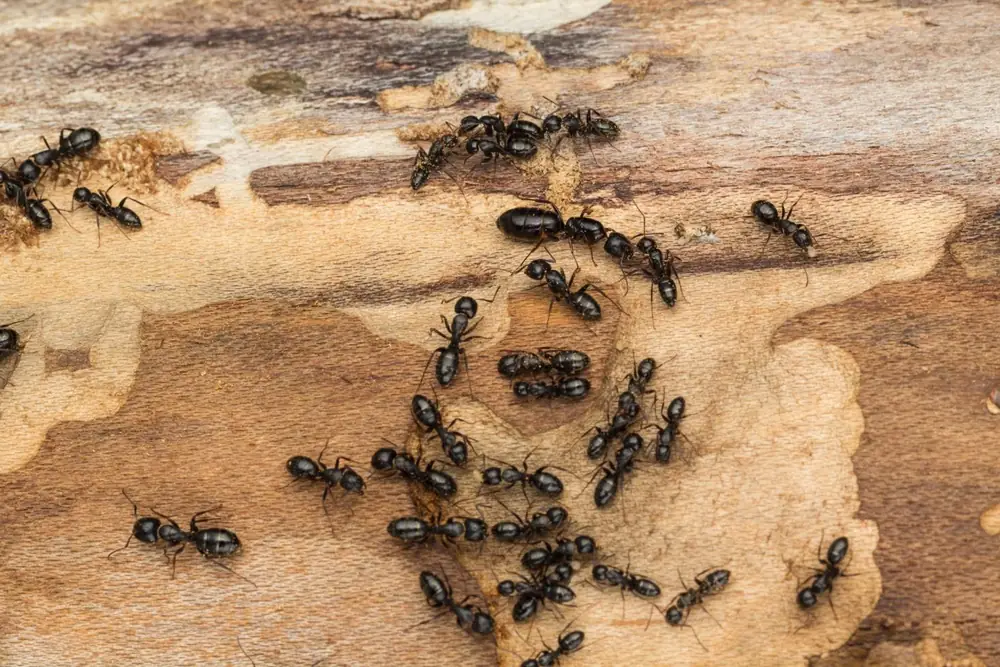
Ant control in Randburg works by reaching the nest, not wiping out the trail. We find where the ants are coming from, identify the species and use baits the workers carry back to the colony, plus targeted treatment of nests in paving and walls where needed. The trail on your counter is only the part you can see.
Why ants suddenly appear before rain
Randburg homeowners often notice ants arrive in force on hot, humid afternoons in early summer, just before a thunderstorm. Rising humidity and falling pressure send colonies looking for food and, when the ground floods, for drier shelter. That's when trails appear across kitchen counters, into pet bowls and around sugar bowls, and when ants pour out of plug points and light switches. In winter the same colonies are still there, just quieter.
The ants we see most around Randburg
- Small black or brown house ants. The classic kitchen trail ants. They nest in walls, under paving and in flowerbeds against the house, and follow scent trails to sweet and greasy food.
- Pugnacious ants. Larger, aggressive and quick to bite. They're common in gardens and lawns and push up loose soil between paving.
- Ants in electrical fittings. Some species nest inside plug points, switches and electrical boxes, and can damage the wiring. These need careful, targeted treatment, not a spray into the socket.
- Sugar ants and garden species that farm aphids on roses and citrus trees, then wander indoors.
Flying ants or flying termites?
After the first good rain, swarms of winged insects come out of the lawn or the walls. Some are ants; many are termites. Ants have a narrow, pinched waist, elbowed antennae and front wings longer than the back ones. Termites have a thick waist, straight antennae and four wings of equal length that break off easily, leaving piles of wings on the windowsill. If you're finding wings indoors, look at our page on termites in Randburg homes before assuming it's ants.
How we treat ants
We start by following the trail outside to find where it comes from: a crack in the paving, the base of a wall, a flowerbed, a gap around a window frame. Then we choose the treatment.
Ant baits are the core of it. Workers pick up the bait, carry it home and feed it to the rest of the colony, including the queens, so the nest dies out from the inside. It takes a few days, and you'll often see more ants on the bait before you see fewer. Where a nest is reachable, under paving or in a wall void, we apply a targeted treatment directly. Around the outside of the house, a non-staining residual barrier can stop new trails starting. For more on what to look for, our guide to identifying ant activity is a good read.
Ants in complexes, schools and food businesses
In a townhouse complex, one colony under the communal paving can send trails into half a dozen units, so treating a single kitchen rarely holds. We prefer to bait the shared gardens and paved areas along with the affected units. Schools, offices and restaurants get the same approach, with baits placed in protected spots away from food and children, and a service record where it's needed for inspections.
The mistake almost everyone makes
Spraying the trail. It kills the workers in view and breaks the scent path, so the ants find another route within a day or two. Worse, some species respond to stress by splitting into several smaller colonies, so you end up with more nests than you started with. If we've put down bait, leave the ants alone so they can carry it home.
A Randburg tip
Look at your flowerbeds against the house. In many established Randburg gardens, beds have been built up over the years until the soil is level with the bottom of the window or above the damp-proof course. Ants nest happily in that warm, sheltered soil and walk straight into the wall. Pulling the soil level down and leaving a strip of gravel against the house makes a real difference.
What ant control costs, and why
Most ant treatments are fairly modest jobs. The cost depends on how many nests and entry points there are, whether ants are in electrical fittings, the size of the property and whether a perimeter treatment is needed. A single trail into a townhouse kitchen is quick; a large garden with several colonies under the paving takes longer. You'll find the guide "from" price on this page and on our pest control pricing page. If it's a small trail to the cat bowl, moving the bowl onto a saucer of water and wiping the trail with soapy water may sort it.
Ants are a city-wide issue, and ant control across Johannesburg covers the wider picture. We also deal with ants in Northcliff homes on the ridge to the south, and our Olivedale page covers the complexes there. The rest of what we treat locally is on our Randburg page.
Combat Pest Control is SAPCA registered and registered with the Department of Agriculture under Act 36. Owner Jason van Heerden has 25 years of experience, we offer service within 24 hours, and ant treatments carry our 3-month guarantee. Call 084 200 2700 or WhatsApp us a close-up photo of the ants.
Questions we get asked
How much does it cost to get rid of ants?
Most ant jobs are modest. The price depends on the number of nests, whether ants are in electrical fittings and the size of the property. We confirm it after a quick inspection.
Why are there more ants after you put down the bait?
Because the bait is working. Workers gather on it and carry it back to the nest. Leave them alone, and numbers drop over the following days as the colony dies out.
Can ants damage my plug points?
Yes. Some species nest inside plug points and switches and can damage wiring. Don't spray into the socket; we treat these nests carefully and you may want an electrician to check the fitting afterwards.
Is ant treatment safe for my cat and dog?
Yes. Baits go into protected spots out of reach, and any residual treatment is applied where pets don't lick or lie. Keep pets off treated surfaces until they're dry.
How long does an ant treatment last?
When baiting kills the colony, that colony is gone for good. New colonies can move in from outside over time, which is why we combine baiting with advice on entry points, and the treatment carries a 3-month guarantee.
What should I do before you arrive?
Don't spray the trail or wipe it away, because we use it to find the nest. Put food away and note where you've seen the most ants.