
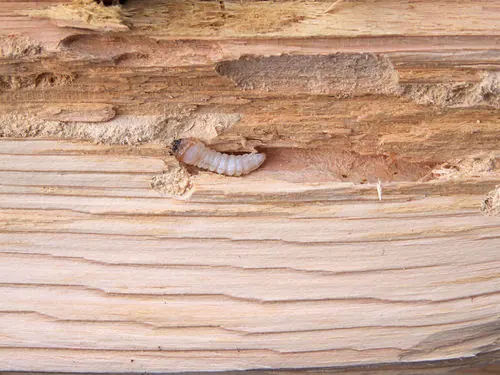
Wood borer treatment in Randburg starts by checking whether the infestation is still active. Many older floors, roof timbers and furniture show old exit holes from beetles long gone. Fresh holes and pale, powdery dust mean they're still working. We confirm that first, then treat the affected timber so the larvae inside die and new beetles can't lay eggs.
What wood borer actually is
Wood borers are beetles. The adult lays eggs in cracks and pores in timber, and the larvae hatch and spend months or years tunnelling inside the wood, eating as they go. You don't see that stage at all. The first sign is usually when adult beetles chew their way out, leaving neat round exit holes and pushing out fine dust, called frass. Then they mate and lay eggs, often in the same timber, and the cycle starts again. Over years, timber can be weakened from the inside while the surface looks almost normal.
Why older Randburg homes are prone to it
Much of Randburg's older housing, in suburbs like Ferndale, Blairgowrie, Bordeaux and Linden, was built with timber floors, wooden skirting, built-in cupboards and timber roof trusses. Some of that wood has been in place for decades, and over that time it may have been patched, painted over or covered with carpet without anyone looking closely at it. Antique and second-hand furniture brings borer into homes too, and an infested piece can spread beetles into nearby timber. Dark, unventilated roof spaces and the void under suspended floors are where we find a lot of activity.
Signs to look for
- Exit holes, small and round, in floorboards, skirting, door frames, furniture and roof timbers.
- Frass, fine powder or pellets, in little heaps below the holes or falling out when the timber is tapped.
- Sharp, clean edges on the holes and pale dust suggest recent activity; dark, dusty, painted-over holes are usually old.
- Weak or crumbling timber, such as floorboards that give underfoot or roof timbers that break away at the edges.
- Small beetles around windows in spring and summer, when adults emerge and look for light.
Borer or termites?
Both damage timber, and in older Randburg homes we sometimes find both. Termites come from the soil, build mud tubes and leave timber hollowed out and packed with earth. Borer leaves exit holes and powdery frass, with no mud at all. They need completely different treatments, so if you see mud tubes, read about termite control for Randburg properties first.
How we treat wood borer
- Inspection. We check floors, skirting, built-in cupboards, roof timbers and any furniture you're worried about, to confirm the activity is live and see how far it has spread.
- Timber treatment. Affected timber is treated with a registered product that penetrates the wood to reach larvae inside and protects the surface against new egg-laying.
- Fumigation where needed. Heavy infestations in furniture or in places a timber treatment can't reach may need fumigation with registered fumigants. The sealed area then has to be vacated until it's cleared.
- Advice on damaged timber. Badly weakened floorboards or roof members may need replacing by a builder or carpenter. We'll tell you if that's the case.
The mistake that wastes money
Sanding and varnishing an old floor with live borer in it. The new finish goes over the top, the larvae carry on inside, and in a year or two fresh holes appear through the new varnish. If your floor has holes and you're about to refinish it, have it checked and treated first. The same applies to painting skirting and roof timbers.
A Randburg tip
Check any antique or second-hand wooden furniture before it comes into the house, especially the back panels, drawer bottoms and legs. Fresh holes or powder underneath mean it should be treated before it sits next to your timber floor or built-in cupboards.
What wood borer treatment costs, and why
The price depends on how much timber is affected, whether it's a few floorboards, a whole floor, a roof space or individual pieces of furniture, how easy it is to reach, and whether fumigation is required. A single piece of furniture or a small section of floor is a modest job; a full roof space is a larger one. The guide "from" price on this page also sits on our Johannesburg pest control prices page, and we confirm after inspecting. If the holes are old and painted over with no fresh dust, you may not need treatment at all.
For more about borer across the city, see wood borer treatment in Johannesburg. We also treat wood borer in Northcliff homes nearby, and Ferndale's older houses have their own page. Everything else we treat locally is on pest control for Randburg.
We're SAPCA registered and registered with the Department of Agriculture, and owner Jason van Heerden has 25 years in pest control. We offer service within 24 hours, and our borer treatments carry a 3-month guarantee. Call 084 200 2700, or WhatsApp us a close-up photo of the holes and dust.

Questions we get asked
How much does wood borer treatment cost?
It depends on how much timber is affected and how easy it is to reach. A piece of furniture or a small section of floor costs much less than a full roof space, and fumigation adds to the price. We quote after inspecting.
How do I know if the borer is still active?
Look for fresh, sharp-edged holes and pale powder underneath. Old, dark or painted-over holes with no new dust usually mean the beetles are long gone.
Do I need to move out for the treatment?
Not for a normal timber treatment. Keep children and pets off treated surfaces until dry. Only fumigation needs the sealed area to be empty until it's cleared.
Will treated floorboards need replacing?
Only if they're badly weakened. Most infested timber can be treated and stays in use. We'll tell you if any boards or roof members need a builder or carpenter.
Can I treat wood borer myself?
Small, accessible pieces of furniture can sometimes be treated with a product from a hardware store, but floors, roof timbers and built-in cupboards need a thorough, penetrating treatment to reach the larvae inside.
Can you treat antique furniture?
Yes. Smaller pieces can usually be treated directly, and heavily infested pieces may need fumigation. Tell us about any finishes you're worried about.
When are wood borer beetles most active?
Adults usually emerge in the warmer months, so new holes and powder often show up in spring and summer. The larvae are feeding inside the timber all year.