
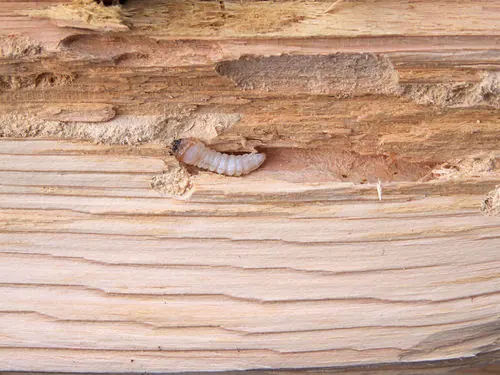
Wood borer treatment in Johannesburg South targets the beetle larvae tunnelling inside old floors, roof timbers, skirting boards and furniture. Many older homes in the south have original timber that borers love. We confirm the damage is borer and not termites, check whether it's still active, and treat the affected timber so new larvae can't develop.
Why older southern homes get borer
The older suburbs closer to town, such as Turffontein, Rosettenville, Kenilworth and La Rochelle, have many houses with original timber: pine floors on joists, skirting boards, door frames, roof trusses and built-in cupboards that have been in place for decades. Softwoods like pine are a favourite of the common furniture beetle, and old, untreated timber has none of the protection modern treated wood has. Old wooden furniture brought in from elsewhere can also bring borer with it.
Wood borer damage is slow. The beetles lay eggs in cracks and joints, and the larvae spend years tunnelling inside the wood before they emerge as adults through small round exit holes. By the time you see the holes, the larvae inside have been feeding for a long time, and the next generation may already be on its way.
Borer or termites?
This is the first question, because the treatments are completely different. Wood borer leaves small, round exit holes, about the size of a pinhead or a little larger, and fine, powdery dust (called frass) that falls from the holes. The surface of the timber often looks sound. Termites leave mud tubes, soil-packed galleries and timber that sounds hollow or crumbles, but no neat holes. In older southern homes we often find both, so we check carefully. If it turns out to be termites, our termite control in Johannesburg South page explains what's involved.
Is it still active?
- Fresh, pale frass under the holes, often in little piles on the floor or furniture
- Clean, sharp-edged holes rather than dark, dirty old ones
- Frass that reappears after you've cleaned it away
- Small brown beetles near windows in late spring and summer, when adults emerge
- Timber that feels soft or crumbles when pressed with a screwdriver
Old, dark holes with no fresh dust may be historic damage from an infestation that has died out. Fresh dust means the larvae are still feeding. A quick way to check: vacuum the area and look again in a week or two.
How we treat wood borer
We inspect the affected timber, check how far the damage spreads, and look for other affected areas: under the house if there's a suspended floor, in the roof space and in built-in cupboards. Then we treat the timber with a registered wood borer product that penetrates the wood and kills the larvae inside, and protects the surface against new eggs. Bare timber in roofs and under floors can be treated directly; sealed or varnished floors may need the finish dealt with first, because the product needs to reach the wood. Furniture can be treated on site or, where infestation is severe, fumigation of the item may be the better option. Badly weakened structural timber should be checked by a builder and replaced.
For a normal treatment you can stay at home; keep children and pets off treated surfaces until they're dry.
The mistake people make with old floors
Sanding and varnishing a borer-damaged floor without treating it first. The new finish looks lovely, but it seals the active larvae in and stops a treatment from reaching them later. A few years on, fresh holes appear through the new varnish. If you're restoring an old floor, have it checked and treated before the sander goes in.
A tip for older southern homes
Check under your house, in the roof space and in the back of built-in cupboards once a year, especially in spring when adult beetles emerge. Look for fresh dust and new holes. And before you bring second-hand wooden furniture inside, check the underside and the backs of drawers for holes and dust; treating one item is far easier than treating a floor.
Selling an older home
Buyers and banks often ask for an entomological certificate when a property changes hands, and in older southern homes wood borer and termites are exactly what the inspection looks for. We inspect, report what we find and, where there's no active infestation, issue the certificate.
What wood borer treatment costs, and why
The price depends on how much timber is affected, whether it's floors, roof timbers, cupboards or furniture, how accessible the timber is, and whether finishes need to be removed. A single piece of furniture is a small job; a whole suspended floor or a roof is a larger one. Our pest control price guide shows the starting point, and we'll quote after inspecting.
For more on older homes in the area, see pest control in Turffontein and our Johannesburg South page. We also treat wood borer in Soweto and wood borer across Johannesburg.
Combat Pest Control is SAPCA registered and registered with the Department of Agriculture under Act 36, and Jason van Heerden has 25 years of experience treating timber pests. We offer service within 24 hours, and borer treatments carry a 3-month guarantee. Call 084 200 2700, or WhatsApp us a photo of the holes and dust.

Questions we get asked
How much does wood borer treatment cost?
It depends on how much timber is affected and where it is. A piece of furniture is a small job; a whole floor or roof costs more. We quote after inspecting.
How do I know if the wood borer is still active?
Look for fresh, pale dust under clean, sharp holes. Vacuum the area and check again in a week or two; if dust reappears, it's active.
Is it wood borer or termites?
Wood borer leaves small round holes and fine powdery dust. Termites leave mud tubes and hollow, soil-packed timber. We confirm before treating.
Can borer-damaged timber be saved?
Usually, yes, if it's caught early. Badly weakened structural timber should be checked by a builder and may need replacing.
Do I need to leave the house during treatment?
No, not for a normal treatment. Keep children and pets off treated surfaces until they're dry.
Should I treat my floor before sanding it?
Yes. Varnishing over active borer seals the larvae in and makes later treatment much harder.