
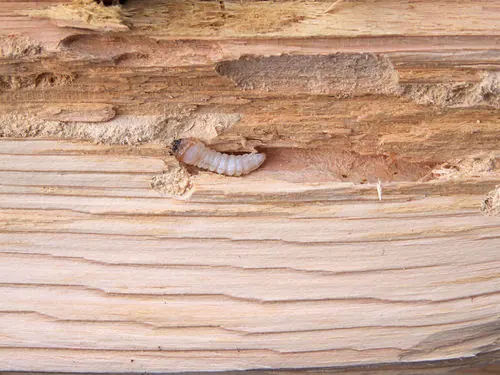
Wood borer treatment in Roodepoort starts with confirming the borer is still active, because old holes don't always mean a live infestation. We inspect floors, roof timbers, door frames and furniture, identify the beetle, then treat the affected timber with a registered product that penetrates the wood. Badly damaged pieces may need replacing, and we'll tell you which.
What wood borer is
Wood borer is the name for several beetles whose larvae tunnel through timber, feeding on the wood for months or even years before turning into adults. The adult beetles chew their way out, leaving small round exit holes, then mate and lay eggs in cracks in the timber to start the cycle again. Because the damage happens inside the wood, you usually see only the exit holes and the fine powder, called frass, that falls from them.
Why Roodepoort homes get it
Many of Roodepoort's older homes, particularly in areas like Florida and the original parts of Roodepoort, were built with pine floorboards, timber roof trusses, wooden door and window frames and built-in cupboards. Untreated softwood that has been in place for decades is exactly what common wood borer prefers. Second-hand furniture, old wooden chests and antique pieces can also bring borer into a house. Newer homes are less affected, but untreated timber in a roof or a pine extension can still be attacked.
Signs of active wood borer
- Small round exit holes, about the size of a pinhead to a match head, in floors, skirting boards, roof timbers or furniture
- Fresh, pale, powdery dust beneath the holes or on the floor below a beam
- Clean edges on the holes; old, inactive holes look dark and dirty
- Soft or crumbling timber when you press it with a screwdriver
- Small beetles near windows in spring or early summer
Wood borer or termites?
This is the question we're asked most, and the answer changes everything. Wood borer leaves round exit holes and fine powdery frass, and the damage is inside the timber itself. Subterranean termites leave mud tubes, soil packed into the wood, and hollow, papery timber, and they come from the soil. They're treated in completely different ways. If you're seeing mud tubes or soil, look at our page on termite control in Roodepoort.
How we treat wood borer
- Inspection. We check floors, under suspended floors where there's access, roof timbers, door and window frames, built-in cupboards and furniture, and confirm whether the activity is current.
- Identification. We identify the borer and assess how far it has spread and how much structural damage there is.
- Treatment. We apply a registered wood borer product to the affected timber, by surface application, injection into exit holes or both, so it penetrates and kills the larvae inside. For badly affected furniture or where surface treatment can't reach, fumigation with a registered fumigant may be recommended.
- Advice on repairs. Timber that's lost its strength should be replaced with treated wood. We'll show you which pieces.
For surface treatments, you don't need to move out; children and pets simply stay off the treated wood until it's dry. Fumigation is different: the sealed area or item must be vacated until it's cleared.
The common mistake
Sanding and varnishing an old floor without checking for borer first. A fresh coat of varnish seals over a live infestation, and the beetles simply chew through it later, leaving new holes in your new finish. If your floor has holes and fresh dust, have it inspected and treated before any refinishing. It's also worth treating timber before varnishing, because many finishes stop the product from soaking in.
A Roodepoort tip
Before you bring a second-hand wooden cupboard, chest or chair into the house, turn it over and look at the back, the base and the inside of the legs for round holes and dust. Put a sheet of dark paper under it for a week. If fine pale powder appears, it's active, and it should be treated before it sits next to your floors.
What wood borer treatment costs, and why
The cost depends on how much timber is affected, where it is (a few floorboards, a whole roof or a piece of furniture), how accessible it is, and whether fumigation is needed. Treating one room of floorboards is very different from treating a whole roof space. Old, dark holes with no fresh dust may not need treatment at all, and we'll tell you if that's the case. Look for the "from" price shown on this page; our pest control pricing for Johannesburg lists other services.
Nearby
Older homes around the lake are covered on pest control in Florida. The established suburbs over the ridge have similar timber, so see wood borer in Northcliff. For the full picture across the city, our main wood borer treatment in Johannesburg page goes into more detail, and our Roodepoort pest control page covers everything else.
Old timber deserves a proper look before anyone sands, replaces or panics. Combat Pest Control's owner and operator, Jason van Heerden, has 25 years in pest control, and the business is SAPCA registered and registered with the Department of Agriculture under Act 36 of 1947. We offer service within 24 hours and a 3-month guarantee on borer treatments. Phone 084 200 2700, or WhatsApp a photo of the holes and dust.

Questions we get asked
How much does wood borer treatment cost?
It depends on how much timber is affected, where it is, how easy it is to reach and whether fumigation is needed. A few floorboards cost much less than a whole roof.
How do I know if the wood borer is still active?
Look for fresh, pale powder under the holes and clean-edged holes. Old, dark holes with no new dust usually mean the infestation is no longer active.
Is it wood borer or termites?
Wood borer leaves round exit holes and fine powder; termites leave mud tubes, soil in the wood and hollow timber. The treatments are different, so we check first.
Do I need to move out for wood borer treatment?
Not for surface treatments. Keep children and pets off treated surfaces until they're dry. Fumigation is different: the sealed area must be empty until it's cleared.
Can I sand and varnish my floor after treatment?
Yes, once the treatment has soaked in and dried. It's best to treat before refinishing, because varnish can stop the product penetrating.
Can wood borer spread from furniture to my floors?
Yes. Adult beetles emerge and lay eggs in nearby timber. Check and treat second-hand wooden furniture before bringing it in.