
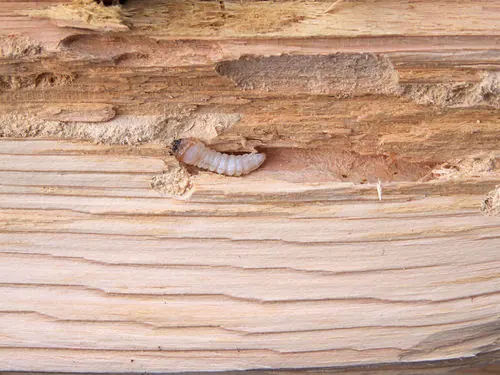
Wood borer treatment in Soweto starts with confirming it really is borer and not termites, then treating the affected timber so the larvae inside are killed and new beetles can't lay eggs. We inspect roof trusses, door and window frames, floors and wooden furniture, treat what's active and tell you honestly when timber needs replacing.
What wood borer is
Wood borer is the name for several beetles whose larvae live inside timber and eat it from within, sometimes for years. You rarely see the larvae. What you notice is the adult beetle leaving: a small, round exit hole, often no bigger than a pinhead or a match head, with fine, powdery dust called frass falling out of it. New holes with pale, fresh powder mean the infestation is active. Old, dark holes with no fresh dust may be from years ago.
Where we find it in Soweto homes
- Roof timbers. Pine roof trusses and purlins in older homes and extensions, especially where the timber was untreated when the roof went up.
- Door and window frames. Wooden frames in older four-roomed houses and in extensions where old frames were reused.
- Furniture. This is one of the most common sources in Soweto. Solid wood wardrobes, display cabinets, headboards and dining tables, especially second-hand pieces or furniture handed down in the family, often bring borer into the house.
- Floors and skirting boards in the homes that have wooden floors.
- Stored timber in garages and backyard rooms, waiting for a building project.
Wood borer or termites?
The difference matters because the treatment is completely different. Wood borer leaves neat, round exit holes and fine powder, and the timber surface usually looks normal apart from the holes. Subterranean termites leave mud tubes on walls and foundations, eat timber from the inside along the grain so it sounds hollow, and pack the damage with soil. There's no fine powder and no neat holes. If you see mud anywhere near the damage, it's termites, and our termite control in Soweto page is the one you need.
How we treat wood borer
- Inspection. We check the roof space, frames, floors and furniture, confirm the species and whether it's active, and judge how far it's gone.
- Treatment of affected timber. We apply a registered wood borer treatment to the affected timber, getting it into the wood where the larvae are feeding and onto surfaces where beetles would lay new eggs.
- Furniture. Movable pieces can be treated in place or taken outside. In severe cases, or for valuable or very infested items, fumigation with a registered fumigant may be the better option; see our fumigation services.
- Structural advice. If a truss or frame has lost too much strength, we'll tell you it needs replacing, ideally with treated timber.
You can stay in the house during normal wood borer treatment. Gas fumigation is different: the sealed area must stay empty until it's cleared.
Why borer is worth catching early
Wood borer works slowly. A single wardrobe can carry larvae for two or three years before the first adults chew their way out, and each new generation lays eggs in the same piece or the timber nearby. In a roof, that means trusses lose strength gradually, with no sign from inside the house except a little dust on the ceiling boards or a sagging line in the roof. By the time a beam cracks or a frame splits, the damage has been building for years. Treating an early infestation is much cheaper than replacing timber, and in a roof it's also a safety question.
What people get wrong
Filling the holes with wood filler, sanding the furniture and varnishing over it. The larvae inside keep eating, and the beetles chew new holes straight through the fresh finish. Another mistake is bringing a second-hand wardrobe into the bedroom without checking it. Borer spreads from furniture to frames and roof timber over time.
A tip for Soweto households
Before you buy or accept second-hand wooden furniture, check the back panels, the drawer bottoms and the feet. Fresh holes or small piles of fine dust underneath mean active borer. Have the piece treated before it comes inside, or leave it.
What wood borer treatment costs
It depends on how much timber is affected, where it is and whether it's structural or furniture. Treating a single wardrobe or a door frame is a small job. Treating a roof space full of trusses is bigger, and fumigation of furniture is priced separately. Our guide prices for wood borer and other treatments show where the work starts, and we'll quote after the inspection. If the holes are old and there's no fresh dust, you may not need treatment at all, and we'll tell you.
Related pages
For families in Orlando, where many of the oldest homes are, there's a local page, and the Soweto pest control page lists everything we treat here. We also handle wood borer in Johannesburg South, and wood borer treatment throughout Johannesburg.
Combat Pest Control brings 25 years of experience under Jason van Heerden, with SAPCA registration and registration with the Department of Agriculture. Bookings get service within 24 hours, and the treatment is covered by a 3-month guarantee. Call 084 200 2700, or WhatsApp us a close-up photo of the holes and the dust so we can tell borer from termites.

Questions we get asked
How much does wood borer treatment cost?
It depends on how much timber is affected and whether it's furniture or roof timber. A single piece of furniture is a small job; a whole roof space costs more. We quote after inspecting.
How do I know if wood borer is still active?
Look for fresh, pale powder under the holes, and new holes appearing. Old, dark holes with no new dust may be from an infestation long gone.
Can borer spread from furniture to my roof?
Yes, over time. Beetles from an infested wardrobe can lay eggs in frames, floors and roof timber, so it's worth treating furniture early.
Do I need to move out for wood borer treatment?
Not for normal treatment. Only gas fumigation requires the sealed area to be empty until it's cleared.
Will filling the holes stop the borer?
No. The larvae are deeper inside and keep eating. Treat the timber first, then fill and finish it.
Is it wood borer or termites in my door frame?
Neat round holes with fine powder mean borer. Mud tubes, soil in the damage or hollow-sounding timber mean termites. WhatsApp us a photo if unsure.