
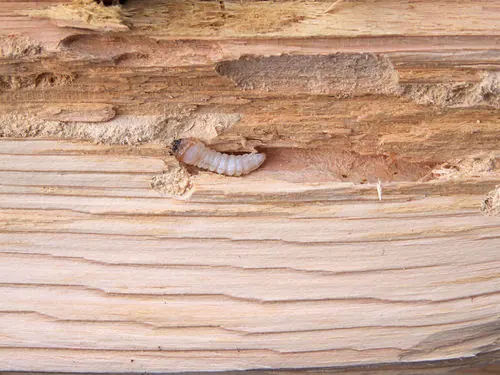
Wood borer treatment in Fourways starts with confirming that it really is borer, and that it's still active. We look for fresh exit holes and new dust, identify the beetle, then treat the affected timber so the larvae inside are killed. Furniture that can't be treated in place may need fumigation, and we'll check for termites while we're there.
Isn't borer an old-house problem?
Mostly, yes. In Johannesburg's older suburbs, original pine floors and roof timbers that are decades old are the classic borer target. Fourways is a younger area, and a lot of homes here have tiled floors and roof trusses that are relatively recent. That doesn't mean borer never turns up. In Fourways it just tends to arrive in different ways:
- Second-hand and antique furniture. Dressers, wardrobes, tables and chairs bought at auctions, online or from family, often with an active infestation inside.
- Outdoor timber. Pergolas, lapas, timber decks, gazebos and boundary features, especially when built from untreated or poorly treated poles.
- Firewood stored indoors. Logs kept next to the fireplace or in the garage can carry borer larvae, and beetles can emerge and move into nearby timber.
- Older buildings on the plots. Farmhouses, barns and stables out towards Chartwell and the smallholdings often have old roof timbers, floors and door frames that have never been treated.
- Renovations. Wooden floors, ceilings, cupboards and doors added in a renovation, if the timber was stored badly or not properly treated.
How wood borer works
Adult beetles lay eggs in cracks and pores in the wood. The larvae hatch and tunnel through the timber for months or even years, feeding as they go, completely out of sight. When they're ready, they pupate near the surface and the adult beetle chews its way out, leaving a small round exit hole and a little heap of fine powder (called frass). The adults then mate and lay eggs, often in the same piece of wood. So by the time you see holes, the infestation has been there for a while.
The two types we see most are the common furniture beetle, which goes for softwoods like pine and older furniture, and powderpost beetles, which attack the sapwood of certain hardwoods and produce very fine, flour-like dust.
Is it active?
Old holes from an infestation that died out years ago are common, especially in antique furniture, and they don't need treatment. Signs that borer is still active are:
- Fresh, pale dust under the holes, or on the floor below a beam, that comes back after you clean it
- Holes with clean, sharp edges and light-coloured wood inside rather than dark, dirty edges
- Small beetles near windows or lights, especially in spring and summer
- Timber that crumbles or feels soft when pressed
A simple test: vacuum the dust away, and check again after a couple of weeks. If fresh dust appears, something is still feeding inside.
Borer or termites?
It's an important difference, and we check every time. Borer leaves round exit holes and fine powder. Termites leave mud tubes, soil packed into gaps and timber that's hollow inside while the surface looks fine. In Fourways' sandy soil, termites are a far more common cause of serious timber damage, especially in built-in cupboards and door frames. If that's what you're seeing, read about termite control in Fourways.
How we treat wood borer
- Inspection. We check the affected timber, confirm the species, decide whether it's active, and look at nearby wood it could spread to, including the roof space.
- Treatment of the timber. Accessible timber, such as roof trusses, floors, decks, pergolas and frames, is treated with a registered wood borer product applied to the surface and worked into the exit holes, so it penetrates to where the larvae are feeding.
- Furniture. Pieces that can't be treated in place, or valuable items, may be fumigated with a registered fumigant. The fumigated area has to be sealed and empty until it's cleared.
- Advice on badly damaged wood. Where timber has lost its strength, such as a deck board or pergola beam, we'll tell you it needs replacing, ideally with properly treated timber.
The mistake to avoid
Sanding, varnishing or painting over borer holes without treating first. It seals the surface, but the larvae inside keep feeding, and the new beetles simply chew through the fresh finish. The other mistake is bringing a newly bought antique straight into a room full of wooden furniture without checking it.
A Fourways tip
Inspect any second-hand furniture on the stoep before it comes inside, and look underneath and at the back, where borer usually starts. Store firewood outside, off the ground and away from the house, and bring in only what you'll burn that day. For new pergolas and decks, ask your builder for properly treated timber.
What wood borer treatment costs, and why
The cost depends on how much timber is affected, how easy it is to reach, whether it's structural timber or furniture, and whether fumigation is needed. A single piece of furniture or one pergola is a fairly small job; a full roof space in an old farmhouse is a bigger one. Our guide prices for wood borer work show where it starts, and we'll tell you if the holes are old and need nothing at all.
For a deeper look at borer, see wood borer treatment across Johannesburg. We also treat borer in Bryanston's older homes, properties in Witkoppen, and every suburb on the Fourways pest control page.
Combat Pest Control is SAPCA registered and registered with the Department of Agriculture under Act 36, with Jason van Heerden's 25 years of experience behind every job. We offer service within 24 hours, and borer treatments carry a 3-month guarantee. Phone 084 200 2700, or WhatsApp a photo of the holes and dust.

Questions we get asked
How much does wood borer treatment cost?
It depends on how much timber is affected, how easy it is to reach and whether fumigation is needed. One piece of furniture or a pergola costs much less than a whole roof space.
How do I know if the borer is still active?
Look for fresh, pale dust that comes back after you clean it, and holes with clean, light-coloured edges. Old, dark holes with no new dust are usually from past activity.
Can borer spread from furniture to my house?
It can spread to nearby untreated wood, especially other furniture, wooden floors or timber in the roof. That's why infested pieces should be treated quickly.
Do I have to leave home during wood borer treatment?
Not for normal timber treatment, though children and pets should stay clear of the treated wood until it has dried. If fumigation is needed, the sealed area must be empty until it's cleared.
Is it wood borer or termites?
Borer leaves small round holes and fine powder. Termites leave mud tubes, soil-packed gaps and timber that's hollow inside. We check for both.
Will painting or varnishing over the holes stop the borer?
No. The larvae keep feeding inside and the new beetles chew through the fresh finish. The timber needs to be treated first.
Does my new pergola need treating?
If it's built from properly treated timber, it shouldn't. Untreated poles and beams are much more likely to get borer, so check with your builder.