
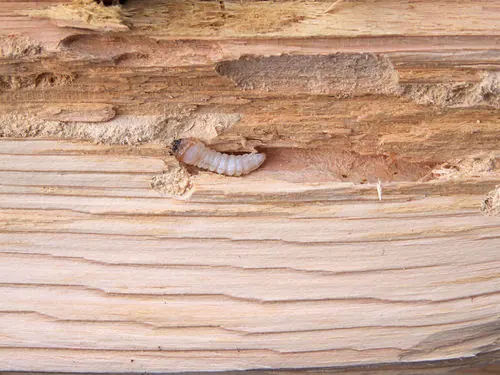
Wood borer treatment in Bryanston starts by confirming that the beetles are still active and identifying which timber is affected. We inspect floors, roof trusses, beams, built-in cupboards and furniture, treat the affected timber with a registered product that penetrates the wood, and use fumigation for furniture where needed, so the larvae inside are killed before they emerge and spread.
What wood borer is
Wood borer is the larval stage of several small beetles. The female lays eggs in cracks and joints in timber, and the larvae tunnel through the wood for months or years, feeding as they go. When they mature, they pupate just under the surface and the new adult beetle chews its way out, leaving a small round exit hole. Then the adults mate and lay eggs, often in the same piece of timber, and the cycle continues. You only see the holes long after the damage inside has started.
The beetles most often found in South African homes include the common furniture beetle, which attacks softwoods like pine, and powder-post beetles, which go for certain hardwoods. Both are common in homes with older timber.
Why Bryanston homes are affected
Many Bryanston homes have stood for several decades, and their timber has been in place just as long: pine strip floors, parquet, roof trusses and purlins, timber ceilings, staircases and built-in wardrobes. Bryanston homes also tend to be full of furniture, and older pieces, antiques and items bought second-hand can bring borer into the house. A borer-infested chest can spread beetles into a timber floor nearby.
Renovation adds another twist. Old timber reused in an extension, or new pine joined to an infested beam, can carry the problem into the new part of the house.
Signs of active wood borer
- Small, round exit holes, roughly the size of a pinhead or a little bigger, in floors, beams, furniture or skirting boards
- Fine, powdery dust (frass) beneath the holes, especially fresh, pale dust that reappears after you clean it
- Small beetles near windows in spring and summer, when adults emerge
- Crumbling edges on floorboards, beam ends or the backs of drawers
- Timber that feels soft when you press a screwdriver into it
Old, dark holes with no fresh dust may be historic damage from a past infestation. Fresh, pale dust means the larvae are still working.
Wood borer or termites?
They are often confused but are treated completely differently. Wood borer leaves neat round holes and fine powder. Subterranean termites leave mud tubes, mud-packed tunnels and hollow timber, but no exit holes or dust piles. Termites come from the soil; borer is already inside the wood. If you see mud on the timber or the foundations, read about our termite control in Bryanston, which carries a 5-year guarantee.
How we treat wood borer
Inspection. We check floors, roof timbers, staircases, built-in cupboards and furniture to confirm live activity and how far it has spread.
Timber treatment. Affected timber is treated with a registered wood borer product that soaks into the wood and kills the larvae inside. Where floors or beams are sealed or varnished, we may need to treat from the underside or through the exit holes.
Fumigation where needed. Heavily infested furniture, or items that can't be treated by application, can be fumigated with a registered fumigant. The sealed area must be vacated until it is cleared.
Replacement advice. Timber that has lost its strength, especially in a roof, should be assessed by a builder and replaced. We will point out where that is the case.
The mistake that costs the most
Sanding and resealing an old floor without checking for borer. The new finish looks lovely, but it goes straight over a live infestation, and you may need to strip it again to treat it. If you are planning to refinish floors, have them checked first.
A Bryanston tip
Before you bring an antique or second-hand wooden piece into the house, turn it over and look at the unpolished underside and the backs of drawers. That is where fresh borer holes and dust show first. Keeping a suspect piece in the garage until it has been checked can save a timber floor.
What wood borer treatment costs, and why
The cost depends on how much timber is affected, where it is, whether the floor or roof is easy to reach, whether furniture needs fumigating and how far the infestation has spread. A single piece of furniture is a small job. A whole floor or a roof structure takes much more time and product. You will find the guide "from" price on this page and the full list on our pest control cost guide. Old, inactive holes with no fresh dust may not need treatment at all, and we will tell you if that is the case.
We also treat wood borer in Sandton, older homes in Epsom Downs, and timber across the city through wood borer treatment in Johannesburg. The Bryanston pest control page lists our other local services.
Jason van Heerden owns and runs Combat Pest Control, with 25 years of experience, SAPCA registration and registration with the Department of Agriculture. We offer service within 24 hours, and wood borer treatments carry a 3-month guarantee. Call 084 200 2700, or WhatsApp us a photo of the holes and the dust.

Questions we get asked
How much does wood borer treatment cost?
It depends on how much timber is affected and how easy it is to reach. One piece of furniture is a small job; a whole floor or roof structure costs more. We quote after inspecting.
How do I know if the wood borer is still active?
Look for fresh, pale dust under the holes, especially dust that comes back after you clean it. Old, dark holes without fresh dust are often historic damage.
Is it wood borer or termites?
Wood borer leaves small round holes and fine powder. Termites leave mud tubes and hollow timber without exit holes. They need completely different treatments.
Do I need to move out during treatment?
For timber treatment, no; keep children and pets away from treated wood until it is dry. If furniture is fumigated, the sealed area must be vacated until it is cleared.
Can wood borer spread from furniture to my floors?
Yes. Adult beetles emerge, mate and lay eggs in nearby timber, so an infested antique can spread borer into floors or built-in cupboards.
Will the treatment damage my floors or furniture?
No. The products are applied to the timber and don't stain when used correctly. On sealed surfaces we may treat from the underside or through the exit holes.
Should I treat before refinishing my floors?
Yes. Have the floor checked first, because sealing over a live infestation means stripping the finish again later to treat it.