
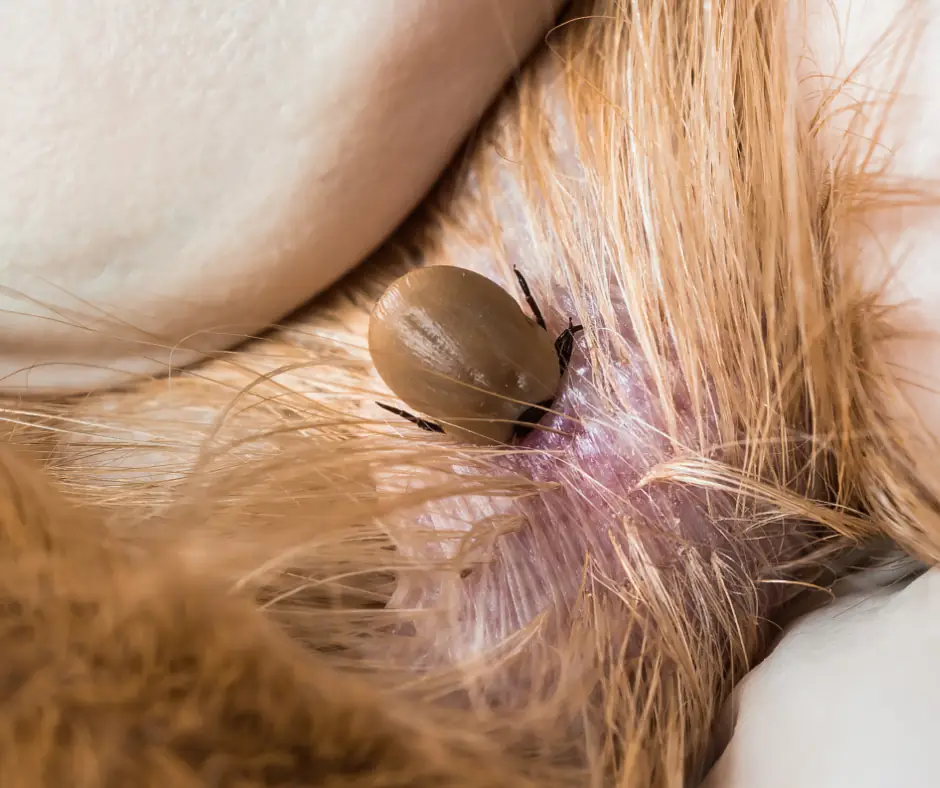
Tick control in Fourways means treating the places ticks live off the animal: kennels, walls, cracks, paving, long grass and the corners where dogs rest. We apply a residual treatment to those areas while your vet treats the animals, which breaks the breeding cycle. On plots and smallholdings we also look at stables, paddock edges and feed stores.
Why Fourways and the surrounding plots see so many ticks
Fourways sits right on the edge of open country. North and west of the shopping centres and estates there's still veld, river frontage along the Jukskei, and smallholdings with horses, cattle, goats and chickens out towards Chartwell and beyond. Ticks live in long grass and wait on the tips of the stems for an animal to brush past. Every dog walk on a veld path or along the river is a chance to bring some home.
Once they're on a property, one species in particular causes trouble: the brown dog tick. Unlike most ticks, it's happy to complete its whole life cycle around a house. Engorged females drop off the dog, crawl up walls and into cracks, under eaves, behind kennels and into gaps in the paving, and lay thousands of eggs. A few weeks later, tiny larvae are crawling up the garage wall. That's the stage where most people call us.
Why ticks matter
For dogs, ticks are more than a nuisance. Some carry biliary (canine babesiosis), which is a real and serious risk for dogs in Gauteng, especially in summer. For people, a bite from a veld tick can cause tick bite fever. Neither of these is a reason to panic, but both are good reasons to take a tick problem seriously and to talk to your vet or doctor if a pet or person becomes unwell after a bite.
Signs the ticks are breeding at home
- Small ticks crawling on walls, window frames or the ceiling of the garage or kennel
- Pets picking up ticks even when they haven't been out of the yard
- Clusters of very small ticks on the dog's ears, between the toes and around the neck
- Ticks found inside the house, on couches or dog beds
How we treat a tick problem
At home
We focus on the resting and hiding places. That means kennels inside and out, the walls around them up to the eaves, cracks in the walls and paving, the garage, under decks, the base of boundary walls, and the edges of the lawn where grass grows long. Where ticks have been seen indoors, we treat dog beds, skirting boards and the gaps where they hide. Treatments are odourless and non-staining, and you don't need to leave home; just keep pets off treated areas until they're dry.
On plots and smallholdings
On a working plot the job is bigger. We look at stables, tack rooms, feed stores, the edges of paddocks, kennels and staff areas, and treat the hiding places around the buildings. Livestock and horses themselves are treated by your vet or under their guidance, never by us. For larger properties a scheduled programme over the summer season usually works better than a single visit.
With your vet
We don't put anything on animals. Ask your vet to treat all the dogs and cats on the property on the same day as our visit, and to put them on an ongoing tick product. If the animals are protected but the yard isn't, or the other way round, the ticks keep cycling.
The mistake that keeps ticks around
Treating only the dog. Tick products on pets work well, but the brown dog tick lays its eggs off the animal, so the yard stays full of larvae and nymphs waiting for their next meal. The opposite mistake happens too: someone sprays the yard and forgets the second dog, or the cat. Everything with fur on the property needs to be covered.
A tip for dog owners who walk in the veld
Stick to the middle of the path rather than letting the dogs push through long grass, and check them every time you get home: ears, neck, armpits and between the toes. Remove ticks with fine tweezers, gripping close to the skin. Do it before the dogs go back to their beds, and you stop most ticks before they ever drop off and breed.
What tick control costs, and why
The price is shaped by the size of the yard, how many kennels and outbuildings there are, whether ticks have got inside the house, and whether follow-ups are needed. A suburban yard with one kennel is a fairly small job. A smallholding with stables and several outbuildings is quoted after we've seen it. You'll find starting points on our pest control prices page. If you're only finding the odd tick on the dog after a veld walk, a good vet product and regular checks are probably all you need.
Ticks and fleas often arrive together, so see our flea treatments in Fourways if you're getting bitten indoors too. For the city-wide guide, read tick control in Johannesburg. We also treat plots and kennels for ticks in Midrand and Kyalami, homes in Witkoppen, and everything else on our main Fourways page.
Jason van Heerden brings 25 years of pest control experience to every job. We're SAPCA registered and registered with the Department of Agriculture, we offer service within 24 hours, and the treatment carries a 3-month guarantee. Phone 084 200 2700, or WhatsApp us a photo of the ticks on the wall.
Questions we get asked
How much does tick treatment cost for a yard?
It depends on the size of the yard, the number of kennels and outbuildings, and whether ticks are inside the house. A suburban yard with one kennel costs much less than a smallholding with stables.
Do you treat dogs for ticks?
No. Your vet treats the animals. We treat the yard, kennels, walls and other places where ticks breed, ideally on the same day as the vet treatment.
Why are there ticks crawling up my walls?
That's usually the brown dog tick. Females drop off the dog, climb walls and into cracks to lay eggs, and the young ticks then crawl around looking for a host.
Is the treatment safe for my dogs and horses?
Yes, once it's dry. Keep animals off treated areas until then. We never apply products to animals themselves.
How long before the ticks are gone?
Most yards improve clearly within a couple of weeks if the animals are treated at the same time. Heavy infestations or plots may need a follow-up visit.
Can ticks live inside the house?
Brown dog ticks can, in dog beds, behind furniture and along skirting boards. We treat those areas too if ticks have been found indoors.
Can ticks make people sick?
A bite from a veld tick can cause tick bite fever. See a doctor if you develop a fever, headache or a dark spot at a bite site after being in the veld.