
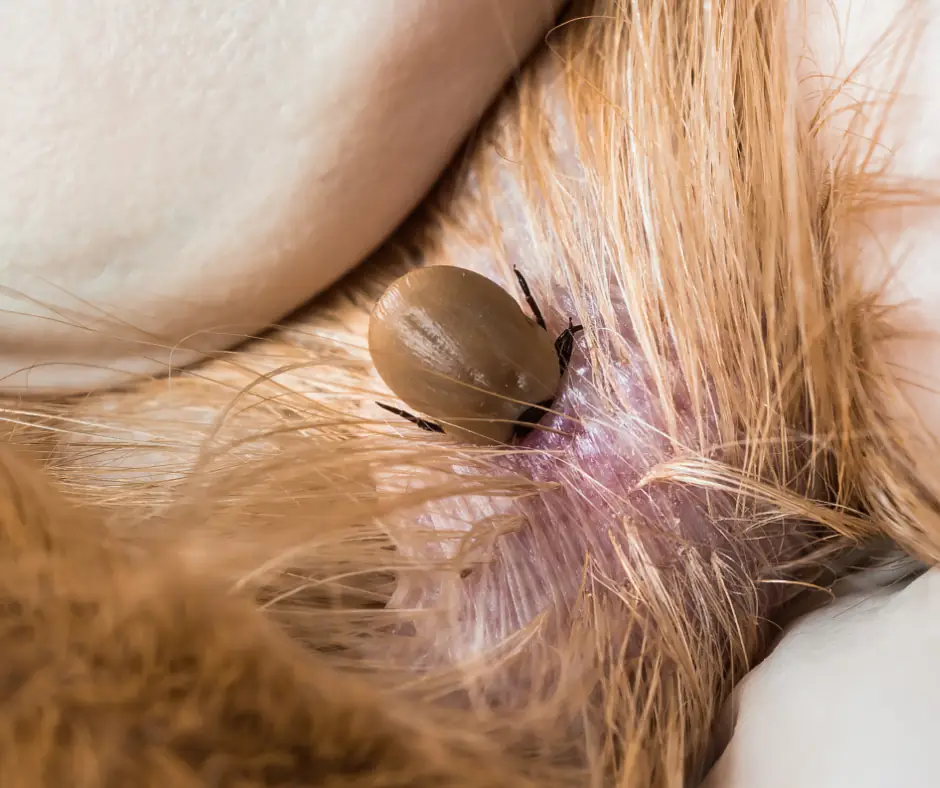
Tick control in Johannesburg means treating the places ticks wait, breed and hide: lawns, flowerbeds, kennels, dog runs, walls and cracks in paving. Treating the dog alone leaves thousands of eggs and young ticks in the garden. We treat the environment while your vet protects the animals, and the two together break the cycle.
Why ticks matter here
Ticks are more than a nuisance on the Highveld. They spread biliary to dogs, a disease every Johannesburg vet knows well, and other tick-borne infections that make pets seriously ill. People can be bitten too, and tick bite fever is a known risk in South Africa. A dog that keeps picking up ticks at home is being exposed again and again, so getting the garden under control matters as much as the monthly tablet.
How ticks live in a garden
A tick's life has several stages: egg, larva, nymph and adult, and each stage needs a blood meal before it moves to the next. A fed female drops off the animal and lays thousands of eggs in a sheltered spot. The larvae that hatch climb grass stems and wait for a host to brush past.
The brown dog tick is the one that causes the most frustration in suburban homes. It's adapted to living around dogs and can complete its whole life cycle around a kennel, a dog bed or even inside a house. Fed ticks crawl up walls and into cracks, under window sills, behind skirting boards and into gaps in the kennel, which is why owners find them climbing walls. Other ticks prefer long grass and open veld, and come in on dogs that walk on the edge of open land or on horses and livestock on smallholdings.
When ticks are worst
Ticks are most active through the warm, wet months, from spring into autumn, when long grass and humid conditions help young ticks survive. In winter numbers drop outside, but brown dog ticks sheltering around kennels and inside homes keep going.
Signs of a tick problem
- Ticks on the dogs every time you check, even after treatment
- Tiny ticks, almost like specks of dust, clustered on the dog's ears or between toes
- Ticks crawling up kennel walls, outside walls or the inside of a garage
- A dog that's lethargic, off its food or has pale gums: see a vet urgently
How we treat ticks
- Inspection. We look at where the dogs sleep, rest and patrol, and at the boundary where the garden meets a lane, a park or veld.
- Treating hiding spots. Kennels, dog beds, walls, gaps in paving, under decks and the bases of fences and walls are treated with residual products, getting into cracks where fed ticks hide.
- Treating the garden. Lawns, flowerbeds, shrubs and long grass along boundaries where ticks wait for a host.
- Indoors if needed. Where brown dog ticks have moved inside, we treat along skirting boards, around door frames and where the dogs sleep.
- Working with your vet. Dogs need a vet tick product at the same time, otherwise they keep carrying new ticks in.
- Follow-up. Heavy infestations usually need a second treatment, because eggs laid before the first one keep hatching.
Keep children and pets off the treated areas until they've dried. You don't need to leave home.
Smallholdings, estates and big gardens
Smallholdings and equestrian properties on the northern edge of the city, especially around Kyalami and Midrand, have the heaviest tick pressure because horses, dogs and long grass share the same ground. Estates bordering open veld in Fourways see ticks brought in by dogs walking the boundary. Homes in the south near the Klipriviersberg Nature Reserve have similar edges; our tick control in Johannesburg South covers those properties.
The mistake that keeps ticks coming back
Pulling ticks off the dog and dropping them on the ground or into the garden bin. A fed female can still lay her eggs. Drop removed ticks into a jar of surgical spirit instead. The other mistake is treating once and stopping: if the eggs already in the garden aren't dealt with in a follow-up, the next generation arrives a few weeks later.
A local prevention tip
Keep a mown strip at least a metre wide between the lawn and any long grass, veld or overgrown lane on your boundary, and keep the kennel off the ground with no gaps for ticks to hide in. Ticks waiting on grass stems need long grass; take it away and they struggle to find the dog.
What tick control costs, and why
The cost depends on the size of the garden, the number of kennels and outbuildings, whether the inside of the house needs treating, and whether a follow-up is needed. A town garden with one kennel is a fairly small job. Smallholdings and stables are quoted on the area involved. Our Johannesburg pest control prices include a guide price for tick treatments. If you're only finding the odd tick after a walk in the veld, a good vet product may be all your dog needs. Ticks and fleas often appear together; see flea control for Johannesburg homes if you're seeing both, and the tick guide for more on their life cycle.
A tick problem at home puts your dogs at risk every day, so we offer service within 24 hours. You'll be dealing with a SAPCA registered business, registered with the Department of Agriculture and run by Jason van Heerden, who has 25 years of pest control behind him. Tick treatments are guaranteed for 3 months. Ring 084 200 2700, or WhatsApp a picture of the ticks you're pulling off the dogs.
Questions we get asked
How much does tick control cost?
The size of the garden, the number of kennels and outbuildings, and whether the house needs treating too are what set the price. A normal town garden is a fairly small job; smallholdings are quoted by area. We confirm the price before starting.
Why are ticks climbing my walls?
Those are usually brown dog ticks. Fed ticks climb walls and crawl into cracks to moult or lay eggs. It means they're breeding around the kennel or the house, and those hiding spots need treating.
Can ticks make my dog sick?
Yes. Ticks spread biliary and other diseases to dogs. If your dog is lethargic, off its food or has pale gums, take it to the vet urgently.
Is the treatment safe for my dogs?
Yes, once it's dry. Keep pets off treated areas until they've dried, and we'll show you which areas those are.
How long does a tick treatment last?
Our tick treatments carry a 3-month guarantee. Keeping dogs on a vet tick product and grass short helps it last longer.
Do you treat horses or livestock?
No. We treat the property, stables, paddock edges and kennels; your vet treats the animals themselves.
What should I do before you come?
Mow the lawn a day or two before, clear clutter around the kennel and dog areas, and make sure the dogs have been treated by your vet or are booked in.