
Scorpion control in Soweto focuses on the shelters scorpions use: brick and block stacks, rubble left from building work, gaps under doors and cracks in walls. We identify the species, treat the hiding places and outside walls with a residual barrier, and show you how to cut the clutter that keeps them near where people sleep.
Where scorpions live in Soweto
Scorpions are night hunters. They spend the day in tight, dark, dry spaces and come out after dark to hunt insects. Soweto yards often have plenty of that kind of shelter: bricks waiting for an extension, a pile of broken blocks behind a backyard room, old roof sheeting leaning against a wall, timber offcuts and scrap. Stands that border open veld or unused land see more, because scorpions wander in from the edges. They're most active in the warm months from spring through summer, especially on humid nights after rain.
Indoors, they get in under doors without a seal, through gaps where the roof meets the wall, and through cracks around window frames. Shoes left on the floor, clothes on the ground and bedding hanging down to the floor give them somewhere to hide once inside, which is how most stings happen.
Which scorpions are dangerous?
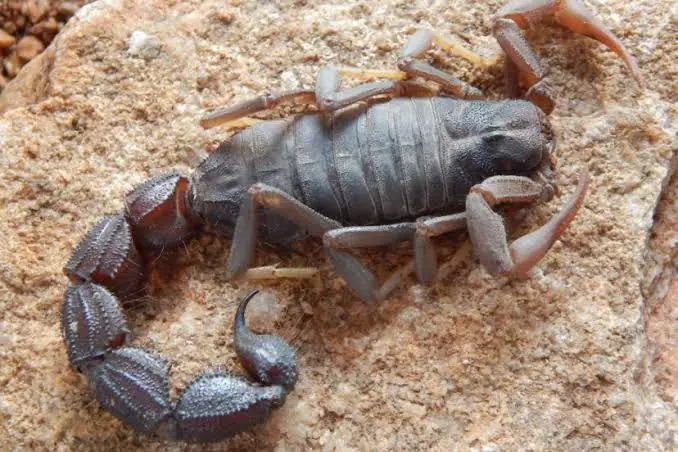
There's a simple rule of thumb in South Africa: thick tail, thin pincers means danger; thin tail, big pincers means less so.
- Thick-tailed scorpions (the Parabuthus group) have a heavy, chunky tail and small, slender pincers. Their venom is the stronger kind, and stings, especially on small children, the elderly or people with health problems, need medical help.
- Burrowing and rock scorpions with large, crab-like pincers and a thin tail rely on their claws. Their sting is painful but usually much less serious.
If you're not sure, don't handle it. Take a photo from a safe distance and WhatsApp it to us.
How we treat scorpions
- Inspection of the yard, building material, outbuildings, walls and the edges of the house, looking for shelter and evidence.
- Targeted treatment of the hiding places: brick stacks, rubble, cracks and the base of walls.
- Perimeter barrier, an odourless, non-staining residual treatment around the outside of the house and backyard rooms, focusing on doors, window frames and the wall base.
- Indoor treatment where needed, under beds, behind cupboards and along skirting boards in rooms where scorpions have been found.
- Proofing advice on door seals and gaps, which is often what makes the biggest difference.
Scorpions are tougher than most insects, so treatment works best combined with removing shelter. You don't need to move out; keep children and pets off treated areas until dry.
Backyard rooms need extra care
Many scorpion sightings we hear about in Soweto happen in backyard rooms rather than the main house. These rooms are often built quickly, sit right next to stored building material, and may have a gap under the door, an unsealed join where the roof sheeting meets the wall, or a floor that's lower than the yard outside. Tenants often sleep on a mattress on the floor, which brings people and scorpions to the same level. When we treat a stand, we give these rooms the same barrier as the house and check every door and roof edge for gaps.
What people get wrong
Burning or burying the rubble pile. Scorpions under a burning heap usually just move to the next shelter, often a room. Moving the material slowly with gloves on, with the yard treated first, is far safer. Another mistake is walking barefoot across the yard at night in summer. Wear shoes and use a torch.
A Soweto tip
Fit a rubber or brush seal to the bottom of every outside door, including backyard room doors. Scorpions can flatten themselves to get through tiny gaps, and a door seal is the cheapest way to keep them out of the rooms where people sleep. Shake out shoes and clothes left on the floor before putting them on.
If someone is stung
Keep calm and keep the person still. Wash the area and apply a cold compress. For thick-tailed scorpion stings, stings on young children or older people, or if there's trouble breathing, muscle twitching or sweating, get to a clinic or hospital immediately. Bring a photo of the scorpion if you can.
What scorpion control costs
Cost depends on the size of the stand, how many buildings and backyard rooms need a barrier, and how much rubble and building material is lying around. A house with a tidy yard is a smaller job than a stand with a lot of stored material. You'll find the guide "from" price on our Johannesburg price guide. Clearing shelter yourself first can lower what's needed.
Related services
Spiders share the same hiding places; see spider treatment in Soweto. Homes around Kliptown have their own page, and you'll find all our local work on the Soweto pest control page. We also deal with scorpions in Roodepoort next door and with scorpion control across Johannesburg.
Combat Pest Control is SAPCA registered, registered with the Department of Agriculture and led by Jason van Heerden, who has 25 years in pest control. Book with us for service within 24 hours, with a 3-month guarantee on the work. Phone 084 200 2700, or send us a photo on WhatsApp and we'll tell you which kind of scorpion it is.
Questions we get asked
How much does scorpion control cost?
It depends on the size of the yard, the number of buildings and how much rubble needs treating. We give a firm price after inspecting.
How do I know if a scorpion is dangerous?
Look at the tail and pincers. A thick tail with thin pincers is the more dangerous kind; big pincers with a thin tail usually means a milder sting.
Can you get rid of scorpions completely?
We can cut their numbers sharply and keep them out of the house, but scorpions living in open veld nearby can wander in. Barriers and door seals keep them out of the rooms.
Is the treatment safe for my family?
Yes, when it's applied correctly. Keep children and pets off treated areas until they're dry.
Why are there more scorpions after rain?
Rain floods their shelters and brings out the insects they eat, so they move about more on warm, humid nights.
What should I do before you arrive?
Don't move or burn the rubble pile, keep children away from it, and tell us where you've seen scorpions, especially indoors.