
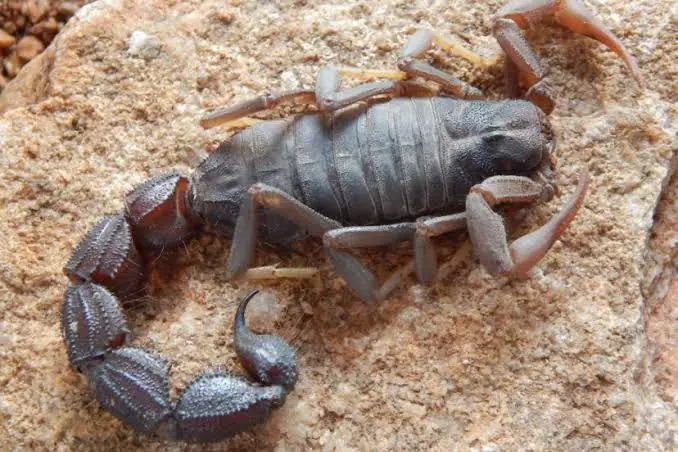
Scorpion control in Johannesburg South is mostly needed in homes near the Klipriviersberg ridges and in gardens full of rocks, stone walls and paving. We treat the places scorpions hide by day, apply a barrier around the house, and show you how to seal the gaps and change the garden so fewer of them reach your doors.
Why the south has so many scorpions
Scorpions are creatures of rock and dry ground. The Klipriviersberg and the rocky ridges running through the southern suburbs are natural scorpion habitat, and many homes in Mondeor, Glenvista, South Hills and neighbouring suburbs are built on or right up against those slopes. Gardens there are often landscaped with the same stone: rockeries, dry-packed walls, stepping stones and loose rock along the boundary. Every one of those is a daytime hiding place.
Scorpions hunt at night, mainly for insects, and they're most active in the warm, humid months from spring to autumn. After summer rain they often move to drier shelter, and that's when they turn up indoors, under doors, in bathrooms and in shoes left on the floor.
Which scorpions are dangerous?
There's a well-known South African rule of thumb: scorpions with thick tails and small, slender pincers tend to have stronger venom, while those with thin tails and large, heavy pincers rely on their claws and tend to have milder stings. It's a guide, not a guarantee, and any sting on a small child, an elderly person or someone with health problems should be checked by a doctor. Most of the scorpions we find around southern homes are the burrowing and rock-dwelling types, but we always identify them before advising.
Signs you have a scorpion problem
- Scorpions found indoors more than once in a season, especially in bathrooms and near outside doors
- Scorpions under pot plants, doormats, paving slabs or bricks when you lift them
- Small burrows at the base of walls, under rocks or in bare soil
- Pets pawing at the same corner of the patio at night
If you want to see how many are around, walk the garden after dark with an ultraviolet torch. Scorpions glow under UV light, and the result can be eye-opening.
How we deal with scorpions
- Inspection. We look at the house, the walls, the rockery, paving, wood piles, building rubble and anywhere stone or debris touches the house.
- Habitat treatment. We treat the gaps in rockeries and walls, under paving edges, around drains and at the base of the house with a residual product suited to scorpions and the insects they feed on.
- Barrier at the house. A treated band along the foundation, around doors, air bricks and drains makes it harder for scorpions to come inside.
- Proofing advice. We show you the gaps to close: under doors, around pipes, weep holes and broken air bricks.
Scorpions are tougher to kill than most insects, and they don't feed on bait, so the aim is to reduce their numbers around the house and stop them getting in rather than to remove every one from a hillside.
The mistake people make
Building or keeping a big rockery right against the house, and then treating only indoors. As long as there's a pile of rocks a metre from the back door, scorpions will be living there. The second mistake is leaving shoes, towels and clothes on the floor. A scorpion indoors looks for a dark, tight space, and a shoe is perfect.
A tip for homes near the Klipriviersberg
Keep a clear strip, about a metre wide, between the house and any rocks, wood piles or stacked building materials, and fit brush strips under outside doors. Scorpions can climb rough walls but not smooth ones, so a strip of smooth paving or plaster along the base of the wall helps too. Shake out shoes and check bedding on children's beds during the warm months.
What scorpion control costs, and why
The price depends on the size of the property, how much rockery, stone walling and paving needs treating, and whether the house is right against natural bush or a ridge. A town house with a small garden is a lighter job than a big stand on the slopes. Follow-up treatments during the warm season may be worth it on high-pressure properties. Our guide pest control prices show the starting point, and we'll give you an honest quote after an inspection.
Where there are scorpions there are usually spiders; see spider control in Johannesburg South. For local detail, see pest control in South Hills and our main page for the south. We also treat scorpions in the Rosebank area, and the city-wide picture is on scorpion control in Johannesburg.
We're SAPCA registered and registered with the Department of Agriculture, with 25 years of pest control experience and service within 24 hours. Scorpion treatments carry a 3-month guarantee. Call 084 200 2700, or WhatsApp us a photo of the scorpion, ideally showing the tail and pincers.
Questions we get asked
How much does scorpion control cost?
It depends on the size of the property and how much rockery, walling and paving needs treating. Homes against a ridge or natural bush take more work than small town gardens.
How do I know if a scorpion is dangerous?
As a rule of thumb, thick tails with small pincers suggest stronger venom, and thin tails with big pincers milder. Send us a photo and we'll identify it.
What should I do if someone is stung?
Keep calm, keep the person still and get medical advice, especially for children, the elderly or anyone who feels unwell. Take a photo of the scorpion if it's safe.
Can you get rid of all the scorpions?
Not from a hillside, no. We reduce the numbers around your house, treat their hiding places and help you stop them getting indoors.
Is the treatment safe for my pets?
Yes, once it's dry. Keep pets off treated areas until surfaces have dried, then they can go back out.
When are scorpions most active?
In the warm months from spring to autumn, at night. They often appear indoors after rain when they look for dry shelter.
Why do I find scorpions in the bath?
They come in under doors and through drains looking for shelter and moisture, then can't climb the smooth sides. It doesn't mean they live in the bathroom.