
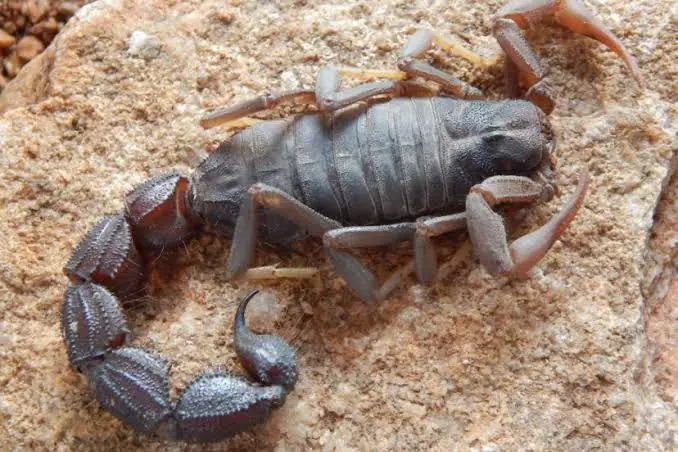
Scorpion control in Bryanston is about the garden as much as the house. We find where the scorpions are sheltering, usually in rockeries, retaining walls, paving edges and wood piles, treat those places and the house perimeter with a residual product, and show you what to change so they stop treating your home as an extension of their habitat.
Where scorpions live on a Bryanston stand
Scorpions want a dark, dry hiding place by day and insects to hunt by night. Bryanston gardens have both in abundance. Rockeries and dry-stone features are ideal, as are sleeper and stone retaining walls, the gaps under paving slabs, wood piles, compost bins, and the leaf litter under old trees and hedges. Pool surrounds, pump rooms and garden sheds add more.
They come indoors mostly by accident, chasing insects or looking for a cooler or drier place. They get in under doors, through gaps around sliding doors, via weep holes and through drains, and end up in bathrooms, garages, cupboards and shoes. Activity rises on warm summer nights, especially after rain.
Knowing which scorpion you have
The quick rule used across South Africa is a good one. Thick tail and thin, slender pincers: treat with real caution, as these species rely on venom. Thin tail and big, heavy pincers: generally much less venomous, though a sting still hurts. Many of the scorpions people find in northern Johannesburg gardens are the big-pincered, burrowing kind, but never assume; check the tail first. Anyone stung by a thick-tailed scorpion, and any child, elderly person or person with allergies who is stung, should get medical help.
Signs scorpions are living nearby
- Scorpions found indoors more than once, especially in the same room
- Small burrows with a crescent-shaped opening in lawn edges, rockeries or bare soil
- Scorpions found under pots, stones, timber or garden cushions
- Dogs or cats repeatedly pawing at one spot in the garden at night
Our scorpion treatment
- Inspection. We walk the garden and the outside of the house, looking at rockeries, walls, paving, wood piles and entry points into the home.
- Harbourage treatment. A residual product is applied to the cracks and crevices in rockeries, retaining walls, paving edges and other hiding places near the house.
- Perimeter barrier. We treat around the foundations, door thresholds, sliding doors, weep holes and garage doors with an odourless, non-staining barrier.
- Insect control. Fewer insects means fewer scorpions, so the treatment also reduces their food around the house.
- Proofing advice. We show you the gaps worth sealing and the garden features worth changing.
Let the treated areas dry before children and pets go back onto them.
Children, pets and scorpions
Children are the main reason Bryanston families call us about scorpions. Kids play barefoot on the lawn, turn over stones and put their hands into rockeries, which is exactly where scorpions shelter. Teach them to look before they lift and to wear shoes outside after dark. Dogs and cats are often stung on the nose or paws while investigating; most recover, but a pet that is drooling heavily, trembling or struggling to breathe needs a vet straight away.
When scorpions are most active
Activity builds from late spring and peaks on warm, still summer nights, often just after a storm. In winter, scorpions become much less active and stay deep in their burrows or under stones. That makes late winter or early spring a good time to clear rubble, move wood piles and treat harbourage, before the season starts.
The common mistake
Building a beautiful rockery right against the house. It looks good, but it puts prime scorpion habitat a step away from the patio door. A wood pile stacked against the garage wall does the same. Treating the house without changing those features means the scorpions keep coming.
A Bryanston tip
Scorpions glow under ultraviolet light. Buy a cheap UV torch and walk the garden after dark on a warm evening; you will see exactly where they are concentrated, which is useful to show us and very good at persuading the family to shake out their shoes.
What scorpion control costs, and why
The price depends on the size of the property, the length of the house perimeter, and how many rockeries, retaining walls and paving areas need treating. A townhouse with a courtyard garden needs little time. A large Bryanston stand with terraced rockeries, long walls and outbuildings takes more time and product. A guide "from" price is shown on this page, and our guide to pest control prices lists other services. If you see one scorpion a year, moving the wood pile and sealing the gap under the door may be all you need.
Spiders live in exactly the same places; our spider control in Bryanston can be done on the same visit. We also deal with scorpions in Fourways, homes in Petervale, and gardens across the city through our Johannesburg scorpion control. Our pest control page for Bryanston covers the rest.
Combat Pest Control is SAPCA registered and registered with the Department of Agriculture, and Jason van Heerden has 25 years of experience. We offer service within 24 hours and a 3-month guarantee on scorpion treatments. Call 084 200 2700, or WhatsApp us a photo of the scorpion so we can tell you what kind it is.
Questions we get asked
How much does scorpion control cost?
It depends on the property size and how many rockeries, walls and paving areas need treating. A small garden is a short job; a large stand with terraced rockeries and outbuildings takes longer.
How do I know if a scorpion is dangerous?
Look at the tail and pincers. A thick tail with thin pincers means caution; a thin tail with big pincers usually means a less venomous species. If in doubt, send us a photo.
What should I do if someone is stung?
Keep them calm, clean the area and apply a cold compress. Get medical help for any thick-tailed scorpion sting, and always for children, elderly people or anyone with allergies or severe symptoms.
Is the treatment safe for my dogs?
Yes, once it has dried. Keep dogs and children off treated areas until the surfaces are dry.
Why are scorpions coming into my house?
They are usually following insects or looking for a cool, dry place. Gaps under doors, around sliding doors and weep holes let them in.
How long does the treatment last?
Several months in most gardens, depending on rain and insect activity. Our scorpion treatments carry a 3-month guarantee.
Should I remove my rockery?
Not necessarily. Keeping it away from the house walls, clearing debris and treating it regularly is usually enough. Move wood piles and loose stone away from doors.