
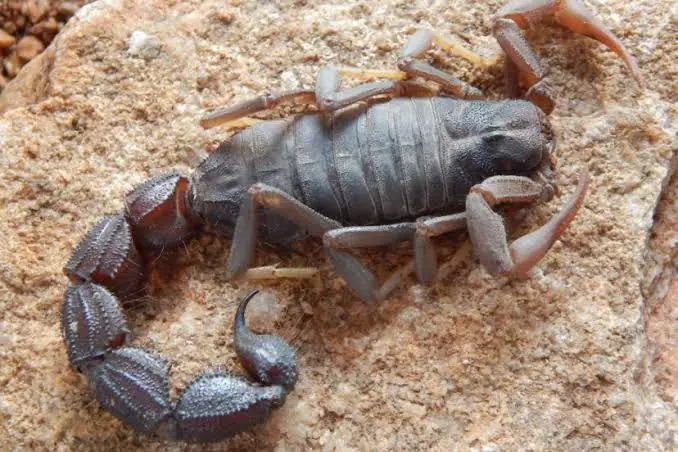
Scorpion control in Roodepoort focuses on where scorpions live: rockeries, stone walls, wood piles, paving and the gaps under doors. We find and treat those hiding places with a residual product, treat entry points around the house, and help you cut down the cover and insects that draw scorpions in. That reduces how many reach your home.
Why the ridges bring scorpions
Roodepoort is a hilly area, with rocky ridges and koppies through and around many suburbs, and the Walter Sisulu National Botanical Garden on its western side. Scorpions love that kind of ground: loose rock, crevices and dry grassland with lots of insects. Homes that back onto a ridge or open veld, and gardens built with rockeries, stone walls and gabions, bring that habitat right up to the house.
Scorpions are mostly active on warm summer nights, especially after rain, when they come out to hunt. In winter they slow down and stay tucked away under rocks and in wall crevices.
How to tell which scorpion you have
There's a simple rule used across South Africa: look at the tail and the pincers.
- Thick tail, small pincers: be careful. Scorpions with a thick, heavy tail and thin, slender pincers rely on their venom, and some of these, such as the Parabuthus species, can cause serious symptoms, particularly in children, the elderly and people with health conditions.
- Thin tail, big pincers: these rely on their pincers to hold prey and generally have much milder venom. A sting is painful but usually not dangerous.
Never try to handle one to check. If you're stung, especially by a thick-tailed scorpion, or a child is stung, get medical help immediately.
Where scorpions hide around a Roodepoort home
- Under rocks in rockeries and at the base of stone retaining walls
- In wood piles, under stacked bricks, paving slabs and building rubble
- Under pot plants, outdoor mats and garden furniture
- In cracks in boundary walls, and under loose plaster
- In shoes, towels and laundry left on the floor, once inside
How we treat scorpions
We begin with a walk round the property, looking at the rockeries, walls, wood piles and paving and noting where the scorpions you've seen came in. Then we apply a residual treatment to the outdoor hiding places and along the base of the walls, around doors, sliding doors and air bricks, where scorpions cross to get inside. We also treat the entry points into the house itself. Scorpions are tough and not easily killed, so the treatment works best alongside removing their cover and food. Odourless and non-staining, it doesn't require you to leave home; just keep little ones and pets away from treated ground until it has dried.
The common mistake
Spraying inside the house every time a scorpion appears, without doing anything outside. The scorpion lives in the rockery and only wandered in through the gap under the door. Treat and tidy the outside, close that gap, and indoor sightings drop sharply. Building new rockeries or stacking rubble against the house does the opposite.
A Roodepoort tip
Buy an inexpensive UV torch. Scorpions glow bright blue-green under ultraviolet light, so a quick walk round the rockery and walls after dark on a warm evening shows you exactly where they are and how many you have. It also helps us target the treatment.
Practical ways to keep them out
- Fit brush strips or rubber seals to the bottom of outside doors and sliding doors
- Keep a bare strip between rockeries and the house walls
- Store firewood and building materials off the ground and away from the house
- Shake out shoes, boots and towels left on the floor or outside
- Pull beds slightly away from walls in rooms near the garden
What scorpion control costs, and why
The price depends on the size of the property, how much rockery, stone walling and paving needs treating, and how many entry points the house has. A townhouse with a small garden is a smaller job than a large property on the edge of a ridge. For a single scorpion sighting, sealing the door gap may be all you need. The starting "from" price for scorpion work is listed here, and you can see our other services on the Johannesburg price list.
Related help
The same rockeries shelter spiders, so ask about spider treatments in Roodepoort too. Homes on the slopes have their own Florida Hills pest control page. Northcliff Ridge has similar issues: see scorpions in Northcliff. Our city-wide page on scorpion control in Johannesburg has more on species, and Roodepoort pest control covers the rest.
Living near the koppies doesn't mean living with scorpions in the house. Combat Pest Control is run by its owner and operator, Jason van Heerden, who has 25 years in pest control; we're SAPCA registered and on the Department of Agriculture register under Act 36 of 1947. Service is within 24 hours, with a 3-month guarantee. Ring 084 200 2700, or WhatsApp a photo of the scorpion to find out whether it's one to worry about.
Questions we get asked
How much does scorpion control cost?
It depends on the size of the property and how much rockery, walling and paving needs treating. A townhouse garden costs less than a large property on a ridge. We quote after the inspection.
How do I know if a scorpion is dangerous?
Look at it from a distance: a thick tail with small pincers means more potent venom; a thin tail with big pincers usually means milder venom. Don't handle it.
What should I do if someone is stung?
Keep them calm and still and get medical help, especially if it's a child or the scorpion had a thick tail. Take a photo of the scorpion if you can do so safely.
Will the treatment stop all scorpions?
It greatly reduces them around the house, but homes next to ridges will always have some nearby. Sealing door gaps and removing cover keeps them out.
Is scorpion treatment safe for my dogs?
Yes, once it's dry. Keep dogs off treated areas until surfaces have dried.
When are scorpions most active?
On warm summer nights, especially after rain. In winter they stay hidden under rocks and in wall crevices.
Should I remove my rockery?
Not necessarily. Keeping it away from the house walls, with a bare strip between them, and having it treated, usually does the job.