
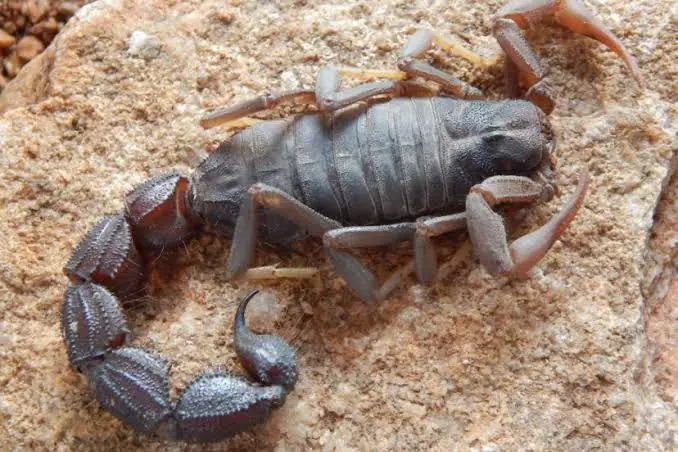
Scorpion control in Fourways focuses on where scorpions shelter during the day: rockeries, loose stone walls, paving edges, rubble and wood piles. We treat those hiding places and the entry points into the house with a residual product, help you seal gaps under doors, and show you how to tell a dangerous scorpion from a mostly harmless one.
Why scorpions turn up in Fourways homes
Look at the landscape and it makes sense. Lonehill takes its name from its granite koppie, and similar rocky outcrops, boulders and stony ground run through the wider area. Granite boulders and the cracks between them are perfect scorpion habitat: cool by day, warm at night and full of insects. When estates and gardens were built, many kept the natural boulders, or added rockeries, gabion walls, dry-stone retaining walls and decorative stone beds. To a scorpion, those are just more koppie.
Homes on the edge of veld or open land, and properties where rubble from building work was left behind the garage, see the most activity. Scorpions are most active on warm summer nights, especially after rain, and that's when they wander into houses through gaps under doors and sliding doors.
Thick tail or big pincers?
Southern Africa has a simple rule of thumb that most people in Gauteng have heard, and it's a useful one:
- Thick tail, small, thin pincers: treat with real caution. These are the scorpions (mostly Parabuthus species) that rely on venom rather than grip, and some have a venom that can be dangerous, particularly to small children, the elderly and people with health problems.
- Thin tail, big, chunky pincers: these rely on their claws. A sting is painful, like a bee or wasp sting, but they're generally not considered dangerous.
It's a guide, not a guarantee, so if you're stung by any scorpion and feel more than local pain, or if a child is stung, get medical help. A photo of the scorpion, or the scorpion itself in a sealed jar, helps the doctor.
Where we find them
- Under loose rocks, paving slabs and stepping stones
- In dry-stone and gabion walls, and between boulders in the garden
- Under pool covers, pot plants, outdoor rugs and doormats
- In wood piles, building rubble, bricks and old timber stacked against walls
- Indoors: in shoes, under towels on the bathroom floor, behind the toilet and in folded washing on the floor
How we treat scorpions
Inspection with a UV torch
Scorpions glow a bright greenish-blue under ultraviolet light. Where it's useful, we check the garden and walls after dark with a UV torch to see exactly where they're living and how many there are. It's often an eye-opener for homeowners.
Treating the hiding places
We apply a residual treatment to rockeries, stone walls, paving edges, the base of boundary and house walls, around the pool equipment and under outdoor features. Scorpions are tougher than most insects, so the treatment goes where they actually rest, not just sprayed on open ground.
Protecting the house
We treat door thresholds, sliding door tracks, garage doors, weep holes and the gaps where pipes enter the walls. Then we point out what to seal. A door that has a gap underneath is an open invitation; a brush strip or rubber seal fixes it.
Treatments are odourless and won't stain paving. You don't need to leave home; keep children and pets away from treated surfaces until they're dry.
The mistake we see most
Trying to "clear" the rockery by lifting all the rocks and spraying underneath with a household insecticide. Scorpions are hard to kill with general sprays, and turning over rocks with bare hands is the easiest way to get stung. Wear thick gloves, use a tool, or leave it to us.
A Fourways tip for families
Make the house less inviting at ground level. Fit seals under exterior doors, keep the bathroom floor clear of towels and clothes at night, shake shoes before putting them on, and don't let children walk barefoot in the garden after dark in summer. Move wood piles, bricks and rubble away from the house, and keep rockeries a little distance from bedroom doors and patios.
What scorpion control costs, and why
The cost depends on how much rockery, stone wall and paving there is, the size of the house and garden, whether a night inspection is needed, and whether the property borders veld or a koppie that keeps supplying new scorpions. A townhouse with a small garden is a straightforward treatment; a large estate stand with boulders and stone walls is a bigger one. See our scorpion and general pest control prices for starting points. If you've seen one thin-tailed scorpion in two years, sealing the door is probably enough.
Scorpions and spiders tend to share the same walls and rockeries, so spider treatments for Fourways homes are often done at the same time. For the wider view, read about scorpion control in Johannesburg. We also treat scorpions in Midrand, homes around the koppie in Lonehill, and every suburb on our Fourways pest control page.
Combat Pest Control is SAPCA registered, holds Department of Agriculture registration under Act 36, and brings 25 years of experience. We offer service within 24 hours, and scorpion treatments carry a 3-month guarantee. Call 084 200 2700, or WhatsApp a photo of the scorpion (from a safe distance) and we'll tell you what it is.
Questions we get asked
How much does scorpion control cost?
It depends on how much rockery, stone wall and paving there is, the size of the property, and whether it borders veld or a koppie. A townhouse garden costs much less than a large estate stand with boulders.
Which scorpions are dangerous?
As a rule of thumb, scorpions with thick tails and small pincers are the ones to treat with caution. Those with big pincers and thin tails usually give a painful but not dangerous sting.
What should I do if my child is stung?
Keep the child calm and still and get medical help straight away. Take a photo of the scorpion, or the scorpion itself in a sealed jar, if you can do it safely.
Is the treatment safe for my pets?
Yes, once it's dry. Keep pets away from treated rockeries, walls and thresholds until then.
How do scorpions get into the house?
Mostly under doors and through sliding door tracks, gaps around pipes and weep holes. A brush strip or rubber seal under exterior doors makes a big difference.
Why do we see more scorpions in summer?
They're most active on warm nights, especially after rain, when they come out to hunt and wander further, sometimes into houses.
Do I have to move the rocks in my garden?
No. We treat around and into the rockery. If you do move rocks, wear thick gloves and use a tool rather than your hands.