
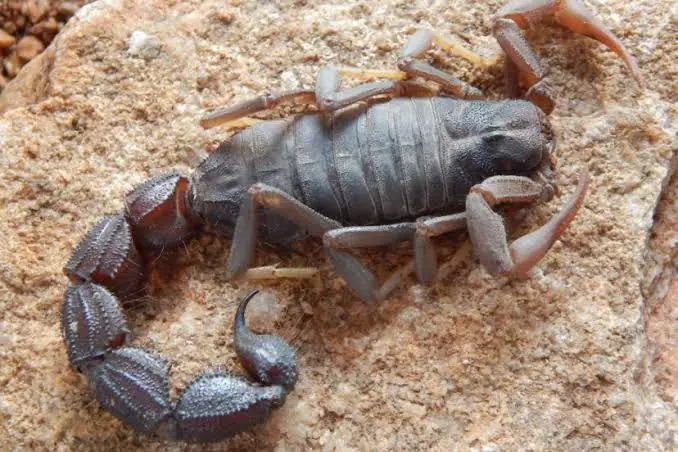
Scorpion control in Randburg means treating where scorpions live and hunt: rockeries, retaining walls, paving edges, wood piles and the gaps around doors. We inspect the property, treat their shelter and the perimeter of the house with a residual product, and show you how to stop them wandering indoors at night.
Why some Randburg properties get scorpions
Randburg has its share of sloping stands, ridge-side gardens and stone-built terraces, especially in areas with rocky ground and koppies. Gardens like these are full of the shelter scorpions need: loose stones, dry-stone retaining walls, rubble left over from building work, piles of bricks behind the garage and old railway sleepers. Where gardens back onto open veld or vacant land, scorpions come in from the edges too. They hunt at night, feeding on crickets, beetles, cockroaches and spiders, so a garden with plenty of insects keeps them fed.
Activity peaks in the warm summer months, particularly on hot, humid nights after rain, when scorpions move further from shelter. In winter they're far less active and stay tucked into cracks.
How to tell which scorpion you've found
There's a useful rule of thumb in South Africa: look at the pincers and the tail.
- Big, heavy pincers and a thin tail. These scorpions rely on their claws to catch prey, and their sting is usually painful but mild, rather like a bee sting. Many of the burrowing and rock scorpions found in gardens look like this.
- Thin, slender pincers and a thick tail. These rely more on venom. Treat any scorpion of this shape with real caution, and if someone is stung, especially a child or an elderly person, get medical help.
A photo helps us identify it, but never handle a scorpion to take one.
Where scorpions get into houses
Gaps under doors, especially sliding and stable doors leading onto the patio; weep holes and air bricks; gaps around pipes under basins; the edges of the garage door; and cracks in old steps and stoeps. Indoors they're often found in bathrooms, in shoes left on the floor, in towels and under rugs.
How we treat scorpions
- Inspection of rockeries, retaining walls, paving joints, wood and rubble piles, the pool pump area and the house perimeter, to find where they're sheltering.
- Targeted residual treatment of those shelters and the cracks and crevices around them.
- Perimeter treatment around the outside of the house, doors, weep holes and garage, so scorpions crossing it are affected before they get in.
- Indoor spots such as bathrooms and the base of door frames where needed. You don't need to leave home.
- Insect reduction, because fewer crickets and cockroaches around the house means less reason for scorpions to hunt there.
Scorpions are tough and less affected by sprays than most insects, so treatment works best combined with removing shelter and sealing gaps. Heavy activity can need a follow-up.
The mistake that leaves them in place
Moving the rubble pile from one corner of the garden to another, or building a new rockery right against the house wall. Both give scorpions a fresh home within metres of your door. If you're redoing the garden, keep stones and rockeries well away from the walls.
A Randburg tip
Fit door brushes or rubber seals to the bottom of every outside door, including the garage-to-house door, and close off weep holes with mesh guards rather than mortar. On sloping stands, the door at the bottom of the garden steps is often the busiest scorpion entrance in the house.
Living safely with scorpions
Shake out shoes and boots before putting them on, especially if they've been left outside or on the floor. Don't walk barefoot on the patio at night in summer. Keep children's toys off the lawn overnight and wear gloves when moving stones or firewood. A UV torch makes scorpions glow at night and is a handy way to see how many you have around the house.
What scorpion control costs, and why
The price depends on the size of the property, how much rockery, retaining wall and rubble needs treating, whether the house perimeter and outbuildings are included and how heavy the activity is. A flat suburban stand is quicker to treat than a terraced ridge property with stone walls. Our pest control prices page lists the guide "from" price, shown here too, and we confirm after the inspection.
Scorpions often share the garden with spiders and centipedes. See Randburg spider treatments and centipedes in Randburg gardens. Our page on scorpion control in Johannesburg covers more species, and we treat scorpions on Northcliff Ridge nearby. Randpark Ridge residents have their own local page, and our full service list is on the Randburg pest control hub.
Combat Pest Control is run by Jason van Heerden, who has 25 years of experience in pest control. We're SAPCA registered and registered with the Department of Agriculture, offer service within 24 hours and back scorpion treatments with a 3-month guarantee. Call 084 200 2700 to book.
Questions we get asked
How much does scorpion control cost?
It depends on the size of the property and how much rockery, stone wall and rubble needs treating. A flat stand costs less than a terraced ridge property. We confirm the price after the inspection.
Are the scorpions in my Randburg garden dangerous?
Most scorpions found in gardens have big pincers and thin tails and give a painful but mild sting. Those with thin pincers and a thick tail rely more on venom and deserve more caution. If anyone is stung and reacts badly, get medical help.
Is the treatment safe for my pets?
Yes, once it's dry. Keep pets off treated surfaces until then. We focus on rockeries, walls and the house perimeter rather than open lawn.
Why are scorpions coming into my house?
They're hunting insects at night and get in through gaps under doors, weep holes and around pipes. Door seals and mesh weep-hole guards make a big difference.
How long before I stop seeing scorpions?
Activity usually drops noticeably within a couple of weeks, especially once shelter near the house is removed. Heavy activity may need a follow-up visit.
Should I remove my rockery?
Not necessarily. Keep it well away from the house walls, clear rubble and loose stone piles, and have it treated. That combination works without losing your garden.