
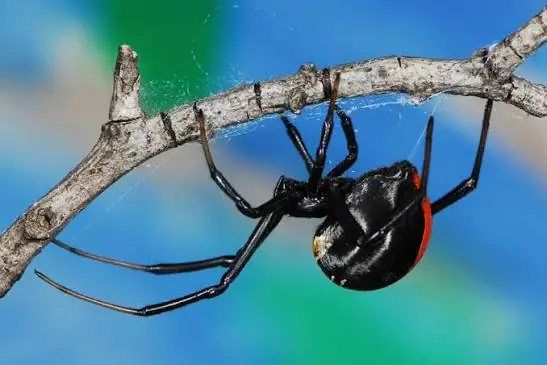
Spider control in Fourways starts with knowing which spiders you have, because most are harmless and a few deserve respect. We identify the species, then apply an odourless barrier treatment around eaves, windows, door frames, garages and outdoor furniture, and advise on the lighting and clutter that keep drawing spiders and their prey to the house.
Why Fourways homes have so many spiders
Spiders follow food, and food means insects. Fourways estates and complexes are often lit up all night: security lights, garden lights, pool lights and porch lights. Every light pulls in moths, beetles, flying ants and midges, especially on warm summer evenings after rain, and the spiders set up right next to them. Add estates that border veld, river frontage and green belts, gardens full of thick shrubs, and stacked pool furniture or children's toys that stay outside, and spiders have everything they want.
The spiders worth knowing
Button spiders (widows)
The brown button spider is very common around Fourways homes. It builds untidy webs under outdoor furniture, inside letterboxes, behind pot plants, in the corners of garages and under the lip of pool coping. Its egg sacs are distinctive: round with little spikes, like a tiny mine. The black button spider, glossy black, often with a red mark, is more likely in rockeries, low walls and veld edges. Black button spider bites are serious and need a doctor; brown button bites are usually milder, but should still be checked.
Violin spiders
Pale brown with a darker violin-shaped mark on the front of the body and long thin legs. They hide in cupboards, behind pictures and in the folds of clothes or bedding left on the floor. Their bite can cause a slow-healing wound, so medical attention is a good idea.
Sac spiders
Small, pale, yellowish spiders that hunt at night and rest in a silky sac in the corner of a ceiling, curtain or window frame. They're often blamed for bites that happen in bed. The bite can cause a small sore that's slow to heal.
Rain spiders and others
The big, flat, brown rain spider that appears on the wall before a storm looks alarming but is largely harmless and eats other insects. Garden orb weavers, jumping spiders and daddy long-legs are also harmless and actually useful. We'll tell you which ones you can leave alone.
How we treat spiders
- Walk the property. We look at the eaves, window and door frames, garages, outdoor furniture, pool surrounds, the base of walls and any rockery, and identify which spiders are present.
- Remove webs and egg sacs where they're accessible, especially button spider sacs, which would otherwise hatch hundreds of young.
- Apply a barrier treatment. An odourless, non-staining residual product goes along the eaves, window and door frames, the garage, under outdoor furniture and around the base of the house.
- Treat inside where needed, mainly cupboards, ceiling corners and behind furniture for violin and sac spiders.
You can stay at home. Children and pets should keep clear of treated surfaces until they're dry.
The thing people get wrong
Spraying every spider you see and leaving the lights blazing. Without dealing with the insects attracted to the house, new spiders keep moving in from the garden and the veld. The other mistake is panicking about rain spiders while ignoring the brown button spider webs under the kids' outdoor chairs, which are a far more realistic risk.
A Fourways tip
Swap white outside globes for warm yellow LED or bug-light bulbs where you can, and use motion sensors on security lights rather than leaving them on all night. Fewer insects around the lights means far fewer webs. Then check under outdoor furniture, pool loungers and children's play equipment once a month in summer, and brush away any button spider webs and egg sacs with a long-handled broom.
If someone is bitten
Stay calm and keep the person still. If you can safely catch or photograph the spider, it helps the doctor. For any bite from a black button spider, a violin spider, or a bite that causes strong pain, muscle cramps or spreading redness, get medical help straight away.
What spider control costs, and why
The cost depends on the size of the house, the length of the eaves and outside walls, how much outdoor furniture and garage space needs treating, and whether indoor treatment is needed. A townhouse with a small garden is a fairly quick job. A large estate home with long eaves, a pool area and a lapa takes longer. Our pest control prices in Johannesburg show typical starting points. If it's a few harmless webs on one light, a broom and a bulb swap may be all you need.
Spiders and scorpions often share the same rockeries and walls; see scorpion control in Fourways if you're finding both. The main page on spider control in Johannesburg has more on species. We also treat spiders in Bryanston, estate homes in Dainfern, and the whole area through our Fourways pest control team.
With 25 years in pest control, Combat Pest Control is SAPCA registered and registered with the Department of Agriculture. We offer service within 24 hours, and spider treatments carry a 3-month guarantee. Call 084 200 2700, or WhatsApp us a clear photo of the spider and we'll tell you whether to worry.
Questions we get asked
How much does spider control cost?
It depends on the size of the house, the length of the eaves and walls, and how much outdoor area and furniture needs treating. A townhouse is a quick job; a large estate home with a pool area takes longer.
Which spiders in Fourways are dangerous?
The black button spider and the violin spider are the ones to take seriously. Brown button and sac spider bites are usually milder. Rain spiders look scary but are largely harmless.
How long does a spider treatment last?
A barrier treatment keeps working for several weeks to a few months outdoors, depending on rain and sun. The 3-month guarantee covers a return if the treated spiders come back.
Is spider spray safe for my children and pets?
Yes, once it's dry. We use odourless, non-staining products, and children and pets should stay off treated surfaces until they've dried.
Why are there so many webs around my lights?
The lights attract insects, and spiders build next to their food. Warm yellow bulbs and motion sensors reduce the insects and therefore the webs.
Should I kill rain spiders?
There's no need. They're largely harmless and eat other insects. Catch one under a container and put it outside if you'd rather not share the room.
What should I do before the treatment?
Leave the webs in place so we can identify the spiders, clear access to the garage and eaves, and move children's toys and pet bowls away from the outside walls.