
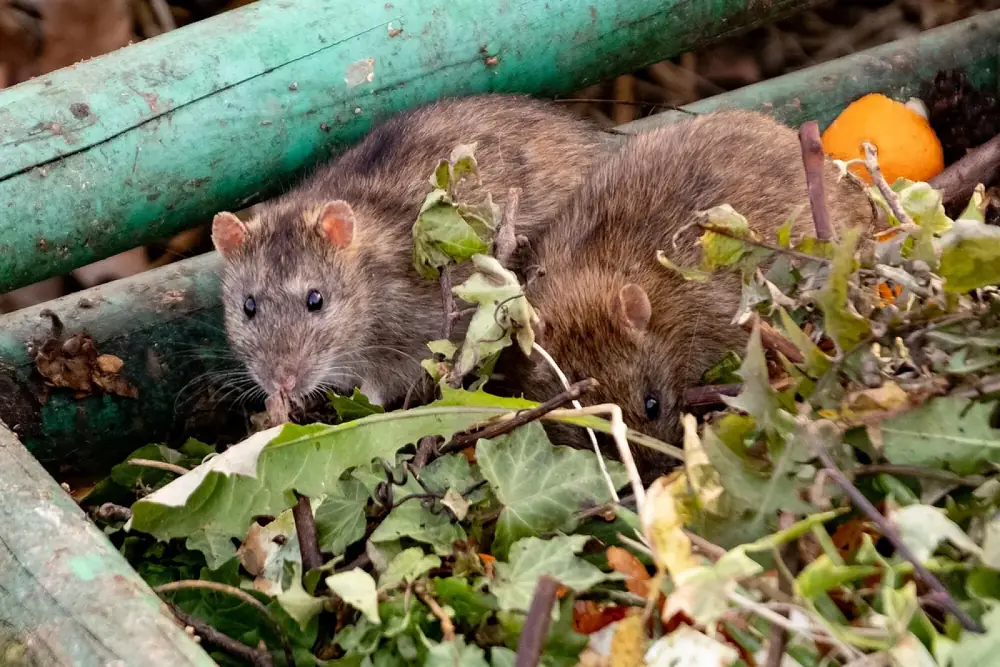
Rat control in Soweto usually means brown rats: big, burrowing rats that live under paving, sheds and rubble and come up from drains. We find the burrows and runways, bait them in lockable stations, trap inside the house and close the holes they use, so the colony is removed rather than pushed next door.
The brown rat is the main culprit
In leafy northern suburbs, most rat calls involve roof rats climbing in from trees. Soweto is different. Here the brown rat (Norway rat) does most of the damage. It's heavier, it digs, and it likes living close to the ground: in burrows under concrete slabs and paving, along the base of boundary walls, under outside toilets and storerooms, inside rubble piles and beneath chicken runs. It swims well and uses drains and sewer pipes to travel, which is why a broken drain cover or a blocked gully often marks the spot where rats are getting onto a property.
Roof rats do turn up too, especially where a tree, a vine or a wall gives them a way onto the roof, and where old roof sheeting has lifted at the edges. The difference matters, because a brown rat problem is solved at ground level and a roof rat problem is solved up top.
What attracts rats to a Soweto yard
- Refuse. Bags left outside between collections, overflowing bins and nearby dumping spots feed rats every night.
- Animal feed. Chicken mash, dog food and pigeon seed left out in the open are among the best rat food there is.
- Shelter. Bricks and rubble left from an extension, old car parts, scrap and stacked timber give them dry places to nest.
- Water. Dripping taps, leaking pipes and blocked drains.
Rats live in colonies, so if you see one in daylight there are almost always many more you aren't seeing.
Signs to check for
- Fresh burrows, about the width of a fist, with loose soil at the entrance, along walls or under paving.
- Thick, dark droppings in a line along a wall or near food.
- Gnaw holes at the bottom of wooden doors, in plastic bins, or in water and irrigation pipes.
- Greasy dark marks where they squeeze along the same route every night.
- Scratching in the ceiling or behind cupboards after dark.
- Dogs that keep digging or barking at one corner of the yard.
If the noise is above you, our guide to spotting rat activity in the roof helps you tell rats from birds or geckos.
Rats and family safety
Rats carry diseases and contaminate food with their urine and droppings, and they can bite. In homes where small children sleep on mattresses on the floor, or where food is stored in the same room as people sleep, that's a real worry. Our approach is built around safety: bait sits only inside lockable, tamper-resistant stations outside, and inside the house we use traps, not loose poison.
How we clear rats from a property
We start outside, because that's where Soweto rats live. We locate active burrows, runways and entry points, then set bait stations along walls and near burrows, secured so they can't be moved or opened. Where rats are coming into a room, we trap inside. Tracking powder can go into burrows or wall voids where nobody will touch it. Then we show you exactly what to seal: holes under doors, gaps around pipes, broken drain covers, and the edge of the roof sheeting if roof rats are involved.
We come back to check the stations, replace bait that's been eaten and move stations if the rats change route. Burrows that stop showing fresh soil tell us the colony is shrinking.
The most common mistake
Pouring poison straight into burrows or mixing it into food left on the ground. Dogs, cats and chickens find it before the rats do, and rats that eat it die underground or inside walls where the smell lingers. Meanwhile the colony next to the drain carries on breeding. Fill old burrows only once activity has stopped, or the rats will just dig a new one beside it.
A Soweto tip
Store chicken feed and dog food in a metal drum with a lid, and feed animals only what they'll finish. Animal feed left out overnight is behind a lot of the rat problems we see in Soweto, often more than household rubbish.
What rat control costs
The cost comes down to the size of the yard, how many stations are needed, whether the roof is involved and how many follow-up visits it takes. A house with a couple of burrows near the back door is a straightforward job. A big stand with several backyard rooms, or a shop or tavern with a store room, costs more and may suit a monitoring contract. See our rat control and pest control prices for the guide "from" price.
More help nearby
Where there are rats there are often cockroaches; our Soweto cockroach treatments deal with those. Homes in Dobsonville have their own local page, and our pest control in Soweto page covers everything else we do here. We also handle rat control in Johannesburg South next door, and rats across the city through our Johannesburg rat control service.
Jason van Heerden has run Combat Pest Control with 25 years of hands-on experience; we're SAPCA registered and Department of Agriculture registered, with service within 24 hours and a 3-month guarantee on rat treatments. Call 084 200 2700, or WhatsApp a photo of a burrow or droppings and we'll tell you what you're facing.
Questions we get asked
What does it cost to get rid of rats in Soweto?
It depends on the yard size, how many bait stations are needed and how many follow-ups it takes. A small home is a modest job; a large stand or a shop costs more. We quote after inspecting.
Will rat poison harm my dogs or chickens?
Not when it's in lockable stations. The bait stays inside a box they can't open or tip, and we place stations where animals don't normally go.
Why are there rats in my yard when my house is clean?
Because rats live outside and travel. A neighbour's rubbish, a dumping spot, a drain or chicken feed nearby can support a colony that then burrows under your paving.
Should I fill in the rat holes?
Not straight away. Leave them until the bait has done its work, because we use them to judge activity. Once no fresh soil appears, fill them firmly.
How quickly will the rats be gone?
Usually within one to three weeks, depending on the size of the colony and how much food is around. Removing animal feed and rubbish speeds it up.
Can rats come up through the toilet or drains?
Yes, brown rats swim and use sewer lines. Keep drain covers in place, repair broken gullies and tell us if you've seen one in the bathroom.
What should I do before you arrive?
Don't put out any poison, keep the dogs tied up while we inspect, and leave burrows and droppings where they are so we can read the activity.