
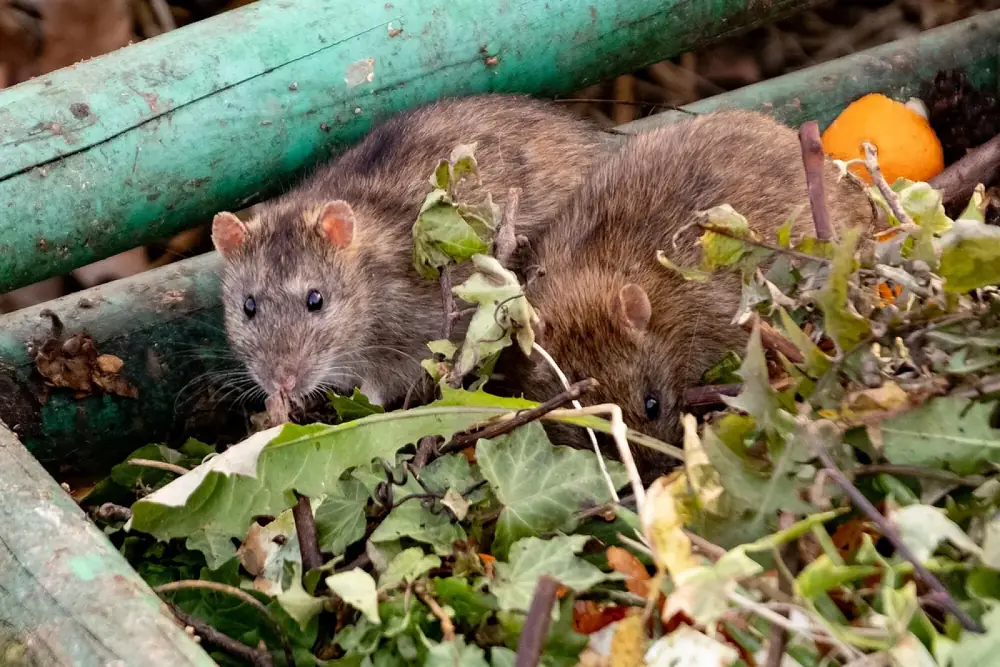
Rat control in Randburg usually starts in the ceiling. Roof rats climb the area's big trees, creepers and boundary walls, get in under the eaves and nest in roof insulation. We find the entry points, put lockable bait stations outside, trap inside the roof and show you which gaps to close so the next rat can't follow.
What a Randburg rat problem usually looks like
The typical call comes from an older house in Ferndale, Blairgowrie, Linden or Bordeaux some time between May and July. These suburbs have decades-old trees whose branches reach across roofs, creepers on boundary walls, fruit trees, compost heaps and bird feeders. That's food, water, shelter and a ladder to the roof, all on one stand. When the first cold nights arrive, rats that spent summer in the garden head for the warm space above your ceiling.
The newer complexes have rats too, but in a different pattern. There it's more often brown rats living around the central bin yard and burrowing into irrigated beds, with roof rats moving along continuous roof lines from one unit to the next.
Which rat are you dealing with?
Roof rats are slim, agile and dark, with a tail longer than the body. They travel high, along branches, walls, cables and gutters. Brown rats are bulkier, with a blunt nose and shorter tail, and they live low, burrowing under paving, sheds, rockeries and compost and coming in at ground level through drains and gaps under doors. A rough guide: noise overhead points to a roof rat; holes in the lawn along the wall or under the Wendy house point to a brown rat. Knowing which one tells us where to put stations and which gaps to look for first.
Signs worth checking
- Dark, spindle-shaped droppings along the top of walls, in the garage or on the roof boards
- Fruit hollowed out on the tree, especially citrus, figs and loquats
- Gnawed garden hoses, irrigation lines and pool cleaner pipes
- Shredded insulation or paper when you lift the roof hatch
- Greasy smudge marks where they run along beams or wall plates
- Dog pellets or chicken feed disappearing overnight
How we clear rats from a Randburg home
We inspect the garden first, because that's where rats live and feed, then the roof space and the rooms where you've heard or seen them. Outside, lockable bait stations go along the walls and fences the rats travel, fixed so children and dogs can't open them. Inside the roof we use traps, because a poisoned rat in a ceiling tends to die where nobody can reach it.
Once we know how they're getting in, we give you the proofing list. In Randburg it's usually the same few things: branches touching the roof, gaps at the eaves and fascia boards, broken air bricks, and openings where geyser pipes and cables pass through. Most homes need a follow-up visit to check the stations and traps and confirm the activity has stopped.
Pets, chickens and aviaries
Plenty of Randburg gardens have dogs, and quite a few keep chickens or an aviary. Feed left out overnight is one of the strongest rat attractants we come across. Lift pet bowls at night, store feed in a sealed metal bin, and sweep up spilt seed under feeders and around the coop. That matters as much as the bait does.
The mistake to avoid
Buying a box of pellets and throwing them into the ceiling. It might quieten things for a while, but you won't know where the bait ended up, a rat may die and rot in a wall cavity, and the gap it came through is still open. Within a season the next one finds it.
A Randburg tip
Ask your neighbour to cut back too. On the smaller stands in the older suburbs, a tree on the next property that hangs over your roof undoes all your own pruning. Branches should stay at least a metre clear of the roof line on both sides of the boundary wall.
What rat control costs, and why
The main factors are the size of the property, the number of stations and traps it needs, how much work happens in the roof and how many follow-ups it takes. A house with rats in one section of the ceiling is a fairly simple job; a large stand with fruit trees, chickens and an outbuilding takes more. Our price list for Johannesburg pest control shows where rat treatment starts, and the guide "from" price is on this page. If you've seen a single rat once and nothing since, a couple of well-placed traps may be all you need, and we'll say so.
Mice often arrive at the same time, so if you're finding small droppings in the kitchen drawers, look at mouse control in Randburg too. Our Ferndale pest control page covers one of the older suburbs where we deal with rats most, and we handle rats in Bryanston next door. The city-wide picture is on Johannesburg rat control, and our other local services are on pest control in Randburg.
We're SAPCA registered and registered with the Department of Agriculture, and Jason van Heerden brings 25 years of experience to every job. We offer service within 24 hours, and our rat treatments carry a 3-month guarantee. Call 084 200 2700, or WhatsApp us a photo of the droppings and we'll confirm what's in your roof.
Questions we get asked
How much does it cost to get rid of rats in my roof?
It depends on the size of the house, how many stations and traps are needed and how many follow-ups it takes. A single roof section is a straightforward job; a large property with outbuildings costs more. We confirm the price after the inspection.
Will the bait stations harm my dogs?
The bait sits inside lockable, tamper-resistant stations that dogs can't open, and we fix them in places pets don't normally reach. Inside the roof we use traps rather than bait.
Why do the rats come back every winter?
Because the way in is still open. Cold nights push rats from the garden into the roof each year, and unless branches are cut back and gaps sealed, the next ones use the same route.
How long before the noise in the ceiling stops?
Most homes notice a clear drop within one to two weeks. Properties with a lot of food and cover nearby can take longer and need an extra follow-up.
What if a rat dies somewhere in the roof?
That's exactly why we trap inside the roof instead of baiting there. If you do notice a smell, tell us on the follow-up and we'll help locate it where the roof space allows.
Do I need to be home for the treatment?
Someone needs to let us in and show us where the activity is, especially the roof hatch. After that, you don't need to change your routine at all.
Are chickens a problem if I want to get rid of rats?
Only their feed is. Store it in a sealed metal bin, don't leave it out overnight and clean up spillage, and chickens and rat control can coexist.