
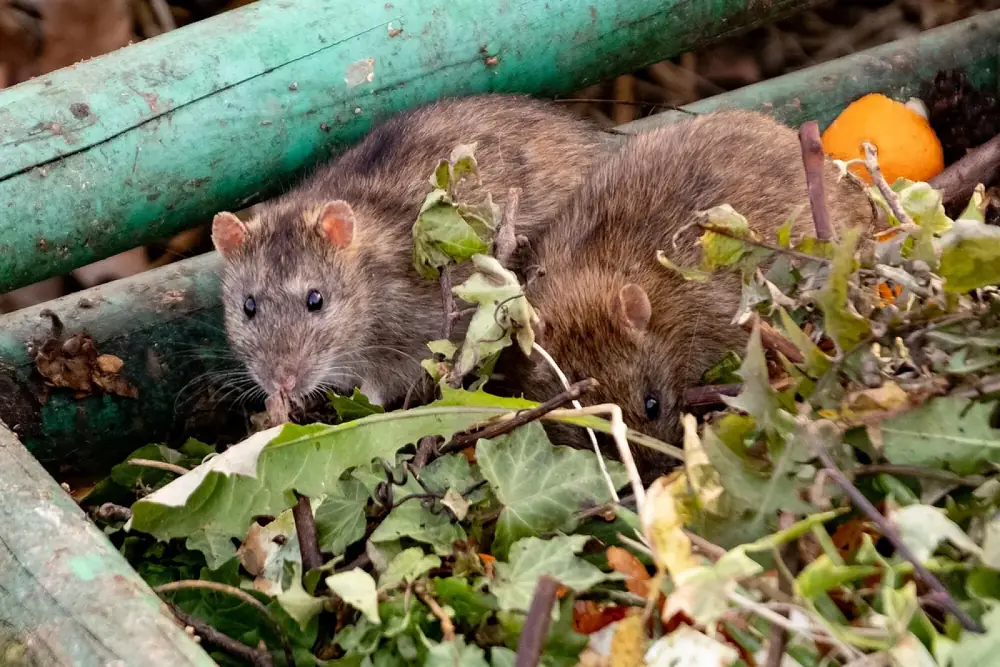
Rat control in Bryanston is mainly about roof rats: agile climbers that live in big gardens and reach the ceiling through trees, creepers and gaps under the eaves. We trace where they nest and how they get in, set lockable bait stations outside and traps in the roof, and then show you exactly which gaps to close.
A garden built for rats
Most Bryanston rat problems begin outside the house. A large stand with mature trees, thick hedges and creepers on the walls gives roof rats cover from the street to the roofline. Fruit trees drop avocados, citrus and figs. Dogs are fed outside and leave pellets in the bowl overnight. Bird feeders scatter seed. Compost bays, wood piles and old garden furniture stacked behind the garage offer dry places to nest.
Then, as May and June bring cold Highveld nights, the rats look for warmth. A roof space insulated with ceiling batts is ideal. That is why our rat calls from this area climb steeply between late autumn and the end of winter, and why the same houses often call again the following year unless the entry points are closed.
How to tell it is rats
- Running and scratching overhead after dark, often along the same line each night
- Droppings roughly the size of a raisin in the roof, garage or behind the stove
- Avocados or fruit hollowed out while still on the tree
- Chewed irrigation pipes, pool cleaner hoses or electrical cables
- Greasy dark marks along beams, the top of walls or where a pipe enters the house
- Dogs fixated on one corner of the ceiling or garden
Our process
First visit. We walk the garden and the outside of the house, then go into the roof space if it is accessible. We are looking for nests, runways, droppings and the places where rats cross from the garden to the building.
Treatment. Lockable, tamper-resistant bait stations go outside along the routes the rats use. Inside the roof we generally set traps, because a poisoned rat that dies in a wall void is far worse than the original problem. Roof rats are naturally wary of new objects, so it can take a few days before they start feeding.
Follow-up. We return to check stations and traps, remove what has been caught, and adjust positions until activity stops.
Proofing. Finally we take you round the gaps: the space where the roof sheeting or tiles meet the wall, broken air-brick grilles, unsealed pipe and cable entries, and branches resting on the roof.
Staff quarters, pump rooms and outbuildings
On larger Bryanston stands, the main house is often not where the rats live. Staff rooms, store rooms and pool-pump housings are warm, quiet and close to food, and rats commute to the main roof from there. We treat these buildings as part of the job, not an afterthought, and it is often where we find the nests.
Rats in cluster complexes
Cluster homes add a complication: the roof space often runs over several units with only a low firewall, or none at all, between them. A rat heard above one bedroom may be nesting three doors down. Treating a single unit in that situation tends to move the noise rather than end it. Where we can, we coordinate with the body corporate to set stations around the whole block and check each roof section, and we leave a short written note of what we found so trustees can plan any proofing work.
Why it is worth acting early
Rats gnaw constantly, and a roof is full of things worth chewing: electrical cables, geyser fittings, the plastic on solar or alarm wiring. They also contaminate insulation and stored items with urine and droppings. A small population caught in May is a much smaller job than an established one found in August.
The mistake that keeps rats coming back
Cutting off the noise without cutting off the route. A rat removed from the ceiling is replaced by the next one if the creeper still reaches the eaves and the gap is still open. People also tend to stop after the first quiet week, while young rats are still in the garden.
A Bryanston tip
Pick up fallen fruit every day or two in autumn, and harvest avocados before they fully ripen on the tree. It sounds minor, but on a stand with several fruit trees it removes the food that carries a rat population through to winter.
What rat control costs, and why
The main cost drivers are the size of the stand, how many bait stations and traps are needed, whether the roof is easy to get into, how many outbuildings are involved and how many follow-up visits it takes. A single house with rats in one section of the roof is straightforward. A large property with rats in several buildings, or a complex with shared roofs, takes longer. This page shows a guide "from" price, and you can compare services on our pest control price list.
Rats and mice often turn up together; if the droppings are small and the scratching is in the kitchen cupboards, see mouse control in Bryanston. We also treat rats in Sandton homes next door, gardens in Petervale, and properties citywide through our Johannesburg rat control service. The Bryanston area page lists everything else we do locally.
Combat Pest Control is owned by Jason van Heerden, with 25 years of rodent work behind it, SAPCA membership and registration with the Department of Agriculture. Rat treatments are guaranteed for 3 months, and we offer service within 24 hours. Call 084 200 2700, or WhatsApp us a photo of what you have found in the roof.
Questions we get asked
What does rat control cost in Bryanston?
It depends on the property size, roof access, the number of stations and traps, and how many follow-up visits are needed. A house with rats in one section of the roof is a fairly simple job; several outbuildings or shared complex roofs cost more.
Why are the rats eating my avocados?
Roof rats love fruit and will climb a tree and hollow out avocados while they hang. Fruit trees near the house also act as a ladder onto the roof, so trim branches back from the eaves.
Will a dead rat smell in the ceiling?
It can if loose poison is used. That is why we use traps inside the roof and keep bait in lockable stations outside, so rats are far less likely to die somewhere you can't reach.
How soon will the noise stop?
Usually within one to two weeks. Roof rats are cautious about new stations, so the first few nights can be quiet on the bait, then activity drops quickly once they start feeding.
Is it safe with my dogs?
Yes. Bait stays inside locked, fixed stations placed where dogs don't go, and traps in the roof are out of their reach.
What should I do before you come?
Note where you hear the noise and where you have found droppings, clear access to the roof hatch, and don't put down loose poison. Keep dog food inside for a few nights if you can.
Do rats chew electrical wiring?
Yes, and it is one of the main reasons to act quickly. Rats gnaw constantly to wear their teeth down, and cables, irrigation pipes and pool hoses are common targets.