
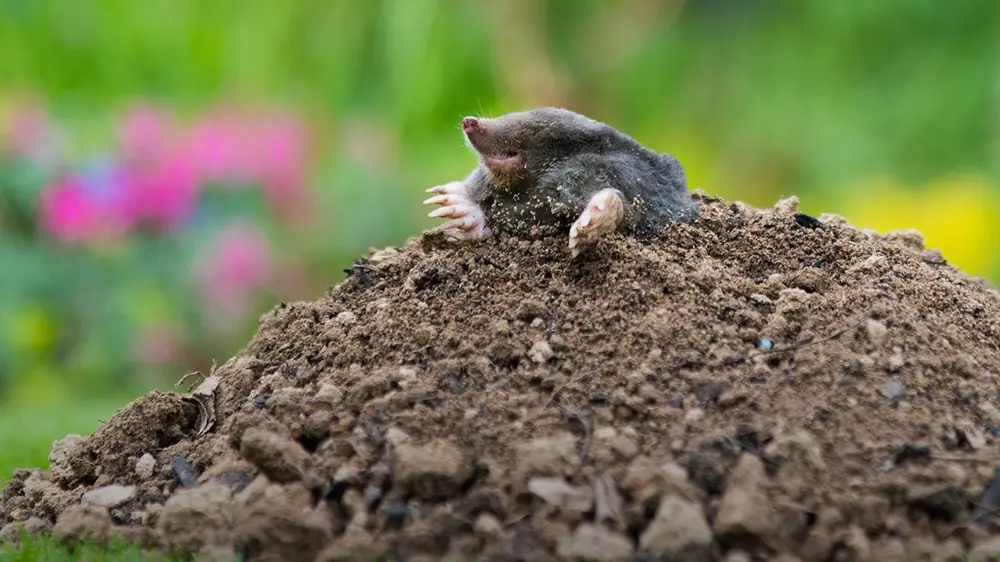
Mole control in Fourways starts with identifying what's digging. Mounds of loose soil usually mean mole-rats, which eat roots and bulbs; raised ridges just under the surface usually mean golden moles hunting grubs and worms. We find the active tunnels, trap them, and advise on the garden conditions that keep drawing them back.
Why Fourways lawns get so much mole activity
The soil does most of the work. Fourways and much of northern Johannesburg sit on granite, which weathers into sandy, crumbly ground. For an animal that spends its whole life digging, it's about as easy as soil gets. Add the area's big irrigated lawns, estate verges, golf course edges and well-fed flowerbeds, and you have damp, soft soil full of roots, bulbs, grubs and earthworms right through the year.
Many estates were also built on veld that mole-rats already lived in. Colonies don't leave when the houses arrive. They simply discover that a watered kikuyu lawn is a better place to live than dry grassland.
Mole-rat or golden mole?
People in Johannesburg call both of them moles, but they're very different animals, and the right approach depends on which one you have.
Mole-rats
The common mole-rat is a rodent that lives in family groups underground. It pushes up mounds of loose soil, often in a line, and it eats roots, bulbs and tubers. If your agapanthus, clivias or vegetable bed suddenly wilts and the plant lifts out of the ground with no roots, a mole-rat has been eating from underneath. This is the one that does real damage to gardens.
Golden moles
Golden moles aren't rodents at all. They hunt insects, grubs and earthworms, and travel just below the surface, leaving raised ridges that feel spongy when you step on them. They make a lawn look untidy but don't eat plants. Their activity often follows the food: a lawn with lots of grubs or heavy watering brings the worms and larvae up, and the golden moles follow.
How we deal with moles
- Find the active runs. Not every mound or ridge is in use. We open and check tunnels to see which ones are being repaired, because those are the ones worth working on.
- Identify the animal. Mound shape, tunnel depth and plant damage tell us whether it's mole-rats, golden moles or both.
- Trap in the main tunnels. For mole-rats we set traps in the active main runs, which is where they travel regularly. Placement is everything; a trap in a feeding tunnel that's been abandoned catches nothing.
- Look at the conditions. We'll talk you through watering, grubs in the lawn and the beds that are attracting them, because that decides whether they come back.
- Follow up. Mole-rats live in groups, so it can take more than one visit to clear a colony.
What doesn't work
Fourways homeowners have tried everything: pouring water or a running hose into the tunnels, smoke, vibrating stakes, chilli, broken glass, pinwheels, even car exhaust. In sandy soil, water drains away before it reaches the animal, and most deterrents just move the activity a few metres along. Flooding also damages the lawn more than the mole does. Exhaust fumes are dangerous to you and your pets and shouldn't be tried at all.
The other common mistake is flattening every mound as soon as it appears and then wondering where the animal is. Leave the fresh mounds until we arrive. They're how we find the active tunnel.
Moles or harvester termites?
Sometimes the damage isn't moles. Bare, sandy patches with lots of tiny holes and cut grass lying on the surface, especially in a dry winter, are harvester termites rather than moles. That's a completely different treatment, covered on our page on termites in Fourways lawns and homes. If you're not sure, WhatsApp us a photo of the damage.
Estates and golf course edges
Where an estate's homes back onto a fairway or a common green space, moles often move from the open ground into private gardens and back again. Clearing one garden while the neighbouring common area stays full of tunnels gives only a short break. Estate managers can ask us to look at the common areas so the work in individual gardens actually holds.
A local tip
Protect the plants that mole-rats love most. When you plant bulbs, agapanthus or a new vegetable bed in Fourways' sandy soil, line the planting hole or bed with fine wire mesh underneath. It's a small job at planting time and saves the plants for years.
What mole control costs, and why
The price depends on the size of the garden, how many active tunnel systems there are, and how many return visits it takes to clear a colony. A single small lawn with one mole-rat is a modest job; a large estate stand next to open ground with several systems takes longer. See our guide prices for where garden work starts. If it's golden moles making a few ridges and your plants are fine, we may tell you to leave them be, because they're eating lawn grubs for you.
Our main page on mole control in Johannesburg has more on how these animals live. We also deal with moles in Bryanston's big gardens, in the estate gardens of Dainfern, and right across the area through our Fourways pest control service.
Jason van Heerden has 25 years in pest control, and Combat is SAPCA registered and registered with the Department of Agriculture under Act 36, offering service within 24 hours. Woke up to a new row of mounds? Ring 084 200 2700, or WhatsApp us a picture of the lawn and we'll tell you what's been digging.
Questions we get asked
How much does mole control cost?
It depends on the size of the garden, the number of active tunnel systems and how many visits it takes. A small lawn with one mole-rat costs far less than a large stand that borders open veld.
Are moles dangerous to my dogs or children?
No. Mole-rats and golden moles stay underground and avoid people. The only real risk is a twisted ankle in a collapsed tunnel.
Will the moles come back after you've cleared them?
They can, especially if your garden backs onto veld, a fairway or a neighbour's lawn with active tunnels. Wire mesh under precious beds and dealing with the surrounding area helps keep them out.
Why are my plants dying with no roots left?
That's the classic sign of a mole-rat eating from below. It pulls roots, bulbs and tubers into its tunnel, leaving the plant loose in the soil.
Does flooding the tunnels with a hose work?
Rarely in Fourways. The sandy soil drains too quickly, the animal moves to a dry section, and the lawn suffers more than the mole.
How long does it take to get rid of mole-rats?
Sometimes a single visit, but mole-rats live in family groups, so a full colony often needs a few return visits over a couple of weeks.
Should I flatten the mounds before you arrive?
No. Leave the fresh mounds alone. They show us where the active tunnels are, which is where the traps need to go.