
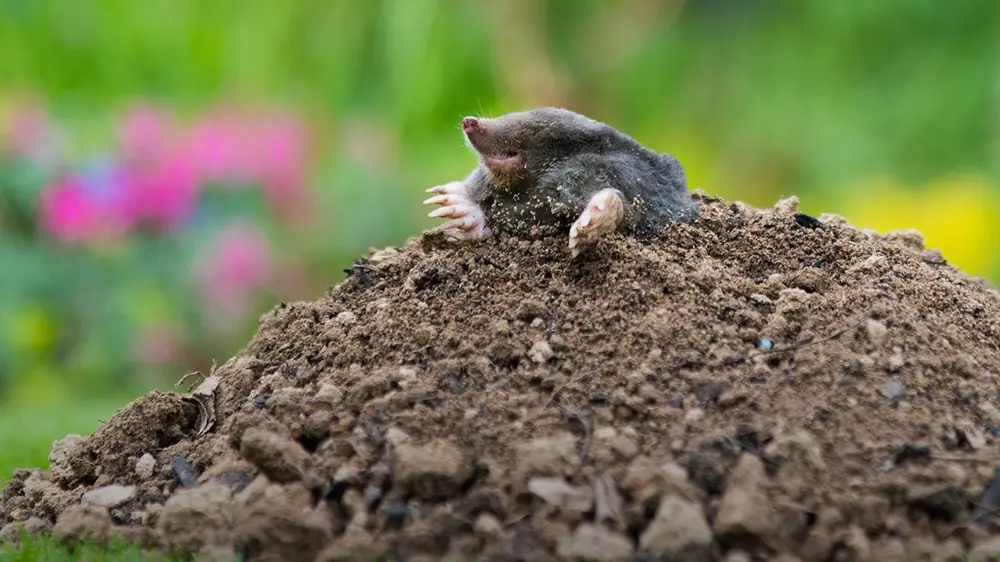
Mole control in Roodepoort usually means dealing with mole-rats, the rodents that push up mounds and eat roots and bulbs, rather than true moles. We confirm which animal is tunnelling, find the active runs, and trap them there. Then we show you how to protect beds and lawns so the next one doesn't move straight in.
Mole-rat or golden mole?
Most people call any tunnelling animal a mole, but two quite different creatures live under Highveld gardens.
Mole-rats: the ones doing the damage
Mole-rats are rodents with large front teeth that they use for digging. They live in tunnel systems, feed on roots, bulbs and tubers, and push loose soil up into mounds as they go. Freshly planted bulbs, young shrubs and vegetable beds are their favourite targets, and a lawn can end up covered in mounds after good rain.
Golden moles: mostly ridges, not mounds
Golden moles are small insect eaters. They tunnel just under the surface, leaving raised ridges in the lawn rather than large mounds, and they're hunting worms and grubs, not eating your plants. They can make a lawn look uneven, but they don't destroy bulbs. Telling the two apart is the first thing we do, because it changes what's worth doing.
Why Roodepoort gardens get them
Many Roodepoort homes have exactly what mole-rats like: big, well-watered lawns, flowerbeds full of bulbs, vegetable patches and soil that's easy to dig after the summer rains. Properties that back onto veld, a ridge or a park are close to wild populations, and an irrigated garden next to dry ground is an obvious place to expand into. Activity often jumps after the first heavy storms of the season, when the soil softens and they can dig fast.
Signs it's mole-rats
- Fresh, loose soil mounds, often in a line or a cluster, with no open hole on top
- Bulbs, carrots or potatoes eaten from below, or a plant that wilts and pulls up without roots
- Soft ground that sinks underfoot along a tunnel line
- New mounds appearing overnight, especially after watering or rain
Bare lawn patches with small open holes, loose crumbs of soil and cut grass are a different problem altogether: harvester termites. If that sounds like your garden, see termite control in Roodepoort instead.
How we deal with mole-rats
We start by finding the active tunnels. Fresh mounds are pushed out from short side tunnels, so we probe around them to locate the main run. Traps are set in the active runs, and we check them on return visits until activity stops. This targeted approach works far better than flooding tunnels or dropping products into old mounds, which mole-rats simply seal off.
Once the garden is clear, prevention matters. In beds where you're planting bulbs, a mesh basket or a buried mesh lining protects them. Around high-value beds, buried mesh or an underground barrier can make a real difference on properties next to open ground.
What to expect after treatment
Some mole-rat species live in family groups and others alone, so one catch doesn't always mean the job is done. We keep checking the runs until fresh mounds stop appearing. Old mounds can be raked out and the lawn levelled once activity has ended; topdressing with a little compost and watering helps the grass knit back in a few weeks during the growing season.
Expect the odd new mound if your property backs onto veld, because wild populations nearby can send a newcomer in. A quick call at the first sign is much easier than waiting until the garden is riddled again.
The common mistake
Stamping down or raking flat every mound and hoping they leave. Mole-rats just push up more soil. Gas cartridges, pouring water or diesel into tunnels and planting ‘mole-repelling’ plants are other things we hear about, and none of them clears an established animal. Diesel and chemicals in the soil also damage your garden and groundwater. Find the active run and deal with the animal directly.
A Roodepoort tip
When you put in new bulbs or a vegetable bed on a property near the veld, line the planting hole or the bed with wire mesh before you plant. It takes an afternoon, and it saves the whole season's planting from being eaten from below.
What mole control costs, and why
The cost depends on how many animals are active, the size of the lawn and beds, and how many return visits are needed to check traps. A single mole-rat in one bed is a small job; a large garden next to the veld with mounds everywhere takes more time. Golden mole activity is often best left alone, and we'll say so if that's the case. There's a guide "from" price on this page, and our guide to pest control costs in Johannesburg lists the rest.
Nearby help
Garden owners up the slopes can see our pest control in Florida Hills page. Across the ridge, we cover moles in Randburg gardens, and city-wide on our main mole control in Johannesburg page. For the other pests in the area, our Roodepoort pest control page has the overview.
Garden work like this is handled by Jason van Heerden himself, owner and operator of Combat Pest Control, after 25 years in the trade. We are SAPCA registered and hold Department of Agriculture registration in terms of Act 36 of 1947, offer service within 24 hours and back the work with a 3-month guarantee. Ring 084 200 2700, or WhatsApp a photo of the mounds so we can tell you what's tunnelling.
Questions we get asked
How much does it cost to get rid of moles?
It depends on how many animals are active, how big the garden is and how many visits it takes to check traps. One mole-rat in a bed is a small job; we quote after looking at the garden.
Are moles and mole-rats the same?
No. Mole-rats are rodents that eat roots and bulbs and push up mounds. Golden moles eat insects and leave raised ridges. Mole-rats cause most garden damage.
Will mole-rats come back?
A new animal can move in from nearby veld or a neighbour's garden. Mesh around bulbs and beds and keeping an eye on fresh mounds helps you catch it early.
Is mole treatment safe for my dogs?
Yes. We trap in the tunnels underground, so there's nothing loose on the lawn for dogs to find.
Does flooding the tunnels work?
Rarely. Mole-rats seal off flooded sections and keep going. Locating the active run and trapping there is far more reliable.
When are mole-rats most active?
Usually after rain, when the soil is soft and easy to dig. In Roodepoort that means a busy period after the first summer storms.