
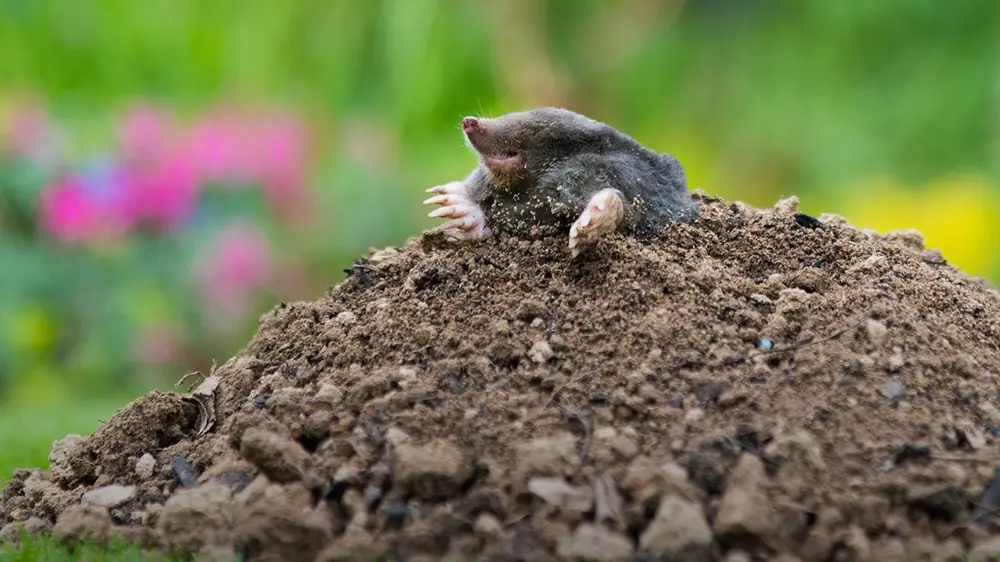
Mole control in Northcliff starts with identifying the digger, because two different animals cause most garden damage here. Mole-rats push up soil heaps and eat bulbs and roots; golden moles leave raised tunnels while hunting insects. We confirm which it is, trap mole-rats in active tunnels and deal with the insect food that draws golden moles.
The two "moles" in Highveld gardens
Mole-rats
Mole-rats are rodents, not true moles. They live underground in tunnel systems and feed on roots, bulbs and tubers. Their trademark is a line of loose soil heaps pushed up from below, often across a lawn or through a flowerbed, and plants that suddenly wilt because their roots have been eaten. Gardeners usually notice when a row of agapanthus or a bed of bulbs disappears.
Golden moles
Golden moles are small insect-eaters. They tunnel just under the surface hunting for grubs, earthworms and other soil insects, leaving raised, winding ridges in the lawn that feel soft underfoot. They don't eat your plants, but their tunnels lift and dry out the grass roots, so the lawn looks lumpy and patchy.
Knowing which one you have changes the whole approach, so we always start by opening a tunnel and looking at the pattern of damage.
Why Northcliff gardens get them where they do
The ridge itself is rocky, and near the crest the soil is often too thin and stony for digging animals. They're far more common lower down the slopes and on the deeper soils around Fairland, Blackheath and Cresta, in flat lawns at the bottom of terraced gardens, and in beds where years of compost have made the ground soft and rich. Irrigated lawns with plenty of soil insects attract golden moles; well-stocked beds of bulbs attract mole-rats.
Activity tends to show most after the summer rains soften the soil, but mole-rats keep working through winter in watered gardens.
Moles, termites or something else?
Bare, patchy lawns in winter on the ridge are often blamed on moles when the real cause is harvester termites. The difference is easy to see: harvester termites leave small round holes with tiny soil heaps and short cut pieces of grass, with no tunnels and no raised ridges. If that sounds like your lawn, read about harvester and subterranean termites in Northcliff before you do anything else.
How we deal with them
- Identification. We look at the heaps, ridges and plant damage, and open a tunnel to see how deep and how active it is.
- Mole-rats: trapping. We find a main, active tunnel, not a short feeding branch, and set traps in it. That's the most reliable way to remove a mole-rat, and follow-up checks confirm when the system is no longer in use.
- Golden moles: removing the food. Because golden moles follow soil insects, treating lawn grubs and insect activity where they're heavy makes the lawn far less attractive. We'll advise on when trapping is appropriate.
- Protecting new planting. In beds that keep losing bulbs, planting in wire baskets stops mole-rats reaching them.
What doesn't work
We get asked about every home remedy going: car exhaust down the tunnel, chillies, broken glass, vibrating stakes, flooding with the hose. Mostly they move the animal a few metres along, or they create a new safety risk without solving anything. Flooding is a particular waste on a slope, because the water simply runs downhill through the tunnels and out the other side.
The mistake: treating the newest heap
The freshest heap of soil is where the animal was, not where it lives. Setting a trap there, in a short side tunnel, usually catches nothing. The main runway is deeper and more regular, and finding it takes patience and a probe.
A Northcliff tip
On terraced gardens, check the bottom terrace first. Soil washed down by summer rain collects there, it's softer and deeper than higher up, and it's usually where a mole-rat system starts before working its way along the beds.
What mole control costs, and why
The cost depends on the size of the garden, how many tunnel systems are active, how many visits it takes to trap a mole-rat, and whether lawn insects also need treating. One mole-rat in a flowerbed is a short job; a large lawn with several systems takes longer. You'll find the starting price on our pest control prices page, and we confirm after looking at the damage.
For more on these animals, see mole control across Johannesburg. We also handle mole problems in Randburg gardens to the north. If your garden is in the flatter streets below the ridge, our Fairland pest control page is worth a read, and everything we treat locally is listed under pest control in Northcliff.
Combat Pest Control is run by owner and operator Jason van Heerden, who has 25 years in the industry. We're SAPCA registered and registered with the Department of Agriculture under Act 36, and we offer service within 24 hours. Call 084 200 2700, or WhatsApp us a photo of the heaps or ridges.
Questions we get asked
How do I know if it's a mole-rat or a golden mole?
Mole-rats push up loose heaps of soil and eat bulbs and roots. Golden moles leave raised, winding ridges just under the lawn surface and don't eat plants. A photo on WhatsApp is usually enough for us to tell.
What does mole control cost?
It depends on the garden size, the number of active tunnel systems and how many visits trapping takes. Our price guide shows the starting price, and we confirm after an inspection.
Are mole treatments safe for my dogs?
Yes. Traps are set underground in the tunnels, and we tell you where they are so you can keep dogs from digging there until they're removed.
Do vibrating stakes or sound devices work?
Not reliably. At best they move the animal a short way. Trapping mole-rats and reducing the soil insects golden moles feed on work far better.
Will they come back after you've trapped them?
A new animal can move into empty tunnels from a neighbouring garden. Flattening old tunnels and protecting bulbs with wire baskets reduces the chances.
Why is my lawn bare but there are no heaps?
That's often harvester termites, especially in a dry winter. Look for small round holes and cut grass pieces rather than tunnels.