
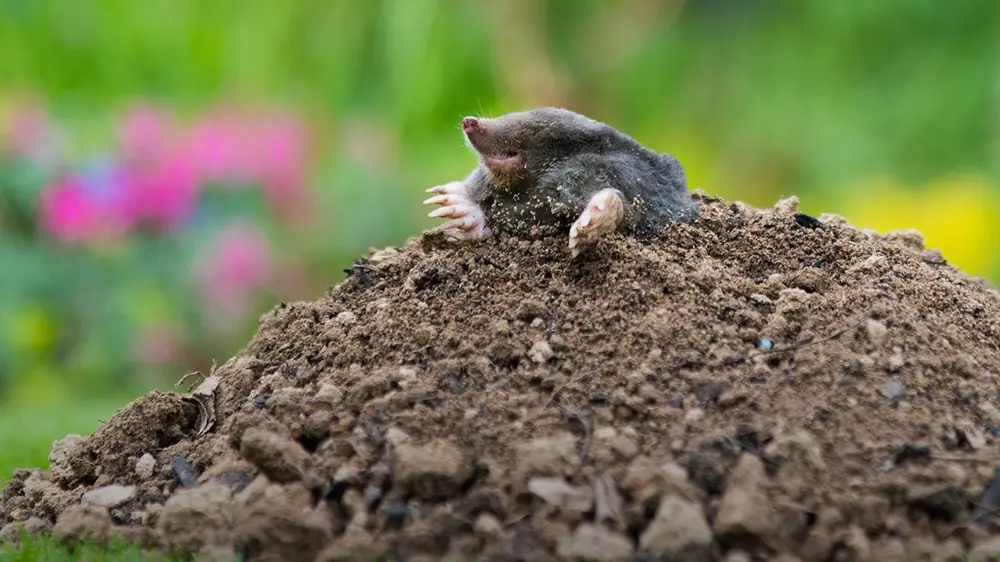
Mole control in Sandton starts with working out which animal is in the garden. Most mounds on Highveld lawns are made by molerats, burrowing rodents that eat bulbs and roots; true golden moles eat insects and leave raised ridges instead. We identify the culprit, then trap molerats in their active tunnels and advise on protecting beds.
Molerat or golden mole?
People call both of them moles, but they are very different animals and they need different responses.
Molerats
The common molerat is a rodent that lives underground in family groups and feeds on roots, bulbs and tubers. It pushes up loose mounds of soil, often in a line, with no visible opening because the hole is plugged from below. Signs are wilting plants that come away in your hand with the roots eaten off, missing bulbs in beds, and young trees or shrubs that suddenly die back. Agapanthus, clivias, irises and vegetable beds are favourites.
Golden moles
Golden moles are small indigenous insect-eaters. They tunnel just below the surface hunting for earthworms and grubs, leaving raised ridges across the lawn rather than heaps of soil. They don't eat your plants. Their tunnels are a nuisance, but they are also a sign of healthy soil, and we don't treat them as vermin. Pressing the ridges down and waiting usually works, since they move on as the soil dries or the grubs run out.
Why Sandton gardens attract molerats
Sandton's larger stands, especially in the older suburbs, tend to have deep, well-worked soil, lots of bulbs and established beds, and automatic irrigation that keeps the ground soft through the dry winter. That's perfect molerat country. When soil elsewhere becomes hard in winter, a watered lawn and a bed full of agapanthus become the easiest digging around. Green belts along the spruits and open ground on undeveloped stands give them somewhere to spread from, and new estates landscaped on former veld can have molerats in residence from day one.
How we deal with molerats
- Finding the active system. We open a section of tunnel near the freshest mound. Molerats dislike open tunnels and usually come to plug them within hours, which tells us the run is in use.
- Trapping. We set traps in the active runs, then check and reset them. A family group may take more than one round.
- Follow-up. We come back to check for fresh mounds and move traps to new activity if needed.
- Protecting beds. For valuable plants, lining planting holes with wire mesh keeps molerats away from roots and bulbs.
We don't recommend scattering poison down tunnels. It can reach pets and wildlife and rarely gets the whole family, and you won't know whether it worked until the mounds return.
What people commonly try first
Hose pipes down the tunnel, car exhaust fumes, windmills, bottles in the ground and castor oil plants are all traditional remedies we hear about. At best they move the molerat a few metres along; at worst they're dangerous or simply flood the bed. Spinning devices and buzzing stakes may disturb them for a few days, but they soon learn to ignore them. Trapping in the active run is still the reliable method.
A tip for Sandton gardens
Plant new bulbs and young trees in wire baskets from the start, particularly in beds near boundary walls and along any green belt. Molerats often enter from the neighbouring property or the open ground beyond, so beds on that edge are hit first, and protecting them at planting time is much easier than digging them up later.
What mole control costs, and why
Cost depends on how large the tunnel system is, how many traps are needed and how many return visits it takes to clear the family group. A single fresh line of mounds in a townhouse garden is a short job; a large estate garden or a sports field with activity in several places takes longer. You'll see a guide 'from' price on this page, and our guide to pest control prices in Johannesburg explains how the different jobs compare. If it turns out to be a golden mole, we'll tell you, and it may not need treatment at all.
Other things that dig up Sandton lawns
Not every bare patch is a molerat. Small round holes with soil heaps and cut grass around them in winter are harvester termites, which are covered on our Sandton termite control page. Small piles of fine soil between paving joints are usually ants, explained under ant treatments in Sandton.
For everything else we handle locally, see our Sandton pest control services. Molerats are also a common call on bigger properties further north, which is why we have a page on mole control in Midrand, and the citywide guide is mole control across Johannesburg. Big gardens in Inanda see their share too.
Combat Pest Control is owned and run by Jason van Heerden, with 25 years of experience, SAPCA membership and Department of Agriculture registration. We offer service within 24 hours and treatments carry a 3-month guarantee. Call 084 200 2700, or WhatsApp us a photo of the mounds and we'll tell you whether it's a molerat or a golden mole.
Questions we get asked
How much does it cost to get rid of a molerat?
It depends on the size of the tunnel system and how many visits it takes to trap the family group. A small garden is a short job; large gardens and sports fields take longer. We quote after looking.
Are moles dangerous to my dog?
Molerats can bite if a dog digs one out, but they aren't a real danger. The bigger risk to pets is poison put down tunnels, which is why we trap instead.
How can I tell if a mound is fresh?
Fresh mounds are dark, moist and loose. Flatten all the mounds one evening and see which ones reappear the next morning; those mark the active tunnels.
Will the molerats come back?
New ones can move in from neighbouring gardens or open ground, especially in winter. Wire baskets for bulbs and young plants reduce the damage if they do.
Should I flood the tunnels with the hosepipe?
It rarely works. Molerat tunnel systems are long and drain well, so the animal moves a few metres and carries on, and you end up with a waterlogged bed.
How long does trapping take?
Often a week or two, depending on how many animals are in the system and how quickly they find the traps. We check and reset traps until fresh mounds stop appearing.