
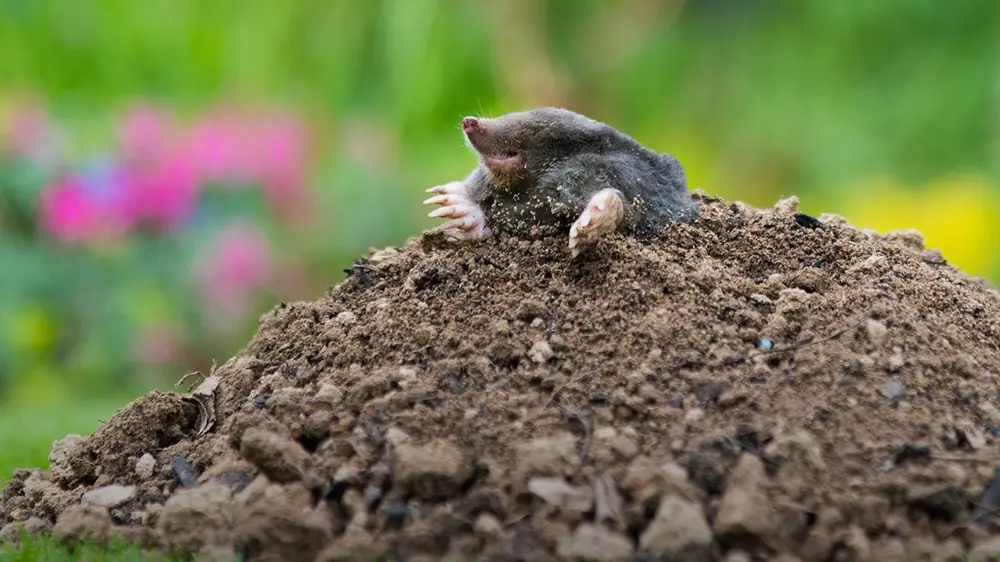
Mole control in Johannesburg is really mole-rat control. The animal pushing soil mounds across Highveld lawns is usually a burrowing rodent that eats roots and bulbs, not a true mole. We find the active tunnel system, trap the animals where they're working, and advise on protecting beds and new lawns.
Mole-rat or golden mole?
Two quite different animals get called "moles" in Gauteng, and it's worth knowing which one you have.
Mole-rats are rodents. They're stocky, velvety, with prominent front teeth they use for digging, and they live in family groups in long tunnel systems. They feed on roots, bulbs and tubers, which is why a row of agapanthus or a bed of potatoes can wilt from below. Their sign is a line of loose, crumbly soil mounds, often appearing overnight after rain when the ground is soft.
Golden moles are small insect-eaters, not rodents. They swim through the topsoil just below the surface, leaving raised, cracked ridges rather than big heaps, and they eat grubs, worms and insects rather than plants. Several species are rare, and they're generally best left alone. If your lawn has ridges but no mounds and nothing is being eaten, we'll tell you that.
Why Johannesburg gardens attract them
Much of Johannesburg was built on grassland, and mole-rats were living in that soil long before the suburbs arrived. Large, irrigated gardens with kikuyu lawns, bulbs and vegetable beds give them more food than the veld ever did. Activity jumps after the first summer rains, when wet soil is easy to dig, and again wherever irrigation keeps beds soft through the dry months. Properties next to open land, ridges or a spruit tend to be re-colonised from outside, which is common in parts of Fourways near open veld and on the bigger stands of Roodepoort.
Signs of mole-rat activity
- Fresh, loose mounds of fine soil in a rough line across the lawn or through beds
- Plants that wilt suddenly and lift out of the ground with no roots
- Bulbs, carrots or potatoes missing when you dig
- Soft, sunken patches where tunnels run just under the surface
- Irrigation pipes chewed underground
How we deal with mole-rats
- Map the system. We walk the garden and work out which mounds are fresh and which tunnels connect them. Old mounds can be weeks out of date.
- Find the live run. Mole-rats close up an opened tunnel quickly, so we open sections and check which ones get plugged. That tells us exactly where they're working.
- Trap in the tunnel. Traps go into the active run and are covered so the tunnel stays dark. This is targeted and keeps anything above ground out of harm's way.
- Check and repeat. We return to check the traps. A family group can take more than one visit to clear.
- Protect what matters. We advise on wire mesh under new lawn or in raised beds, and on spotting new activity early.
Common mistakes
Johannesburg gardeners have tried everything: flooding tunnels with the hosepipe, car exhaust, chewing gum, broken glass, windmills and battery-powered vibrating stakes. Flooding just pushes the animals deeper and soaks your lawn. The deterrents might move them a few metres for a while. The other mistake is treating every heap. Most mounds are old; what matters is the tunnel being used today, and working on dead tunnels wastes time.
It's also easy to confuse mole-rats with harvester termites. Harvester termites leave small holes and bare patches with cut grass in winter, not soil mounds. If that sounds more like your lawn, our termite control across Johannesburg covers it.
A garden tip for the Highveld
When you plant a new bed or lay new lawn, put galvanised wire mesh down first, below root depth, and bend it up at the edges. For veggie gardens, raised beds with a mesh base work even better. It's far easier than trying to protect established beds later, and it outlasts any repellent.
Smallholdings, estates and schools
On smallholdings in places like Kyalami and on the southern edges of the city near the Klipriviersberg, mole-rats can damage paddocks, sports fields and orchards as well as gardens. Large areas take longer to map, so we focus first on the areas you care about most, such as the lawn by the house, the sports field or the vegetable garden. Estates and schools can book regular visits so new activity is dealt with before it spreads. Our mole control in Johannesburg South deals with plenty of these larger properties.
What mole control costs, and why
The cost depends on the size of the garden or field, how many active tunnel systems there are, and how many trap checks it takes to clear them. A normal suburban garden with one system is usually a short job over a couple of visits; a smallholding or school field takes longer. The guide price for this service is on our pest control price list. If you're seeing one fresh mound a month at the bottom of the garden, it may be worth simply watching it before calling anyone. The mole-rat guide goes deeper into how they live.
Mole-rat jobs are one of the few where a picture tells us a lot, so WhatsApp a photo of the mounds before you book. You'll be dealing with a SAPCA registered business, registered with the Department of Agriculture, whose owner has 25 years in pest control. We offer service within 24 hours, and if fresh mounds return to a treated area within 3 months, so do we. The number is 084 200 2700.
Questions we get asked
How much does mole control cost?
The garden sets the price: its size, how many tunnel systems are active and how many trap checks it takes. A normal suburban garden is usually a short job; smallholdings and sports fields cost more. We quote after seeing the activity.
Are the moles in my garden actually moles?
Usually not. The animals making soil mounds in Johannesburg lawns are mostly mole-rats, which are rodents that eat roots and bulbs. Golden moles leave raised ridges instead and eat insects.
Do vibrating stakes or windmills keep moles away?
Not for long. They may move the animals a short distance for a while, but the tunnel system stays, and the activity usually returns.
Is mole-rat trapping safe for my dogs?
Yes. Traps go inside the tunnel and are covered, so pets and children can't get at them.
How long until the mounds stop?
Most gardens see fresh mounds stop within a few visits. Larger properties, or gardens next to open veld, can take longer and may be re-colonised later.
Why have the mounds appeared now?
Rain. Mole-rats dig most when the soil is soft, so activity often jumps after the first summer storms or where irrigation keeps beds wet.
Should I flatten the mounds before you come?
No. Leave them as they are, because fresh mounds help us find the active tunnel. Just note where the newest ones appeared.