
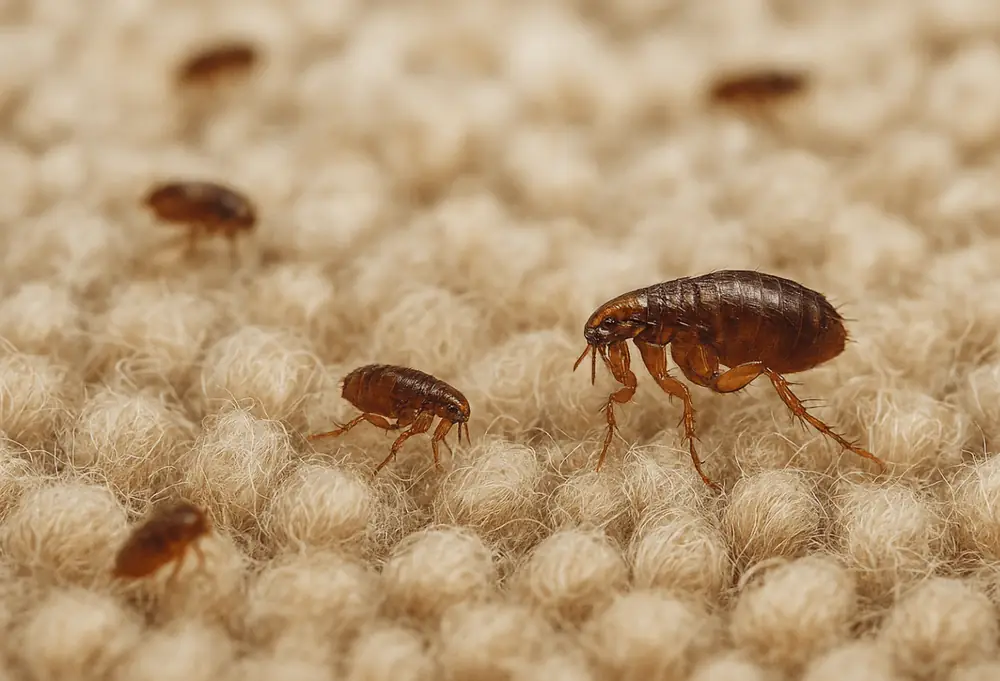
Flea control in Northcliff only works when the pets, the house and the garden are treated together. Adult fleas on your dog are a small part of the problem; eggs, larvae and pupae live in carpets, bedding and shady soil. We treat indoors and outdoors on the same day, while you treat the animals, and follow up if needed.
Why fleas thrive around the ridge
Northcliff is dog country. Big gardens, family homes and plenty of walking: the ridge paths, the open areas around Emmarentia Dam and the Botanical Garden nearby, and the green spaces between suburbs. Dogs pick up fleas wherever other animals have rested, and bring them home.
The gardens finish the job. Flea larvae need shade, humidity and loose organic material, which is exactly what you find under decks, beneath dense shrubs, in sandy patches where dogs lie, and along the shaded lower terraces of a hillside stand. Summer heat and rain speed up the life cycle, so infestations peak between October and March. Cats, stray animals and wildlife moving through gardens add to the pressure.
The flea life cycle, in plain terms
An adult flea lives on the animal and lays eggs, which fall off wherever the animal goes: its bed, the couch, the carpet, the patch of sand under the deck. The eggs hatch into larvae that hide in carpet fibres and soil and feed on debris. The larvae spin cocoons and become pupae, and that's the stage that causes the trouble. Pupae are protected by their cocoon and can wait for weeks until vibration, warmth or carbon dioxide tells them a host is nearby. Then they hatch all at once.
That's why people come home from holiday to a house that seems to be jumping: the pupae have been waiting, and the first person through the door sets them off.
Signs it's fleas
- Small itchy bites around the ankles and lower legs
- Pets scratching, biting at their back and tail, or losing fur
- Black specks in the pet's coat or bedding that turn reddish on damp paper (flea dirt)
- Tiny dark insects jumping from carpets or rugs, easiest to spot on white socks
How we treat fleas
- Ask about the animals. We need your pets on a vet-recommended flea treatment the same week. Without that, fleas on the animal restart the cycle.
- Indoor treatment. We treat carpets, rugs, under furniture, pet beds and resting spots, and the cracks along skirtings, with odourless, non-staining residual products.
- Outdoor treatment. We treat the shaded areas where pets lie and where larvae develop: under decks, beside kennels, under shrubs, in the sandy patches and along the lower terraces.
- Follow-up. Heavy infestations may need a second treatment to catch pupae that hatch later.
You can stay home during treatment. Keep children and pets off treated surfaces until they're dry, then let them back in.
After treatment: vacuum, don't wash
Vacuuming is the best thing you can do in the days after we've treated. The vibration triggers pupae to hatch, bringing new fleas into contact with the treatment, and the suction removes eggs and larvae. Empty the vacuum outside each time. Don't steam-clean or wash the carpets for at least two weeks, or you'll remove the treatment before it has done its work.
The mistake: treating only the dog
A spot-on or tablet kills fleas on the animal, but most of the flea population is in the environment. People treat the dog, see a brief improvement, then get bitten again a fortnight later and assume the product has stopped working. The real answer is treating everything together, and the same applies to ticks in Northcliff gardens, which often come home with the same dogs.
A Northcliff tip
On terraced gardens, find the spot where your dog likes to lie in the shade, often on a lower terrace or under a deck, and rake it over regularly in summer. Disturbing the soil and letting sunlight in makes it far less comfortable for flea larvae.
What flea control costs, and why
The price depends on the size of the house, how many rooms need treating, how big the garden area is, how many pets there are and whether a second treatment is needed. A small flat with one cat is a light job; a large home on a sloping stand with three dogs and lots of shaded garden takes more. Our price list for Johannesburg pest control shows the starting price. If you've caught it early and only the pet is affected, a vet-recommended treatment alone may be enough.
For more on fleas across the city, see flea control in Johannesburg. To the west, we handle flea problems in Roodepoort homes, and dog walkers near the dam may find our pest control in Emmarentia page useful. Every service we offer locally is on our Northcliff overview page.
Our registrations are with SAPCA and with the Department of Agriculture under Act 36. Jason van Heerden, our owner and operator, has 25 years in the business, we offer service within 24 hours, and flea treatments carry a 3-month guarantee. Ring 084 200 2700, or WhatsApp us a photo of the bites and your pet's bedding.
Questions we get asked
Why am I still getting bitten after the treatment?
Pupae protected in cocoons hatch over the following days and weeks. Keep vacuuming: new fleas contact the treatment and die. Activity should fall away within about two weeks.
How much does flea control cost?
It depends on the size of the house and garden, the number of pets and whether a second treatment is needed. Our price guide shows the starting price.
Is flea treatment safe for my pets?
Yes. Keep pets off treated surfaces until they're dry, and don't let them back in until we say so. Pets should also be on their own vet-recommended treatment.
Do we need to leave the house?
No. You can stay home. Children and pets should stay out of treated areas until everything has dried.
Should I wash the carpets before you come?
Vacuum thoroughly instead, and clear the floors of toys and clutter. Don't wash or steam-clean for about two weeks after treatment.
Can I get fleas without having pets?
Yes. Previous owners' pets, stray cats under the house, or wildlife in the garden can all leave fleas behind, and pupae can wait for weeks before hatching.