
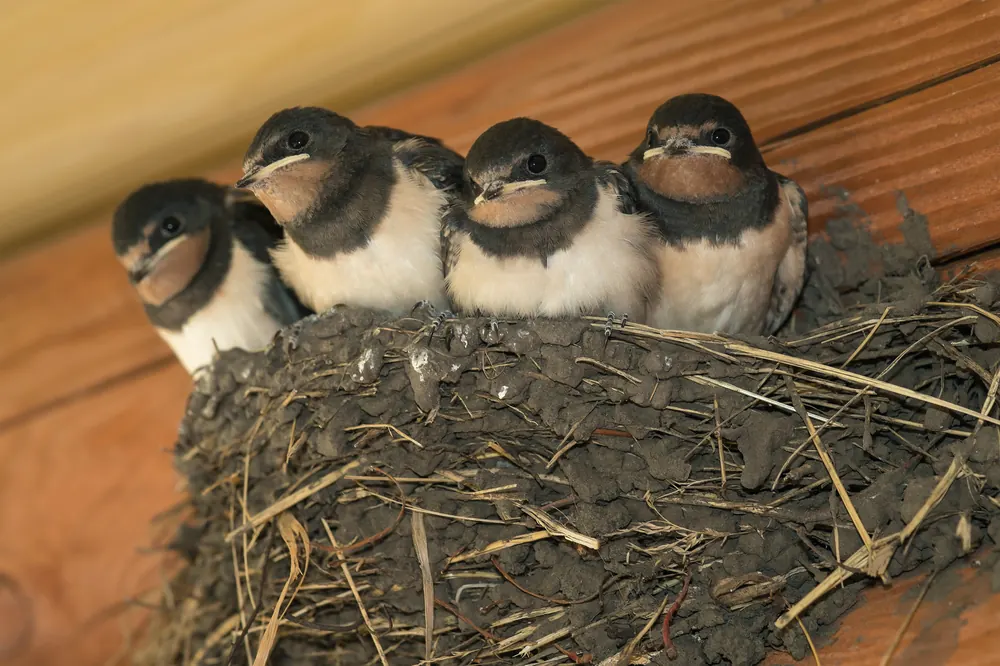
Bird mite control in Bryanston means treating the source, the bird nest, as well as the rooms the mites have reached. We locate nests in roofs, eaves, gutters and air-conditioners, treat and remove them, treat the affected rooms and roof space, and advise on bird proofing so the birds don't simply nest in the same spot again.
What bird mites are
Bird mites are tiny parasites, barely visible to the naked eye, that live in birds' nests and feed on the birds' blood. They breed rapidly in a nest full of chicks. The trouble starts when the chicks fledge or the nest is abandoned: hungry mites in large numbers leave the nest looking for a new host and come through ceilings, light fittings, air vents and window frames into the house.
They can't live on people for long, but they do bite, and the itching can be intense, particularly at night. Many people think they have bed bugs, scabies or an allergy before the real cause is found.
Why Bryanston homes get bird mites
Bryanston's big gardens are full of birds, and the houses offer them plenty of nesting places. Pigeons, Indian mynas and sparrows nest under roof tiles, in gaps at the eaves, in gutters and downpipes, on top of air-conditioner units, inside wall-mounted lights and in the gap where a patio roof meets the house. Mature trees overhanging the roof make it easier still.
Nesting peaks in spring and summer, so bird mite calls rise from late spring onwards, typically a few weeks after a nest near a bedroom or study goes quiet.
Bird mites or bed bugs?
The clues are different. Bed bugs are visible insects the size of an apple seed that hide in mattress seams and leave dark spots on the bed. Bird mites are pinhead-sized, pale or reddish specks that move quickly, often seen on walls, windowsills, ceilings and near light fittings, especially close to the side of the house where the nest is. If the bites started soon after birds stopped visiting a nest near that room, mites are very likely. If you are not sure, our bed bug control in Bryanston page explains the other possibility, and a photo on WhatsApp helps us tell you which you have.
How we treat bird mites
- Find the nest. We inspect the roof, eaves, gutters, air-conditioner units and outside lights near the affected rooms, and check the roof space where accessible.
- Treat and remove the nest. The nest is treated to kill the mites, then removed and bagged. The surrounding area is treated as well.
- Treat the rooms. Affected rooms, windowsills, skirting boards and light fittings are treated with an odourless, non-staining residual product. The roof space near the nest is treated too.
- Bird proofing. We advise on, and can install, bird proofing such as spikes, netting and sealing gaps, so the birds can't return to the same spot.
You don't need to leave home. Keep children and pets out of treated rooms until surfaces are dry, and wash bedding on a hot cycle.
Signs to look out for
- Itchy bites, often on the arms, neck and upper body, appearing overnight
- A crawling, prickling feeling on the skin in bed or at a desk
- Tiny moving specks on white walls, windowsills, bedside lamps or a computer screen
- Bites concentrated in one room, usually the one nearest a nest
- Birds that were nesting in the roof or gutter recently stopped coming
What people commonly get wrong
Removing the nest without treating it. Pulling an untreated nest out of the gutter releases the mites all at once, often straight into the roof space. The second mistake is treating the bedroom but leaving the nest; the mites keep coming until the source is gone.
A Bryanston tip
Each spring, look up at the eaves and gutters on the bedroom side of the house and watch where birds fly in and out. A pigeon or myna carrying twigs into a gap under the roof tiles is easy to stop at that stage with a simple seal, and it prevents a bird mite problem a couple of months later.
What bird mite control costs, and why
The cost depends on how many nests there are and how hard they are to reach, how many rooms are affected, whether the roof space needs treatment and how much bird proofing you want done. A single nest in a low gutter with one affected bedroom is a straightforward job. Several nests under a double-storey roofline, with proofing across a long eave, takes more time and materials. Each page shows a guide "from" price, and our pest control prices for Johannesburg page lists the rest. Bird mites are one pest where home treatments rarely work, because the nest is usually out of reach.
Bird mites beyond Bryanston
We also treat bird mites in Sandton homes and offices, houses in Petervale, and properties across the city through bird mite control in Johannesburg. Our pest control page for Bryanston covers the other pests we deal with here.
Owner Jason van Heerden has spent 25 years in pest control, and Combat Pest Control is SAPCA registered and registered with the Department of Agriculture. We offer service within 24 hours, and bird mite treatments carry a 3-month guarantee. Call 084 200 2700, or WhatsApp us a photo of the specks or the nest.
Questions we get asked
How much does bird mite treatment cost?
It depends on the number of nests, how hard they are to reach, how many rooms are affected and whether you want bird proofing. We quote after the inspection.
Can bird mites live on people?
No. They bite people but can't complete their life cycle on us. Once the nest is removed and the house treated, they die off.
How do I know it's bird mites and not bed bugs?
Bird mites are pinhead-sized and often seen on walls, windowsills and near lights close to a bird nest. Bed bugs are larger, hide in mattress seams and leave dark spots on bedding.
Do I need to leave the house?
No. Keep children and pets out of treated rooms until the surfaces are dry, and wash bedding on a hot cycle.
How quickly will the bites stop?
Usually within a few days of the nest being removed and the rooms treated. A few mites already in the house may take a little longer to die off.
Will the birds come back?
They often try to use the same nesting spot. Bird proofing, such as sealing the gap, spikes or netting, stops them returning.