
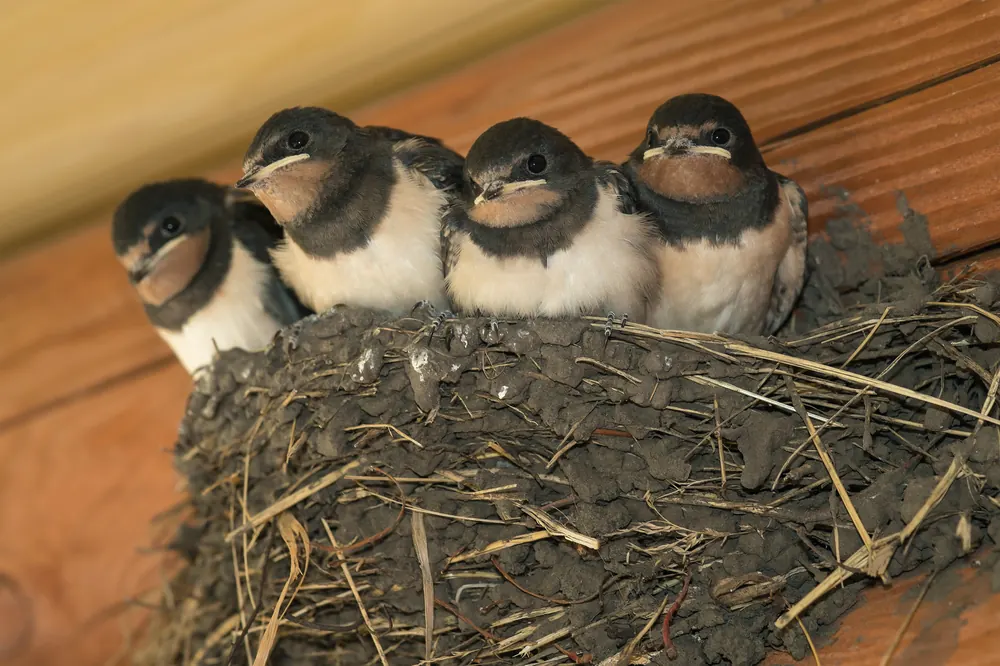
Bird mite control in Johannesburg South means removing the old bird nest that the mites came from, treating the roof space and the rooms they've reached, and proofing the gaps so birds don't nest there again. Mites usually appear after pigeons, mynas or sparrows finish nesting in a roof, gutter or air vent.
How bird mites end up in your bedroom
Bird mites live in birds' nests and feed on the birds and their chicks. While the nest is busy, you'd never know they're there. When the chicks fledge, or the nest is abandoned, the mites lose their food supply. They spread out looking for a new host, and in a house that often means coming down through ceiling boards, light fittings and cornices into the room below. They try to feed on people, and while they can't survive long on humans, their bites can be very irritating.
Southern homes have a lot of nesting sites. Older houses and semis in Kenilworth, Rosettenville, Turffontein and their neighbours often have open eaves, gaps under roof sheeting, broken ventilation grilles and tired gutters, all perfect spots for pigeons, mynas and sparrows. Light industrial buildings and warehouses with open roof structures are popular with pigeons too. Nesting peaks in spring and summer, so most of our bird mite calls come in late spring through summer.
Signs it's bird mites
- Tiny moving specks, smaller than a pinhead, on walls, ceilings, bedding or window sills, often near a light or a window
- Itchy bites at night, often in places where clothing is tight
- Birds nesting in the roof, gutters or vents recently, especially if they've just left
- Mites concentrated in one room, below where the nest was
Bird mite bites are often mistaken for bed bugs, fleas or allergies. The tell-tale is the link to a nest nearby and the tiny, fast-moving specks on walls near the ceiling. Bed bugs are bigger and stay in the bed; for those, see bed bug control in Johannesburg South.
How we deal with bird mites
- Find the nest. We look in the roof space, gutters, eaves, vents and around air conditioners for the nest the mites came from.
- Remove the nest. We remove the old nesting material carefully, because it's where the remaining mites are concentrated.
- Treat the roof and the rooms. We treat the nest site and the surrounding roof space, then the affected rooms below: cornices, light fittings, skirting boards, window frames and around the bed.
- Proof the entry points. To stop the problem repeating, we advise on or fit bird proofing: sealing gaps under roof sheeting, fitting mesh over vents and using spikes or netting where birds roost.
Nobody has to leave home while we work. Once the treated rooms have dried, children and pets can go back in.
The mistake that drags it out
Treating the bedroom over and over without ever finding the nest. As long as the old nest is in the roof, mites keep coming down. The other mistake is removing a nest while the birds are still using it and not treating the area, which sends all the mites into the house at once. The nest, the roof and the rooms need to be dealt with together.
A tip for older southern roofs
After spring, look up at your eaves, gutters and roof vents for signs of birds going in and out, or twigs and grass sticking out of gaps. Closing those gaps in late summer, once the birds have finished nesting, is the cheapest way to make sure next year's birds go somewhere else. Our bird proofing services explain the options in more detail.
Who gets bird mites
Anyone with birds nesting on the building, but some situations come up again and again in the south: a double-storey house with a gap where the roof meets the wall, a semi with an open eave shared with next door, a flat below a pigeon-filled roof, or a home with an air conditioner unit that pigeons nest behind. People sleeping in a room directly under the old nest usually feel it first.
Warehouses and commercial buildings
Pigeons roosting and nesting in warehouse roofs, loading bays and signage bring bird mites, droppings and contamination. For commercial properties we combine nest removal and mite treatment with bird proofing such as netting and spikes, and can add regular checks to a scheduled service.
What bird mite treatment costs, and why
The price depends on how many nests need removing, how easy the roof space is to access, how many rooms need treating and how much bird proofing is required. A single nest in a house roof with one affected room is a fairly contained job. Several nests across a large roof, or a warehouse, takes more. Guide prices are on our pest control prices page, and we'll quote clearly after looking.
For local information, see pest control in Kenilworth and our Johannesburg South hub. We also handle bird mites in Rosebank's older homes and bird mite control across Johannesburg.
We're SAPCA registered and Department of Agriculture registered, with 25 years of experience. Combat Pest Control offers service within 24 hours and a 3-month guarantee on treatments. Call 084 200 2700, or WhatsApp us a photo of the specks or the nest.
Questions we get asked
How much does bird mite treatment cost?
It depends on the number of nests, access to the roof, the number of rooms affected and whether bird proofing is needed. A single nest in a house is a fairly contained job.
Can bird mites live on people?
No. They bite people but can't complete their life cycle on humans. Once the nest is removed and the area treated, they die off.
How do I know it's bird mites and not bed bugs?
Bird mites are tiny, fast-moving specks on walls and ceilings, usually after birds nested nearby. Bed bugs are bigger, oval and stay close to the bed.
Do I need to move out during treatment?
No. The family can stay, but children and pets should keep out of the treated rooms until everything has dried.
Can you stop the birds coming back?
Yes. We seal gaps, fit mesh over vents and use spikes or netting where birds roost, so they nest somewhere else next season.
Should I remove the nest myself?
It's best not to. Removing a nest without treating it can release all the mites into the house at once.