
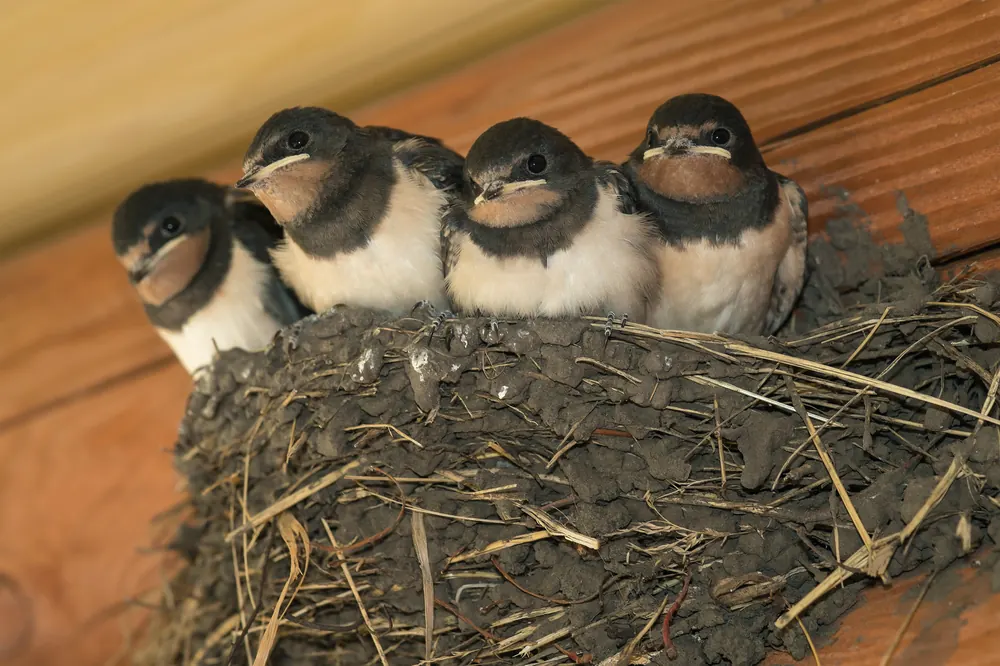
Bird mite control in Johannesburg means dealing with the nest as well as the mites. These tiny parasites live on pigeons, mynas and sparrows nesting in roofs, gutters and air-conditioner housings, and they wander into the house once the chicks leave. We remove and treat the nest, treat the rooms they've reached, and close the gap the birds used.
What bird mites are, and why they suddenly appear
Bird mites are barely visible: smaller than a pinhead, pale or greyish until they've fed, then reddish. They live in nests and feed on the blood of nesting birds and chicks. While the nest is busy, you never know they're there. The trouble starts when the young birds fledge or a nest is abandoned. Thousands of hungry mites leave the empty nest looking for a new host, follow warmth and carbon dioxide through cracks in the ceiling, downlights, cornices and window frames, and end up on people.
They can bite, and the bites itch, but they can't complete their life cycle on humans. Without birds, they die out within a few weeks. That's cold comfort when they're crawling over your pillow, which is why removing the source and treating the house matters.
How to tell it's bird mites
- Tiny moving specks on white surfaces: basins, baths, bedside tables, window sills and walls near the ceiling
- Itchy, red bites, mostly at night, often on the arms, neck and torso
- The problem concentrated in one or two rooms, usually below or beside a roof area where birds have been nesting
- Birds recently seen flying in and out of a gap under the roof, a gutter, a solar panel or an aircon unit, and then stopping
- No sign of bed bugs, such as dark spots on mattress seams or shed skins, despite the bites
Bird mite bites are often mistaken for bed bugs or fleas, and the treatment is completely different. If you can, catch a few specks on clear tape and WhatsApp us a close-up photo.
Where the nests are in Johannesburg homes
Feral pigeons and Indian mynas are the most common culprits in the city, with sparrows not far behind. They favour gaps under roof tiles, open fascias and barge boards, the space behind gutters, the tops of aircon units on outside walls, and more and more often the sheltered gap under rooftop solar panels. Office blocks and shopping centres get nests on ledges, in signage and in ceiling voids above canopies. A lot of these sites are in older homes in the inner suburbs and in complexes with clay-tile roofs, but any building with an open gap at roof level can host one.
How we get rid of bird mites
- Find the nest. We inspect the roof space, eaves, gutters and outside fittings near the affected rooms. This is the most important step.
- Treat and remove the nest. The nest is treated first so the mites don't scatter, then bagged and removed, and the surrounding area in the roof is treated.
- Treat inside. We apply a targeted, odourless residual treatment along cornices, skirting boards, window frames, light fittings and bed frames in the affected rooms.
- Close the gap. Unless the opening the birds used is sealed or proofed, a new pair will nest there next season and the cycle repeats.
You don't need to move out for the treatment. Keep children and pets out of treated rooms until surfaces are dry, and wash bedding on a hot cycle the same day.
The mistake that makes it worse
Pulling an active nest out of the gutter or roof without treating it first. It feels like the obvious fix, but it releases the whole mite population at once, right next to the house. The other mistake is treating only the bedroom: the mites keep coming from the nest site, and people conclude the treatment didn't work.
A Johannesburg tip
If pigeons or mynas are nesting under your solar panels or roof tiles, deal with it in winter, after the breeding season and before the spring nesting begins. Proofing an empty site is quicker, cheaper and avoids the mite outbreak that comes when chicks leave an active nest.
What it costs and why
The main cost drivers are how easy the nest is to reach, how many nests there are, how many rooms need treating inside, and whether you want the entry point proofed at the same visit. A single nest above an accessible ceiling with one affected bedroom is a straightforward job. Several nests under solar panels on a double-storey house, or a commercial building with birds on every ledge, takes more time and equipment. See the price guide for pest treatments for where bird mite work starts.
Bird mites in your area
Older roofs and tall trees in the inner north keep us busy with bird mite treatments in Rosebank, while office blocks and newer homes with rooftop panels make up much of our bird mite control in Sandton, and established family homes on the West Rand are covered by our Roodepoort service. Stopping the birds coming back is covered on our bird proofing page, and the bird mite guide explains the mite's life cycle.
Combat Pest Control is owned and run by Jason van Heerden. We're SAPCA registered, registered with the Department of Agriculture, and have 25 years of experience, with service within 24 hours and a 3-month guarantee on the treatment. If something is biting you at night, call 084 200 2700 or WhatsApp us a photo of the specks.
Questions we get asked
How much does bird mite treatment cost?
It depends on how many nests there are, how hard they are to reach and how many rooms need treatment. A single reachable nest with one affected room is a modest job. The price guide shows the starting price.
Can bird mites live on people?
No. They bite people but can't breed on human blood, so without birds they die out within a few weeks. Removing the nest and treating the house shortens that a lot.
How do I know it's bird mites and not bed bugs?
Bird mites are tiny moving specks seen on walls, basins and sills, usually near a roof nest. Bed bugs are larger, flat and brown, and leave dark spots on mattress seams. A tape sample photo helps us tell.
Do I need to throw away my mattress?
No. Bird mites don't settle in mattresses the way bed bugs do. Wash bedding hot, vacuum the bed and the room, and we treat the bed frame and surrounding surfaces.
Is the treatment safe with kids and pets?
Yes. Keep children and pets out of treated rooms until surfaces are dry, which is usually a few hours. Cage birds should be moved to another room while we work.
How quickly will the bites stop?
Most people notice a big drop within a few days of the nest being removed and the house treated. Stragglers can take a little longer to die off.
What should I do before you arrive?
Don't pull the nest out yourself. Wash bedding, vacuum the affected rooms and note where you've seen the specks, so we can trace them back to the nest.