
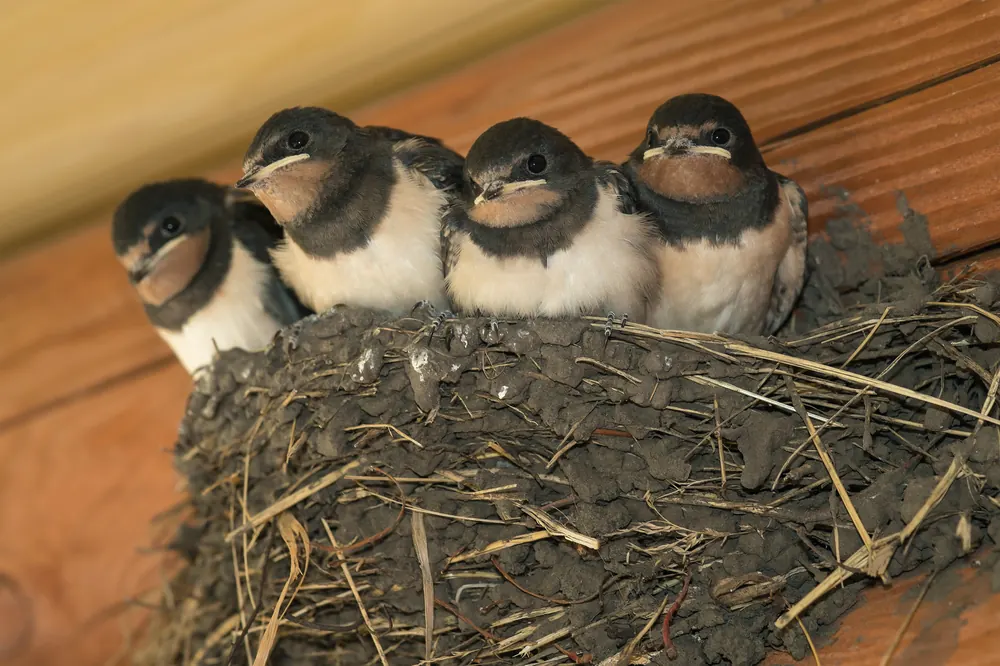
Bird mite control in Sandton means removing the source, which is almost always an active or recently abandoned bird nest, and treating the areas where the mites have spread. We find and remove the nest, treat the roof space, eaves and the rooms affected, and then proof the gaps so the birds can't nest there again.
What bird mites are
Bird mites are tiny, barely visible mites, pale until they've fed and darker afterwards, that live in birds' nests and feed on the birds' blood. They breed very quickly while there are nestlings to feed on. When the chicks fledge or the nest is abandoned, the mites lose their hosts and wander in search of new ones, often through ceiling gaps, light fittings and air vents into the rooms below. They bite people, causing itchy red spots, but they can't live on humans and die off in a few weeks without birds.
Why bird mites are common in Sandton
Pigeons and Indian mynas are common across Sandton, and both happily nest on buildings. In homes, they nest under roof tiles, in gutters, behind fascia boards, on top of air-conditioning units and in the gaps where solar panels and geyser installations meet the roof. Where a roof has solar panels, the sheltered space underneath is a favourite nesting spot. In the CBD and office parks, pigeons nest on ledges, in signage, under balconies and in building services, and mites from those nests can enter offices through windows and ventilation.
Bird mite problems peak in spring and early summer, when nests are busy and the first broods leave.
Signs it's bird mites
- Tiny moving specks on bedding, walls, window sills or desks, especially near a window, vent or light fitting
- Itchy bites, often on the arms, neck and upper body, with no obvious cause
- Birds nesting in the roof, gutter or an air-conditioner nearby, or a nest that has just been abandoned
- Activity that's worse in one room, usually the one directly below the nest
In offices, the first sign is often a few people at desks beside the same window complaining of bites, with pigeons nesting on the ledge outside.
Bird mite bites are often confused with bed bugs or fleas. The difference is the nest: with bird mites, there's always a bird source close by.
How we treat bird mites
- Find the nest. We inspect the roof space, gutters, eaves, air conditioners, solar panels and window ledges to locate active or recently abandoned nests.
- Treat and remove the nest. The nest and surrounding area are treated, the nest removed and the area cleaned.
- Treat affected areas. The roof space around the nest and the affected rooms, such as skirting, window frames, light fittings and furniture joints, are treated with a residual product.
- Bird proofing. Gaps are sealed and spikes, netting or mesh fitted so birds can't return to the same spot. It's worth doing even once the mites are gone, because pigeons stay loyal to a good nesting site and come back next season.
There's no need to move out for a normal bird mite treatment. Keep children and pets off treated surfaces until they're dry, and wash bedding on a hot cycle.
What people get wrong
Removing the nest yourself without treating it. The mites scatter from the disturbed nest straight into the house, and the problem becomes worse overnight. The other common mistake is treating the bedroom for bed bugs again and again when the source is a pigeon nest in the gutter above the window.
A Sandton tip
Have mesh fitted around the edges of your solar panels when they're installed, or soon after. The gap underneath is warm, dry and sheltered, which is exactly what a nesting pigeon is looking for.
What bird mite control costs, and why
The price depends on how many nests there are and how easy they are to reach, whether we need to work in the roof space or on a high roof, how many rooms need treating, and how much bird proofing is required. A single nest in a reachable gutter is a straightforward job; nests under solar panels on a double-storey roof or on a building's ledges take longer and need proofing. This page shows a guide 'from' price, and our Johannesburg price guide has the details.
For a long-term solution, see our bird proofing services, which keep pigeons and mynas off roofs, ledges and solar panels. If the bites turn out not to be mites, our bed bug treatments in Sandton may be what's needed. All our local services are on the Sandton pest control page, and we also cover Kew and other suburbs nearby. Close by, we treat bird mites in Rosebank, and city-wide through bird mite control in Johannesburg.
Owner and operator Jason van Heerden has 25 years of experience in pest control. We're SAPCA registered and registered with the Department of Agriculture, offer service within 24 hours, and bird mite treatments carry a 3-month guarantee. Call 084 200 2700, or WhatsApp us a photo of the specks and the nest if you can see it.
Questions we get asked
How much does bird mite treatment cost?
It depends on the number of nests, how hard they are to reach, how many rooms need treating and how much bird proofing is needed. A single reachable nest is straightforward; high roofs and solar panels take longer.
Can bird mites live on people?
No. They bite people but can't survive or breed without birds. Once the nest is removed and the area treated, the mites die off.
Are bird mites the same as bed bugs?
No. Bed bugs live in beds and furniture; bird mites come from bird nests nearby. The bites can look similar, so finding the source matters.
How long does it take to get rid of bird mites?
Most homes see a clear improvement within a few days of the nest being removed and the areas treated. Mites already in the house die off within a few weeks.
Do I need to leave the house?
No. Keep children and pets off treated surfaces until they're dry, and wash bedding on a hot cycle.
How do I stop birds nesting again?
Bird proofing: sealing gaps, fitting mesh around solar panels and installing spikes or netting on ledges. Without it, birds often return to the same spot.