
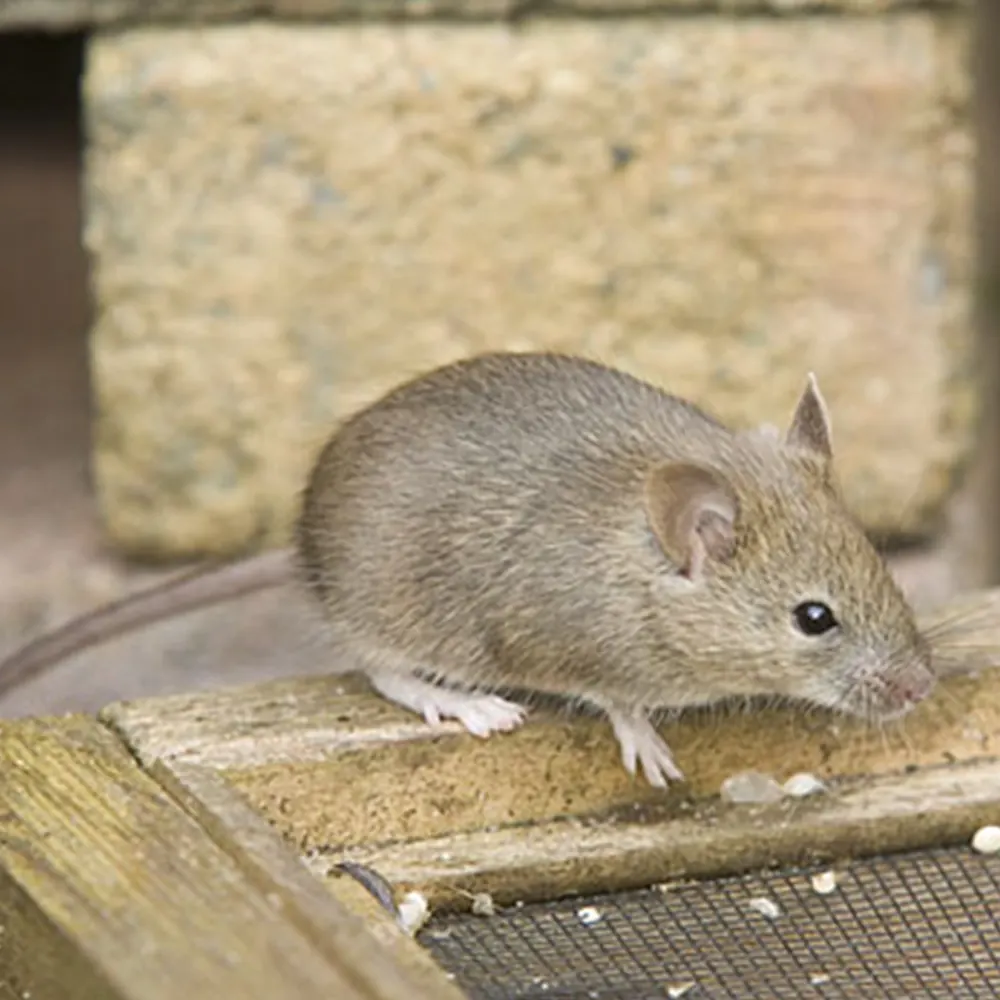
Mouse control in Sandton works best when it combines trapping indoors, secure baiting outside and sealing the small gaps mice squeeze through. We find where they're nesting, which is usually behind appliances, under kitchen units or in the garage, and clear them without leaving loose poison where children or pets can reach it.
Why mice turn up in Sandton homes
House mice aren't fussy. They need warmth, a little food and a gap about the width of a pencil, and Sandton supplies all three. The area's many townhouse complexes, especially around Sunninghill, Paulshof and Rivonia, have units built in rows with shared walls, shared roof spaces and service ducts running between them. A mouse family in one kitchen can reach three more without going outside. Freestanding houses get mice through garages and storerooms, where bags of dog food, bird seed and boxes give them food and nesting material in one place.
The timing is predictable. From about May, as Highveld nights drop towards freezing, mice move in from gardens, hedges and the green belts along the spruits. Most calls we get about mice in Sandton come between late autumn and early spring, although office kitchens and restaurants see them all year.
Where we find them
- Behind and under the fridge, dishwasher and stove, where the motors keep things warm
- In the void under kitchen units, reached through gaps around the plumbing
- Around the geyser and in the roof space directly above the kitchen
- In garages, in boxes, old furniture and bags of pet food
- In office pantries, in cable trays and inside the ceiling voids above them
- In car engine bays, where they nest and chew wiring
Signs that it's mice
Droppings are the giveaway: small, dark and shaped like grains of rice, scattered in drawers, along shelves and behind appliances. You may also notice shredded paper or fabric, small chewed holes in food packaging, a musty smell in cupboards, and light scratching in walls or ceilings at night. Pets often know first; a cat staring at the bottom of the kitchen units is usually right.
How we clear mice
We start with a walk-through of the kitchen, garage, roof space and outside walls to find the nest areas and the entry points. Inside the house we rely on traps placed along the routes mice actually use, which is mostly tight against walls and behind appliances. Outside, and in garages and storerooms, we use lockable bait stations that pets and children can't open. Then comes the part that makes it last: we show you exactly where to seal. Gaps around pipes under the sink, the hole where the gas or geyser pipe goes through the wall, worn garage door seals and broken air bricks are the usual culprits. Steel wool packed into a hole and sealed over works far better than foam alone, which mice chew straight through.
In complexes we suggest the body corporate treats the block together. Clearing one unit while the neighbours still have mice only buys a few weeks.
What most people get wrong
Ultrasonic plug-in repellers are the one we hear about most. Mice get used to them quickly, and the sound doesn't travel behind cupboards, where mice live anyway. The other mistake is putting bait inside the kitchen. A poisoned mouse often dies under the units or inside a wall, and you're left with a smell that lasts for weeks. Trap inside, bait outside, and seal the gaps.
A tip for Sandton townhouses
Pull the stove and fridge out once a year and look at the wall behind them. In many complex units the plumbing and gas lines come through oversized holes that were never sealed after installation, and that single gap is the most common way mice get into the kitchen.
What mouse control costs, and why
A single house or townhouse with mice in the kitchen is a straightforward job: one visit to set traps and stations, advice on proofing, and a follow-up to check the activity has stopped. The price rises with the size of the property, the number of stations needed and whether we're also working in a roof space or treating a whole complex. This page shows a guide 'from' price, and the full price guide for Johannesburg explains how jobs compare. If you've seen a single mouse once, a pair of snap traps from the hardware store may solve it, and we'll tell you honestly.
Is it mice or rats?
Bigger, blunter droppings, heavier footsteps in the roof and larger gnaw holes point to rats, which need a different approach. Our rat control for Sandton properties page covers those. Mice and cockroaches also often share the same warm kitchen spaces, so if you're seeing both, look at our cockroach treatments in Sandton too.
For the full local picture, visit our pest control services in Sandton. We also clear mice in Bryanston homes next door, and there's more on pest control in Sunninghill, where complexes make mice a regular call. City-wide, see mouse control in Johannesburg.
We're SAPCA registered and registered with the Department of Agriculture, Jason van Heerden has 25 years of pest control behind him, and we offer service within 24 hours. Mouse treatments carry a 3-month guarantee. Call 084 200 2700, or WhatsApp us a photo of the droppings and we'll confirm what you've got.
Questions we get asked
How much does it cost to get rid of mice?
For a typical house or townhouse it's a modest job: traps, a few outside stations, proofing advice and a follow-up. Larger properties, roof work and whole complexes cost more. We quote before we start.
How long until the mice are gone?
Most homes are clear within one to two weeks, provided the entry gaps are sealed. Without proofing, new mice simply replace the ones that were caught.
Is it safe to have mouse bait with a cat or dog?
Yes, when it's in lockable bait stations. The bait is inside a box a pet can't open, and inside the house we use traps rather than bait.
Can mice really fit through a tiny gap?
Yes. A house mouse can squeeze through a gap about the width of a pencil, which is why sealing around pipes and under doors matters so much.
Do ultrasonic repellers work?
Not for long. Mice get used to the sound, and it doesn't reach behind cupboards or into wall voids where they nest.
What should I do before you arrive?
Store open food in sealed containers, note where you've seen droppings, and clear access to the area under the sink, behind the fridge and to the roof hatch if you can.