
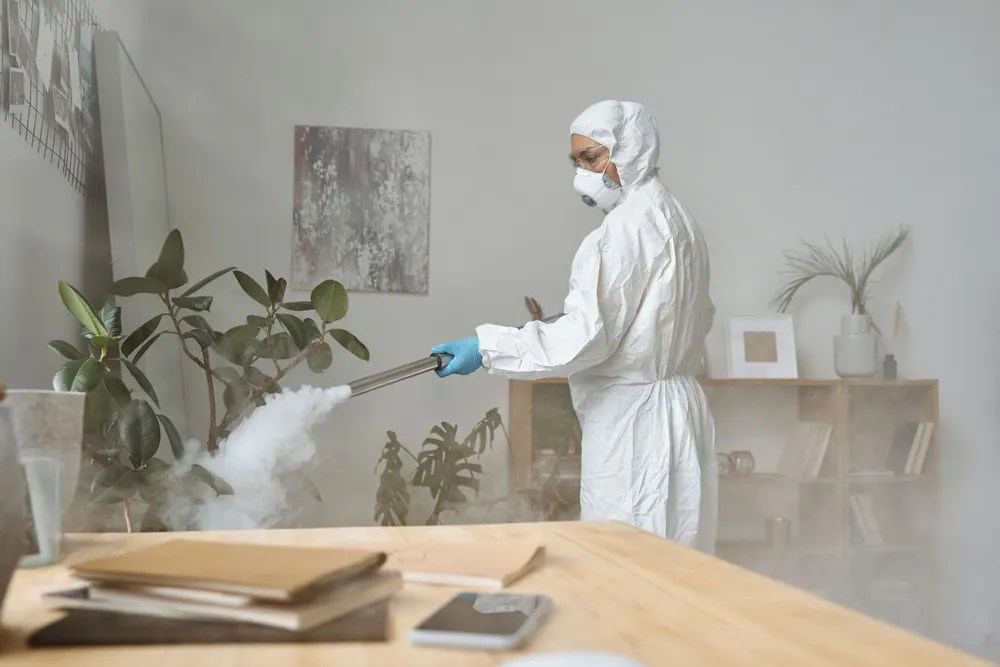
Pest control in Wynberg is industrial work: brown rats around yards and drains, German cockroaches in canteens and food production, flies at refuse points, pigeons in roof trusses and the occasional fumigation of stored goods. We set up monitoring programmes for factories, workshops, warehouses and food businesses, with records for every visit.
What Wynberg is like
Wynberg is an industrial and commercial area on the eastern side of Sandton, next to Alexandra. It's made up of factories, workshops, motor and panel shops, warehouses, wholesalers and food businesses, many in older buildings with steel roofs, open trusses and yards. Some sites run around the clock. Alexandra's dense housing is right next door, and the Jukskei River runs nearby.
Pests thrive in this kind of environment. Old buildings have gaps under roller doors, broken air bricks and holes around pipes. Yards collect pallets, scrap and rubbish. Food handling and canteens supply steady food. Rodents and cockroaches move between neighbouring sites, so one well-run premises can still suffer from the place next door.
Main pests on Wynberg sites
Brown rats
The heavy, burrowing rat. It lives in drains, under concrete slabs, beneath pallets and in yard rubble, and comes inside at ground level. It chews through packaging, cabling and even soft building materials. Lockable bait stations around the perimeter and along internal walls, traps in sensitive areas, and proofing of entry points are the core of control. Our rodent control across Johannesburg page explains how a monitoring programme is set up.
House mice
Smaller and able to squeeze through a gap the width of a pencil. They nest in stored goods, packaging and wall voids, and contaminate far more than they eat.
German and American cockroaches
German cockroaches live in canteens, kitchens and food production areas. American cockroaches, the large reddish-brown ones, come up from sewers and drains, especially in summer. Gel baits, drain treatments and residual treatments of cracks handle both.
Flies
House flies and blowflies breed in refuse, food waste and anything rotting in a yard. Clean bins and a regular waste collection matter most; fly control units and targeted treatments help near production and loading areas.
Pigeons
Open steel trusses in older warehouses make perfect roosts. Droppings land on stock, machinery and staff. Netting under the roof, spikes on ledges and sealing gaps keeps birds out; see our bird proofing in Johannesburg page.
Stored goods and fumigation
Warehouses holding grain, flour, dried foods, tobacco or timber products can be hit by stored-product insects. Wooden pallets and stored timber sometimes carry borer, and termites will feed on pallets and cardboard left on bare ground. When an infestation is deep inside stock, fumigation with registered fumigants may be needed. The sealed area must be vacated until it's been cleared. Our fumigation services in Johannesburg page covers the process.
Working next to a dense neighbourhood
Because Wynberg borders Alexandra, rodent pressure comes from both directions: from the industrial yards themselves and from the housing, informal trading and refuse along the edges. That isn't anyone's fault, it's simply how rats move. It does mean perimeter stations along the boundary are essential, and that sites on the edge of the area may need more frequent visits than those in the middle.
How a Wynberg programme works
We survey the site and map the bait stations, traps and treatment points. Visits follow a fixed schedule, and each visit is logged: stations checked, activity found, products used and recommendations. Those records are what food safety audits, retail clients and health inspectors ask for. If you need a formal entomological inspection or pest report, we can provide that too.
The mistake we see on industrial sites
Buying cheap bait and scattering it around the factory floor. It's a hazard to staff and dogs, there's no record of where it went, rats drag it into stock, and an auditor will mark it down. Lockable stations on a map, checked on a schedule, are safer and actually work.
A Wynberg tip
Keep a clear strip of about half a metre along the inside and outside of perimeter walls: no pallets, no scrap, no stock. Rats travel along walls, and a clear strip lets you and us see activity early and place stations where they'll be used.
What it costs, and why
The cost of an industrial programme depends on the size of the site, the number of stations and treatment points, how often we visit and the type of business. Food handling needs more than a motor workshop. Fumigation is priced on the volume being treated. You'll see a guide "from" price on this page, and our pest control price guide for Johannesburg lists starting points. Contracts are quoted after a site survey.
Wynberg is covered by our Sandton pest control team, and we have a separate page for pest control in Alexandra next door.
Combat Pest Control has 25 years of experience under owner Jason van Heerden, with SAPCA registration and Department of Agriculture registration under Act 36 of 1947. Callouts are handled within 24 hours, and general treatments are guaranteed for three months. Call 084 200 2700 to book a survey, or WhatsApp us a photo of the problem.
Questions we get asked
How much does a pest control contract for a factory cost?
It's quoted on the site size, the number of bait stations and treatment points, how often we visit and what the business does. We survey first and send a written proposal.
Can you provide records for food safety audits?
Yes. Every visit is logged with stations checked, activity, products used and recommendations, giving you a complete file for auditors and inspectors.
Will treatment disrupt production?
Usually not. Baiting and most treatments are done around working areas, and we schedule work in sensitive areas outside shifts.
When is fumigation needed?
When insects are deep inside stored goods or materials where sprays can't reach. The sealed area has to be empty until it's been cleared, so we plan it with you.
Why do the rats keep coming back?
Usually because of food and shelter on or next to the site, and gaps that haven't been closed. Proofing and housekeeping are as important as bait.
Do you handle pigeons in warehouse roofs?
Yes. We bird-proof with netting under the roof, spikes on ledges and sealing of gaps, which keeps them out long term.