
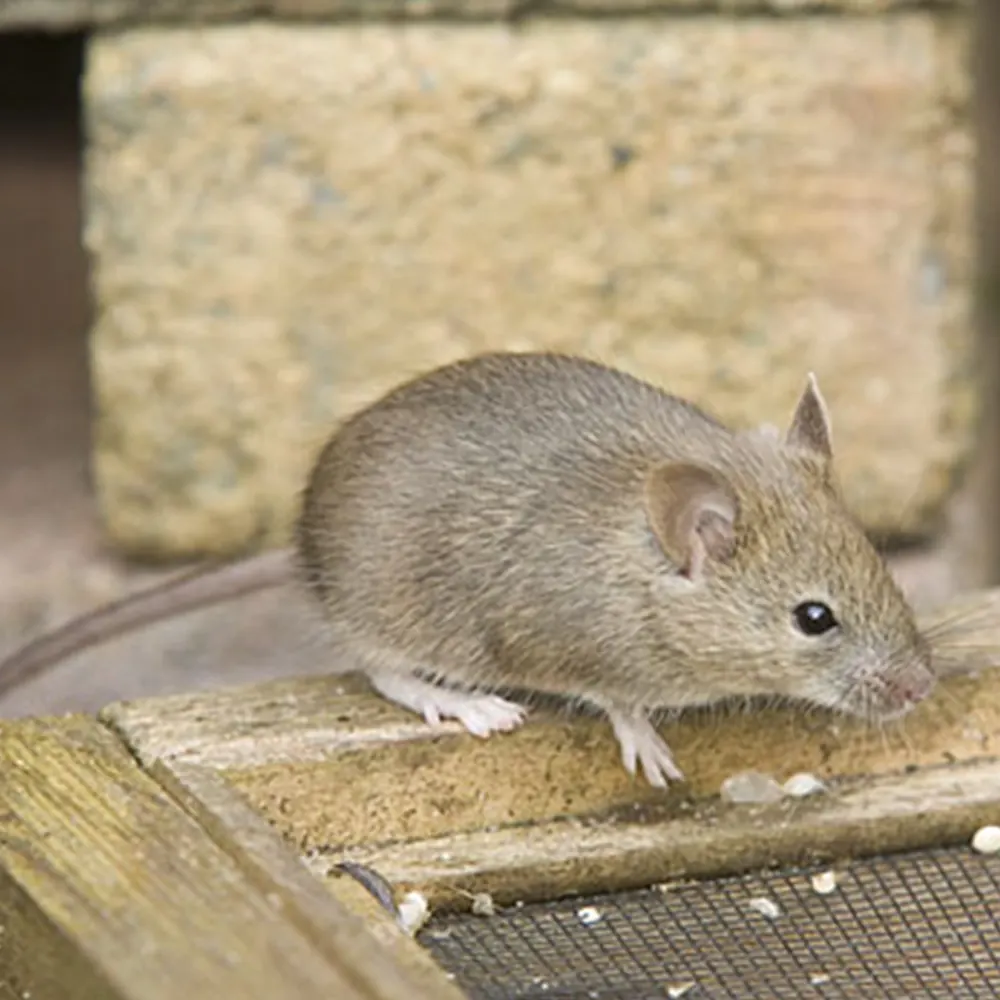
Mouse control in Fourways is mostly about two kinds of mice: house mice living in kitchens and wall cavities, and field mice that move in from the veld when winter comes. We find where they're getting in, trap them indoors, bait outside in lockable stations, and show you which gaps to close so they stay out.
Why mice are a Fourways problem
A lot of Fourways housing is townhouse complexes and cluster homes, often built right up against open veld. That combination suits mice perfectly. Field mice, including the multimammate mouse common in Gauteng grassland, live in the long grass outside the wall. When the veld dries out and the nights get cold from May, or when the grass is cut or burnt, they look for shelter. A garage door with a gap underneath, a weep hole, a gap where the geyser pipe goes through the wall: that's all a mouse needs.
House mice are a different story. They live with people, often for years, inside kitchen units, behind fridges and in the cavity behind built-in cupboards. In complexes they travel through roof spaces and service ducts, so a mouse problem in one unit is rarely only in one unit.
How to tell it's mice
- Droppings like dark grains of rice in drawers, on shelves and along skirting boards
- Small holes chewed in food packets, especially cereal, rice, pet food and bird seed
- Light scratching in walls or the ceiling at night, often near the kitchen
- Shredded paper, fabric or insulation where they're nesting
- A musty smell in cupboards that have been used for a while
- Chewed wiring in the car or the gate motor housing
Bigger droppings and heavier thumping in the roof usually mean rats rather than mice.
How we get rid of them
Inside: traps, not loose poison
Indoors we rely on traps placed along walls, behind appliances and inside cupboards where mice run. A mouse that eats poison inside the house can die under a kitchen unit or in a wall, and you'll smell it long before you can find it. Where it's safe and appropriate, we also use tracking powder in voids and cavities that we can't otherwise reach.
Outside: lockable stations
Along the boundary, the garage and the refuse area we place lockable, tamper-resistant bait stations. They stop the field mice before they get to the house, and children and pets can't get at the bait.
Sealing the gaps
This is the part that makes the result last. A mouse fits through a gap about the width of a pencil. We'll point out the gaps that matter: under garage and kitchen doors, around pipes behind the sink and washing machine, at the geyser, under the eaves and where the stove extractor exits.
What people get wrong about mice
The usual mistake is thinking it's "just one mouse". By the time you see one in daylight there are almost always more, because mice breed fast and are mostly active at night. The other mistake is setting traps in the middle of the floor. Mice run along walls and behind objects, so a trap a few centimetres from the skirting board catches far more than one in open space. And bait them with something they actually eat, like peanut butter or seed.
Complexes and body corporates
Because units share roofs and ducts, we often recommend treating a whole block or the whole complex. Trustees can arrange a site-wide rodent programme for the complex, with stations around the boundary and refuse area serviced on a schedule, while owners deal with their own kitchens. It's usually cheaper overall than each owner calling someone separately.
A tip for homes on the veld edge
Fit a brush strip or rubber seal to the bottom of the garage door, and don't store bird seed, dog pellets or chicken feed in bags on the garage floor. Garages are where most Fourways field mice set up first, and sealed containers plus a closed door remove the two things they're looking for.
What mouse control costs, and why
The main things that set the price are the size of the home, how widespread the mice are, how many traps and stations are needed, and whether we need to come back to check them. A single unit with a few mice in the kitchen is a small job. A whole complex is quoted per site. You can see typical starting points on our Johannesburg pest control price list. If you've caught one mouse and there are no more droppings after a week, you may not need us at all.
For the full Johannesburg picture, read about mouse control across Johannesburg. We also treat mice in Midrand complexes, homes in Maroeladal, and everything else nearby through our pest control in Fourways page.
Combat Pest Control is SAPCA registered, registered with the Department of Agriculture and has 25 years of experience. We offer service within 24 hours, and the treatment carries a 3-month guarantee. Call 084 200 2700, or WhatsApp us a photo of the droppings and we'll confirm whether it's mice or rats.
Questions we get asked
How much does it cost to get rid of mice?
For a single home it depends on the size of the house and how many traps and stations are needed. A unit with a few mice in the kitchen is a small job; whole complexes are quoted per site.
How quickly will the mice be gone?
Most homes see a clear drop within a week or two once traps are in and gaps are sealed. Homes right on the veld edge may need a follow-up in winter.
Is it safe to have mouse bait with a cat or dog in the house?
We don't put loose bait inside. Indoors we use traps, and outdoor bait sits in lockable stations that pets can't open.
Can mice get into a double-storey through the roof?
Yes. They climb rough walls, creepers and drainpipes and get in under the eaves, so we check the roof line as well as the ground floor.
Do mice carry disease?
They can contaminate food and surfaces with droppings and urine, which is why any shelf or packet they've reached should be cleaned or thrown away.
Why are the mice only in winter?
Field mice live in the veld in summer and move indoors when it gets cold and the grass dries out or is cut. House mice stay all year.
Should I clean up droppings before you come?
Leave them where they are so we can see the activity, but put open food away. Afterwards, wet the droppings with disinfectant before wiping them up rather than sweeping them dry.