
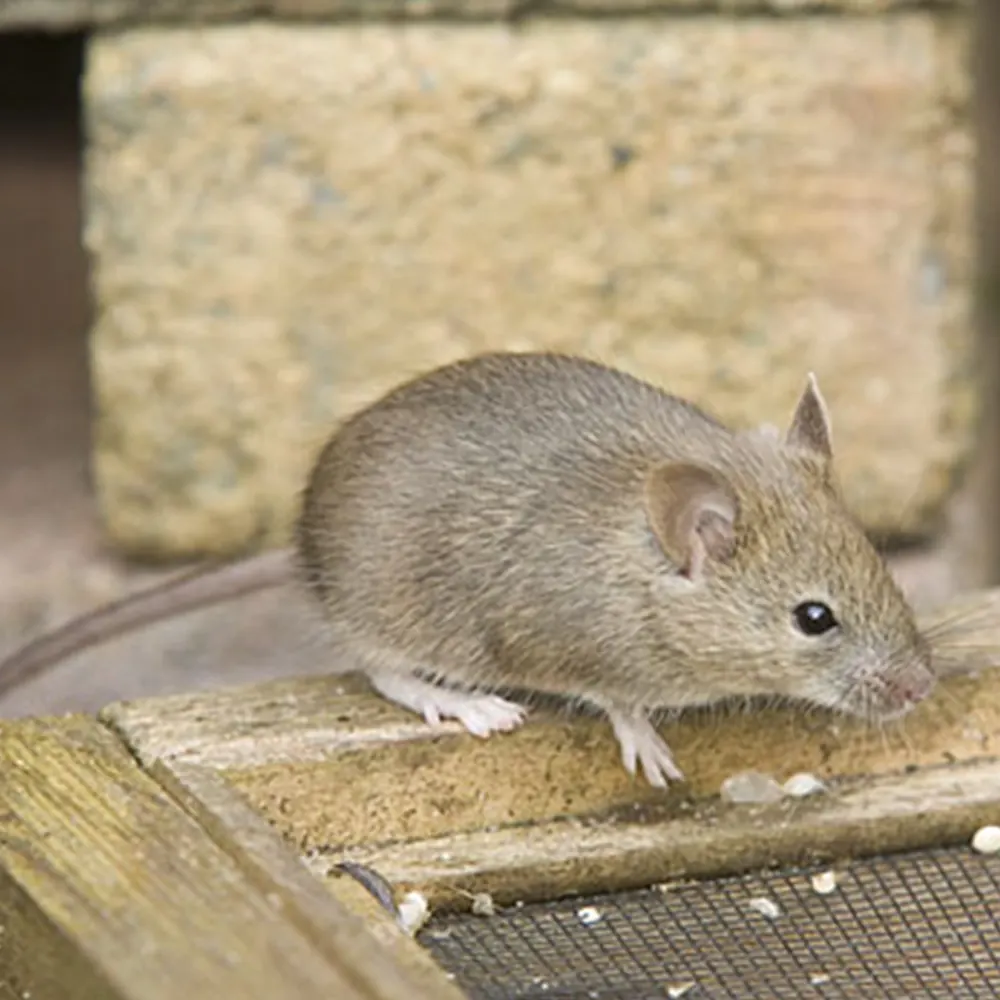
Mouse control in Bryanston is a close-quarters job. House mice nest within a few metres of their food, so we search kitchens, pantries and garages for the nest, then use traps, lockable bait stations and tracking powder in hidden voids. Then we find the small gaps they use, because a mouse fits through a hole the width of a pencil.
Where mice live in Bryanston homes
Unlike rats, mice don't need a tree to climb. They come in at ground level and stay low, and they choose warm, cluttered, undisturbed spaces. In Bryanston we find them most often in:
- Double garages used as storage, with boxes, camping gear and bags of dog food or bird seed on the floor
- Pantries and scullery cupboards, especially behind kickboards where the plinth hides a gap
- Behind and under appliances, where the fridge or dishwasher motor keeps things warm
- Cluster units, where mice move along shared walls and service ducts from one kitchen to the next
- Outbuildings and staff rooms at the back of larger stands
Winter is the busy season. Once the Highveld nights get cold, field and garden mice move into whatever warm building is closest, and a garage door that doesn't close flush to the floor is often all they need.
Signs it is mice and not rats
Mouse droppings are small and pointed, about the size of a grain of rice, and they are scattered rather than grouped. You will see them in drawers, along the back of counters and on pantry shelves. Packets get small neat holes rather than being torn open. There is often a musty smell in a cupboard that is used less. And the sounds are light scratching in walls and cupboards rather than heavy running overhead.
How we get rid of mice
We start with the nest search, pulling out kickboards and checking behind appliances where we can. Traps go along walls and inside cupboards, where mice run along edges. Lockable bait stations are used in garages, outbuildings and around the outside, never loose bait in the kitchen. Tracking powder in wall voids and under plinths shows which routes are active and helps us place traps precisely.
Mice are curious and usually find traps within a night or two, so results tend to come quickly. The longer-term fix is proofing. We show you each gap: the gap under the garage door, holes behind the stove where the gas or water pipe comes in, unsealed openings for air-conditioner lines, and the space under a kitchen plinth that opens into the wall.
Why a few mice become many
Mice breed quickly and start young, so the two you noticed in June can be a busy colony by spring. They also nibble a little from many sources rather than eating one meal, which spreads contamination through a pantry far faster than people expect. And they gnaw: dishwasher hoses, fridge wiring and the insulation on cables behind appliances are common casualties. Dealing with the first signs is quicker, cheaper and less messy than waiting.
Before we arrive
Move open food into sealed containers, clear the cupboard under the sink and the shelves where you have seen droppings, and leave the kickboards accessible. Don't clean away every dropping beforehand; a few left in place help us see where the mice are most active.
Food businesses and offices
Shops, restaurants and offices in and around Bryanston need a record as much as a result. We offer scheduled monitoring with numbered stations and a written service report on every visit, so you can show an inspector exactly what is in place.
What people get wrong with mice
Setting one trap in the middle of the kitchen floor. Mice rarely cross open floor; they run along edges and behind things. Several traps placed flush against the wall, in the cupboard or behind the appliance, catch far more. And clearing the mice without blocking the gap simply makes room for the next family.
A Bryanston tip
Check the brush or rubber strip at the bottom of your garage door. On wide double doors it wears unevenly and leaves a gap at one end, and in winter that gap is the main way mice get into many Bryanston homes. A new seal is a cheap fix.
What mouse control costs, and why
Mouse jobs are usually smaller than rat jobs, but the price still depends on how many rooms and buildings are involved, how many traps and stations are needed and whether follow-up visits are required. A pantry problem in a cluster unit is a short visit. A garage, kitchen and two outbuildings on a large stand take longer, and businesses are quoted for regular monitoring. The guide "from" price on this page, and the full list on our Johannesburg price guide, give you a starting point. If you have caught one mouse and seen nothing since, a few hardware-store traps may be all you need.
Where mice live, cockroaches are often close behind; our Bryanston cockroach treatments deal with those. Heavier footsteps in the roof point to rats instead, and our pest control page for Bryanston covers those along with the other local pests. We also clear mice from homes and estates in Fourways, from houses in Cramerview, and across the city through mouse control in Johannesburg.
Combat Pest Control has 25 years of experience, is SAPCA registered and is registered with the Department of Agriculture. Mouse treatments come with a 3-month guarantee, and we offer service within 24 hours. Call 084 200 2700, or WhatsApp us a photo of the droppings.
Questions we get asked
How much does it cost to get rid of mice?
It depends on how many rooms or buildings are affected and how many follow-up visits are needed. A pantry or kitchen in a cluster unit is usually a short job; a large property with mice in the garage and outbuildings takes more time.
How do mice get into the house?
Through very small gaps, about the width of a pencil: under garage doors, around pipes behind the stove, through air-conditioner line openings and under kitchen plinths.
Are mouse droppings dangerous?
They can carry bacteria, so don't sweep them dry. Spray the area with a disinfectant, wipe it up with gloves on, and throw away any food the mice have reached.
Do I need to empty my cupboards?
Clear the cupboards where you have seen droppings and move food into sealed containers. You don't need to empty the whole kitchen, but we do need access under the sink and behind the kickboards.
How quickly will the mice be gone?
Usually within a week or two. Mice are curious and find traps quickly. Activity that continues after that normally means a gap is still open somewhere.
Is the treatment safe for children?
Yes. Inside the home we mainly use traps placed out of reach, bait stays inside locked stations, and tracking powder goes into wall voids and under plinths, not on open surfaces.