
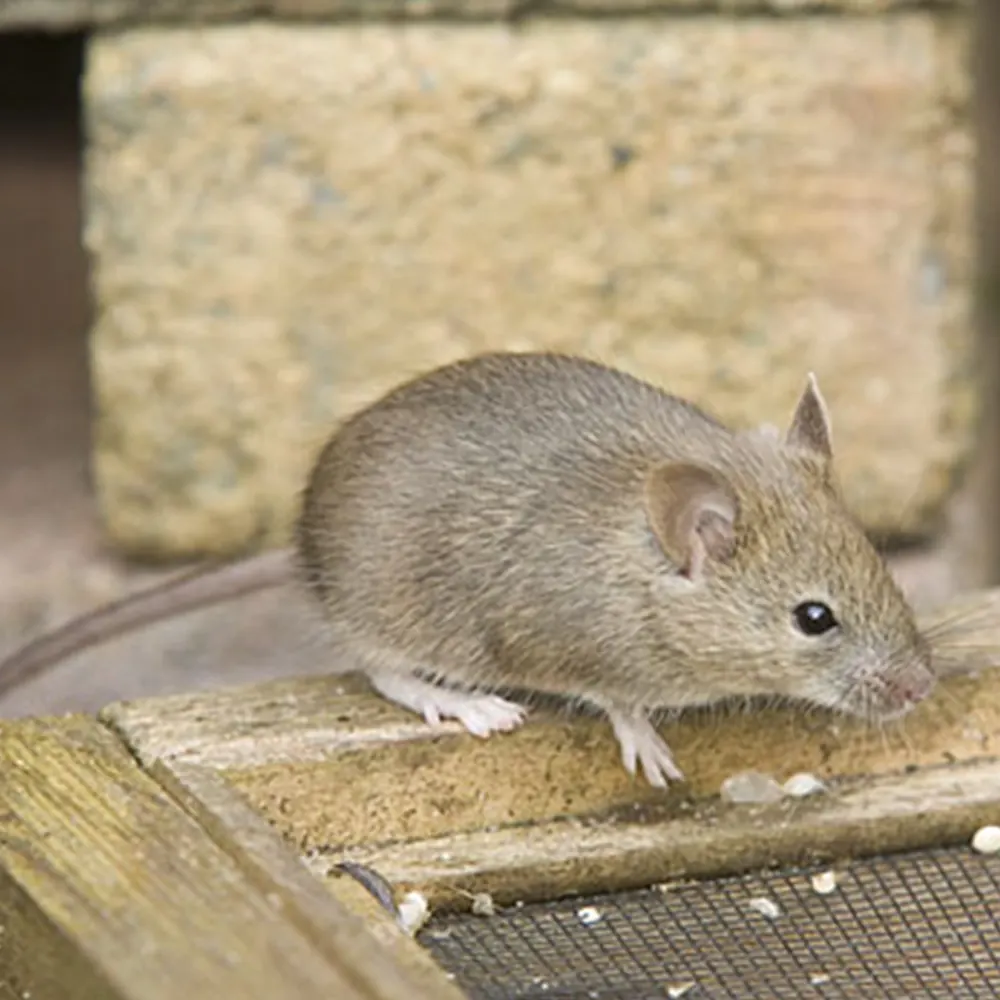
Mouse control in Roodepoort is mostly about the small things: gaps the width of a pencil, food left in reach and nesting spots behind appliances. We find how the mice are getting in, use traps indoors and lockable stations outside, and show you exactly which gaps to close so they don't return next winter.
Why mice are a winter problem here
Roodepoort sits high on the Highveld, and winter nights can drop close to freezing. That's when house mice that have spent summer in long grass, veld and garden beds look for warmth. Homes on the edge of open ground or near the ridges see them first, but townhouse complexes are just as affected, because one infested unit soon leads to the next through shared ceilings and service ducts.
Mice don't need much. A bag of dog pellets in the garage, a bread bin, a pantry with open cereal boxes, a few crumbs behind the toaster: any of these can feed a small family. They're also happy to live inside the home permanently, nesting in kitchen kick-plates, under the oven drawer, in the back of the geyser cupboard or in the insulation in the ceiling.
Mouse or rat?
This matters, because the treatment is different. Mouse droppings are tiny, about the size of a grain of rice, and you'll often find lots of them scattered in drawers and cupboards. Rat droppings are much bigger. Mice nibble small holes in packaging and leave little trails of shredded paper; rats gnaw bigger holes and tend to stay in the roof. If you think you've got rats rather than mice, our page on rat removal in Roodepoort is the better place to start.
Signs of mice in the house
- Small, dark droppings in drawers, on counters and along skirting boards
- Nibbled packets of rice, pasta, cereal or pet food
- Shredded paper, cloth or insulation tucked into a corner
- A faint musty smell in a cupboard
- Light scratching inside walls or behind kitchen units at night
- Pets staring at or pawing the base of a cupboard
How we get mice out
Mice stay close to home and travel only a few metres from the nest, so placement is everything. We look behind and under appliances, in cupboards, in the garage and the roof, and find the nest areas and the runs between them. Inside, we set traps along walls and in cupboards where mice travel. Outside, lockable, tamper-resistant bait stations along the walls stop new arrivals before they get in. In wall voids and ceilings, tracking powder can be used where it's safe to do so.
Then comes the part that makes it last: proofing. We'll show you the gaps around pipes under the sink, where the stove or dishwasher connects through the wall, under the garage door, around the geyser pipes and at the edge of the roof. Steel wool, mesh and filler close most of them.
Complexes and businesses
In a townhouse complex, the most useful thing an owner can do is tell the managing agent. If three units have mice, the whole block probably does, and a coordinated visit covering the shared roof and the refuse area clears it far more reliably than three separate treatments. Shops, offices and food businesses around Roodepoort can take a monitoring contract, with stations checked on a schedule and a service record left after each visit, which is what an inspector expects to see.
Inside a food business we never use loose bait near stock or preparation areas. Traps and sealed stations do the job without the risk of contamination.
What people get wrong with mice
Setting one trap in the middle of the kitchen floor and waiting. Mice run along edges, not across open floor, and a single trap rarely catches more than one. You need several traps placed against walls and behind objects. The other mistake is stopping after the first catch: there's almost never just one mouse.
A Roodepoort tip
Move pet food and bird seed out of paper bags and into sealed plastic or metal bins, especially in the garage. In the complexes around Weltevredenpark and Little Falls, garages are often the first place mice settle, and a sealed bin removes the reason to stay.
What mouse control costs, and why
For most homes, it depends on how widespread the activity is, how many rooms and the roof need treatment, and whether you want us to return to check traps. A few mice in one kitchen is usually a small job, and honestly, if you've seen a single mouse once, a few well-placed snap traps from the hardware store may solve it. Complexes and businesses are quoted per site. The guide "from" price for mouse work is on this page, and the rest is on our Johannesburg price guide.
Nearby
Townhouse owners can read more on our Weltevredenpark pest control page. Over towards Fairland and Cresta, see mouse control in Northcliff, and for the city as a whole, our main page on mice in Johannesburg homes. All the pests we treat locally are listed on our Roodepoort page.
Mice are a quick fix when the gaps are found early. Jason van Heerden, who owns and operates Combat Pest Control, brings 25 years of experience; the company is SAPCA registered and registered with the national Department of Agriculture (Act 36 of 1947). Book for service within 24 hours on 084 200 2700, with a 3-month guarantee on the treatment, or WhatsApp a photo of the droppings to confirm it's mice.
Questions we get asked
How much does mouse control cost?
For a house it depends on how many rooms are affected, whether the roof needs work and if follow-up visits are needed. A few mice in a kitchen is a small job, and we quote before we start.
How did mice get into my house?
Usually through small gaps around pipes, under garage doors, where appliances connect through walls, or at the edge of the roof. A mouse can squeeze through a gap about the width of a pencil.
Are mice dangerous to my family?
They contaminate food and surfaces with droppings and urine and can chew wiring, so it's worth acting quickly. Throw away anything they've nibbled.
Is it safe to use traps if I have a cat?
Yes, if traps are placed inside cupboards, behind appliances or in covered boxes. We position them where pets can't reach.
Do I need to empty my kitchen cupboards?
It helps if you clear the cupboards where you've seen droppings and store dry food in sealed containers. We'll tell you which ones before we arrive.
Why do mice come back every winter?
Because the gaps they used last year are still open. Proofing the entry points after treatment is what stops the yearly return.