
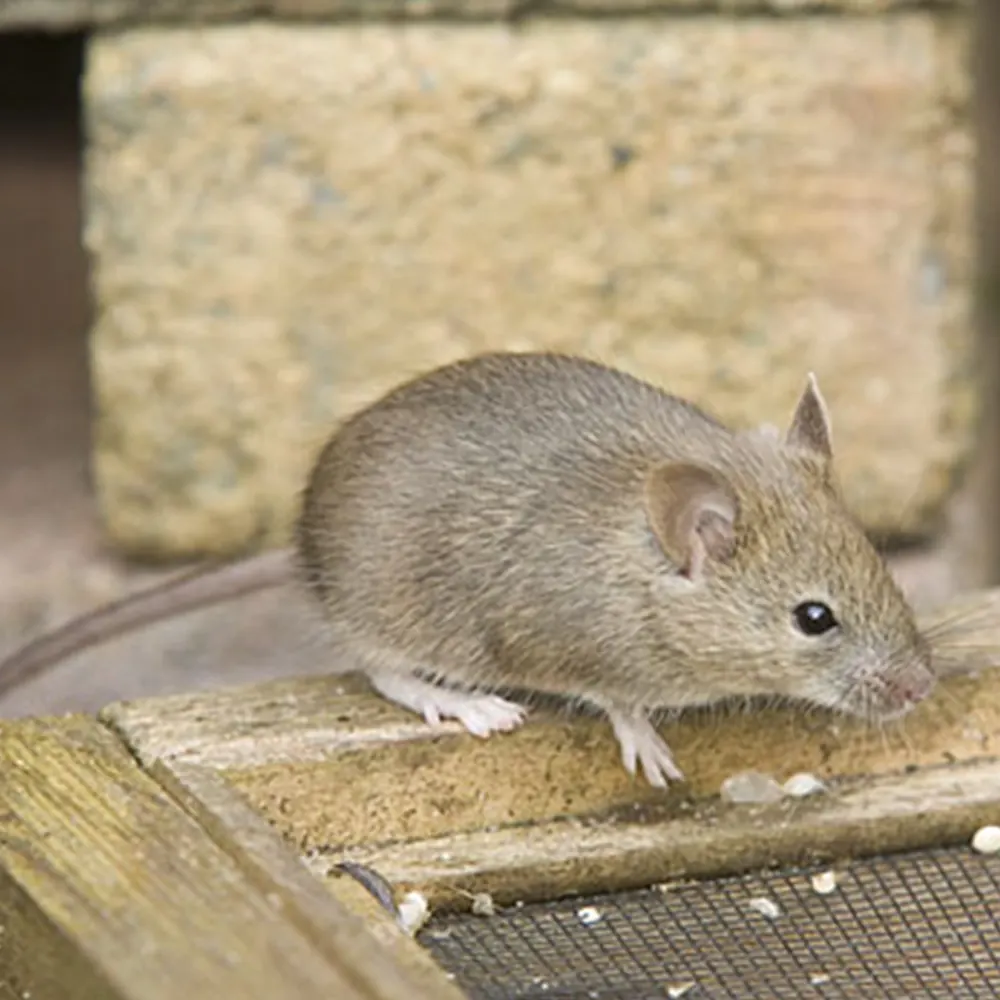
Mouse control in Northcliff targets house mice in kitchens, pantries, storerooms and wall cavities, often in the area's flats, townhouses and shared homes. We locate where they're nesting and the gaps they use, set traps and lockable bait stations in safe positions, and show you how to seal the tiny openings mice squeeze through.
Mice aren't small rats
People often treat a mouse problem like a rat problem and are surprised when it doesn't go away. Mice behave differently. They forage over a small area, often within a few metres of the nest. They nibble at many food sources rather than eating a lot from one, so they take only a little bait at a time. They're curious about new objects where rats are wary. And they breed quickly: a pair in a warm kitchen can become a real infestation over a few weeks.
Those habits decide how we place traps and stations. Mouse devices go close together, along the walls where mice actually run, rather than a few big stations around the outside of the house.
Where mice turn up around Northcliff
Freestanding houses on the ridge do get mice, usually in garages, storerooms and the kitchen. But a big share of our mouse calls come from denser housing around the area: townhouse complexes and flats in Fairland and Cresta, older blocks and shared houses towards Auckland Park and Melville, and the shops and food outlets in between. Shared walls, service ducts, plumbing chases and gaps where pipes pass between units let mice travel from one home to the next.
Student houses and rentals have their own pattern: food stored in cupboards and on counters, frequent moves, and nobody responsible for sealing the gaps. Winter cold makes everything worse, and from around May mice from gardens and verges look for warmth indoors.
Signs it's mice
- Droppings like dark grains of rice, in drawers, behind appliances and along skirting boards
- Nibbled packaging, especially bread, cereal, pet food and seed
- Shredded paper, fabric or insulation collected into a small nest
- Scratching in walls or under kitchen units, rather than across the ceiling
- A musty smell in a cupboard or storeroom
How we deal with mice
- Find the nest area and runs. Behind the fridge and stove, under the kitchen units, in the bottom of the geyser cupboard and in boxed storage are the usual places.
- Trap where food is handled. Kitchens, pantries and food-prep areas get traps rather than bait.
- Bait stations where it's safe. Lockable, tamper-resistant stations go in garages, storerooms, roof spaces and outside along walls, away from children and pets.
- Proofing. We show you the gaps: around pipes under the sink, behind the stove, under external doors, at the sides of garage doors, and where cables enter the house.
- Follow-up. Because mice breed so quickly, a return visit to check traps and stations is part of the job.
Complexes and flats
If you live in a complex, talk to the body corporate before you treat. Mice moving through shared walls won't stop at one unit, and treating the whole block, or at least the units around yours, is the only way to stop them coming back. We work directly with managing agents and trustees when that helps.
The mistake: one trap, one week
Catching one mouse and assuming that's the end of it is the most common mistake we see. If you've seen one, there are almost always more. Set traps every metre or two along the walls where you've found droppings, not one in the middle of the floor, and keep checking for at least two weeks.
A local tip
In older homes and flats, look at the gap where the kitchen waste pipe goes through the wall under the sink. It's often a hole far bigger than the pipe, and a handful of steel wool and some filler closes the most common mouse entry in the house.
What mouse control costs, and why
Cost depends on how many traps and stations are needed, whether we're treating one unit or a whole complex, how many follow-ups it takes, and how much proofing advice the building needs. A single flat is a small job. A block of units or a food shop on a monitoring contract is priced for the site. See the from prices for pest control in Johannesburg. For one mouse seen once, a few hardware-store snap traps may genuinely do it.
For larger rodents, see our page on rat problems in Northcliff. Across the city, mouse control in Johannesburg covers the wider picture, and our Roodepoort mouse control page covers the West Rand side. Students and landlords near the university can read about pest control in Auckland Park, and every local service is on our Northcliff page.
Combat is a SAPCA member and registered with the Department of Agriculture under Act 36. Jason van Heerden brings 25 years of experience, we offer service within 24 hours, and mouse treatments carry a 3-month guarantee. Call 084 200 2700, or WhatsApp a photo of the droppings next to a coin for scale.
Questions we get asked
If I've seen one mouse, are there more?
Almost certainly. Mice live in family groups and breed quickly, so one sighting usually means a nest nearby. Check behind appliances and in lower cupboards for droppings.
What does mouse control cost?
It depends on the number of traps and stations, whether it's one unit or a whole complex, and how many follow-ups are needed. Our price guide shows the starting price.
Is it safe to use traps in the kitchen?
Yes. Traps are what we prefer in kitchens and food areas, because they don't involve bait near food. Keep them behind appliances and away from children's reach.
How do mice get into a flat?
Through gaps around pipes, cables and service ducts, under doors, and through shared walls from neighbouring units. A gap the width of a pencil is enough.
How long does it take to get rid of mice?
Usually one to three weeks, depending on how established they are and whether neighbouring units are treated too.
Should the whole complex be treated?
If several units have mice, yes. Treating one unit pushes them next door, and they return through the same shared walls.