
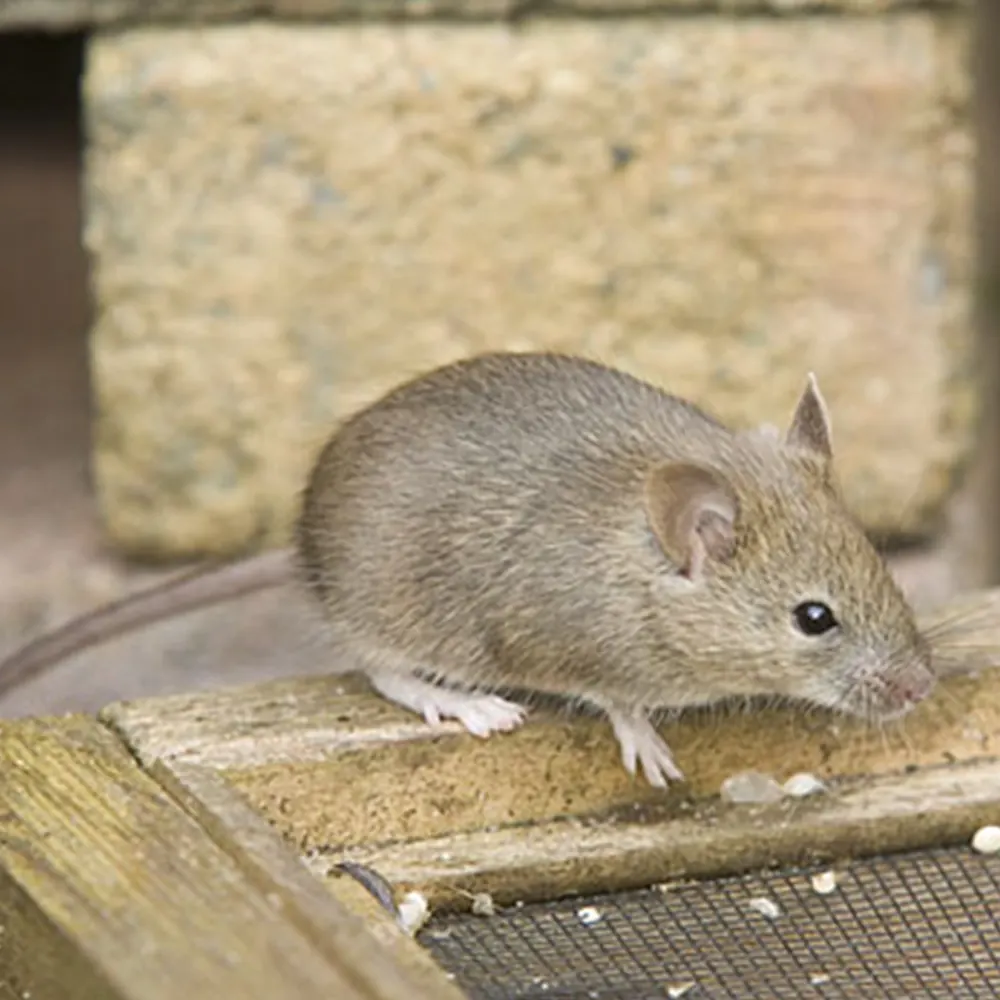
Mouse control in Randburg focuses on the kitchen, the pantry and the garage, because that's where mice live once they're inside. We find the gaps they use, set traps where they run and place lockable bait stations outside where it's safe to do so, then help you seal up so the next mouse can't follow the first.
Mice aren't small rats
People often expect a mouse problem to behave like a rat problem, and it doesn't. Rats usually nest outside and come in to feed. House mice can live their whole lives indoors, in a cavity behind the kitchen units, in the insulation of a stove or under the kick-plate of a dishwasher, travelling only a few metres a night. They breed quickly, nibble a little from many sources and squeeze through gaps around a centimetre wide. That's why one mouse in March can be a dozen by July.
Where we find mice in Randburg homes
Kitchens and pantries
Behind the fridge, under the oven, inside the space below the bottom drawers and in the back corners of pantry shelves. Cereal boxes, pet food and bags of birdseed are favourite targets.
Garages and storerooms
Many Randburg houses have a garage or outbuilding full of boxes, camping gear and garden supplies. Mice nest in the clutter and come into the house through the internal door. They'll also chew car wiring when a vehicle stands for a while.
Flats and townhouses
In sectional-title blocks, mice travel along plumbing ducts and the voids above ceilings. If one unit has mice, the ones around it often do too.
Homes next to open ground
On the edges of Northriding, Olivedale and other newer areas where complexes back onto veld or vacant land, field mice move in when the grass dries out and nights turn cold in late autumn.
The signs
Mouse droppings are small, about the size of a grain of rice, and scattered rather than in piles. You'll often find them in drawers, along skirting boards and on top of kitchen units. Other clues are chewed packaging, a faint musty smell in cupboards, shredded paper or fabric in a hidden corner, and light scratching inside a wall or behind an appliance at night.
How we deal with mice
- We find the runs. Mice keep to edges, so we check along walls, behind appliances and inside cupboard bases for droppings and rub marks.
- Traps indoors. Placed along the runs, behind and under units, out of reach of children and pets. Traps mean no bait in the kitchen and no mouse dying out of reach.
- Stations outside. Lockable, tamper-resistant bait stations along the outside walls catch mice before they come in.
- Proofing advice. We show you the gaps: where the stove pipe and water pipes go through the wall, under the garage door, around air bricks, and behind kitchen units where builders left the wall unfinished.
- Follow-up. We check and reset the traps until the activity stops.
A common mistake
Setting one trap in the middle of the kitchen floor and waiting. Mice rarely cross open floor. A trap works when it sits flush against a wall on a route they already use, and you need several, not one. The other mistake is leaving pet food out overnight: dry kibble in a bowl is an all-night buffet for a mouse family.
A local tip
Check the kitchen plinth. In many older Randburg kitchens, and in plenty of newer ones, the board along the bottom of the units hides an open gap where pipes come through the wall. Pull it off once a year, clean underneath and seal any hole with steel wool and filler. It's the single most common mouse highway we find.
What mouse control costs, and why
Mouse treatments are usually among the more affordable jobs we do. The price depends on the size of the home, how many traps and stations it needs, whether the garage and outbuildings are included, and how many follow-up visits it takes. A flat costs less than a family home with a double garage and a storeroom. Our current Johannesburg pest control prices show where mouse work starts, and this page shows the guide "from" price. If you've seen one mouse and found a handful of droppings, a few well-placed snap traps from the hardware store may solve it; if they keep coming, call us.
Where there are mice there are often cockroaches sharing the same warm spaces behind appliances, so it's worth reading about cockroach control in Randburg as well. For more detail on how mice behave across the city, see mouse control in Johannesburg, and if you're just south of us, our Northcliff mouse treatments work the same way. Residents of Olivedale have their own page, and the full list of what we treat locally is on Randburg pest control services.
Combat Pest Control is SAPCA registered and registered with the Department of Agriculture, with 25 years of experience under owner Jason van Heerden. We offer service within 24 hours, and if the mice come back within 3 months of treatment, so do we. Call 084 200 2700, or WhatsApp us a photo of the droppings.
Questions we get asked
How much does mouse control cost?
Mouse treatments are usually one of the more affordable services. The price depends on the size of the home, the number of traps and stations, and whether we include the garage and outbuildings. We confirm it once we've seen the property.
How do I know it's mice and not rats?
Mouse droppings are about the size of a grain of rice and scattered; rat droppings are much bigger. Mice tend to stay in the kitchen and cupboards, while rats are usually heard in the roof.
Are traps safe with children and pets in the house?
We place traps behind and under units and in spots children and pets can't reach. Any bait is kept outside in lockable stations.
How long does it take to get rid of mice?
A light infestation usually clears in one to two weeks. Heavier activity, or a home with a lot of storage, can take a few follow-up visits.
Should I clean up the droppings before you come?
Leave them for the inspection if you can, because they show us where the mice are running. Afterwards, clean with gloves and a damp cloth rather than sweeping, which raises dust.
Why do mice keep coming into my flat?
In blocks of flats they travel through shared plumbing ducts and ceiling voids. Sealing gaps in your unit helps, but treating the building with the body corporate gives a lasting result.