
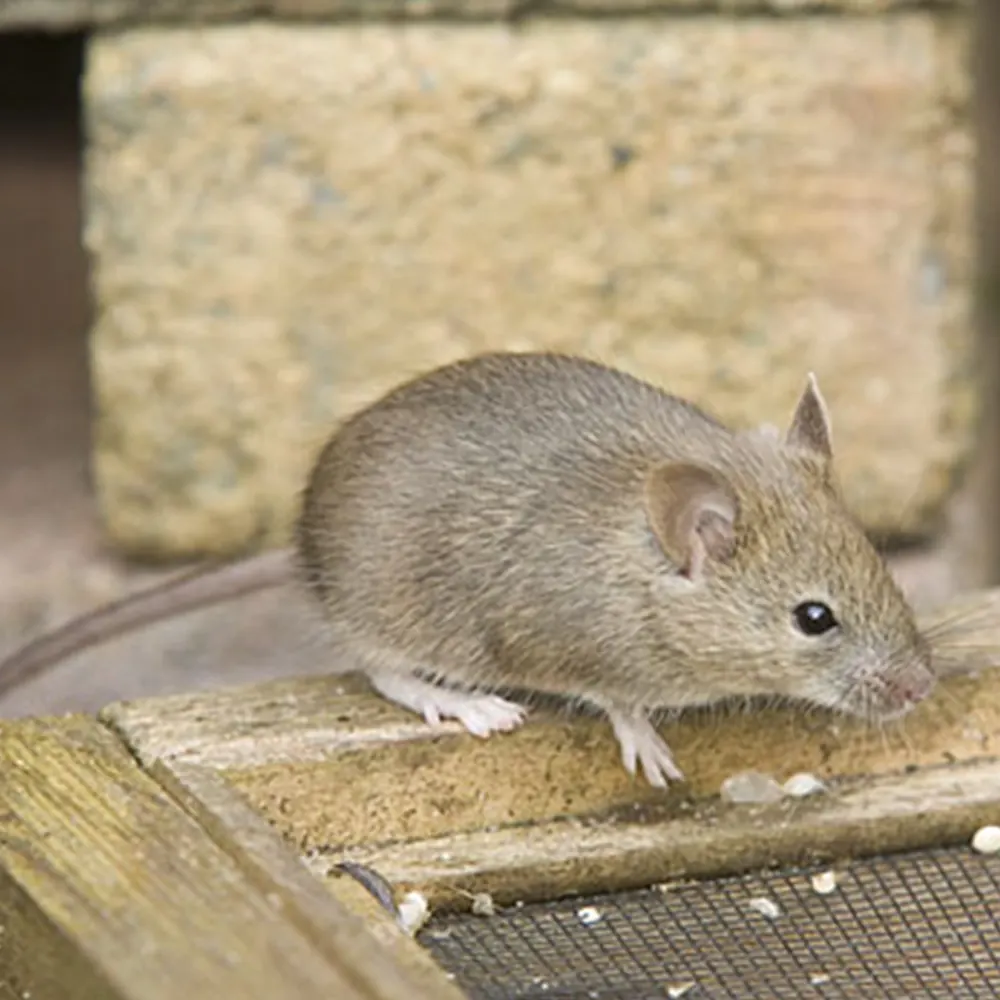
Mouse control in Johannesburg is mostly about finding where the mice are nesting indoors and the small gaps that let them in. We set traps and secure bait stations in the right places, clear the activity, then point out the holes to seal so the next mouse can't follow the same path.
Why mice are a different problem from rats
People often treat mice like small rats, but they behave very differently. The house mouse is curious rather than cautious, so it investigates new objects quickly. It needs very little water, gets most of what it needs from food, and can live its entire life inside a building. A pair can produce several litters in a few months, so a couple of mice in March can be a real infestation by winter.
Mice also travel only short distances from the nest, usually a few metres. That means treatment has to be close to where they live, not spread around the garden. If you have heavier footsteps in the roof as well, read our guide to rat control in Johannesburg, because the approach is quite different.
Where mice hide in Johannesburg buildings
- Kitchens: under and behind the stove, inside the kick-plate space under built-in cupboards, behind the fridge and dishwasher where it's warm.
- Flats and complexes: in service ducts, behind geyser cupboards and along pipe runs shared between units.
- Garages and storerooms: inside boxes of old clothes, camping gear, bags of dog food and bird seed.
- Offices: under raised floors, in ceiling voids above kitchenettes and inside desk drawers where people keep snacks.
- Shops and warehouses: among pallets of dry goods, behind shelving and in cardboard packaging.
Signs of mice
Mouse droppings are about the size of a grain of rice, pointed at the ends, and turn up in large numbers along skirting boards, in drawers and on shelves. You might find shredded paper or fabric where they're nesting, small holes chewed in packets of rice or pasta, and a musty smell in a cupboard. Pets staring at the same spot under the kitchen units is another giveaway.
How we get rid of mice
- Find the nest area. We follow droppings and gnawing to the warm, sheltered spots near food where mice are living.
- Trap close to the nest. Inside homes and food areas we rely mostly on traps, placed along walls where mice run, so there's no bait near food.
- Secure stations where they fit. In garages, ceiling voids and outbuildings, lockable bait stations keep the bait away from children and pets.
- Proofing. We show you the gaps to seal: around plumbing under sinks, behind the stove where the gas or power comes in, gaps under doors, and holes in ceiling boards.
- Follow-up. We check traps and stations and confirm the activity has stopped.
Mice in flats, complexes and businesses
In a block of flats or a townhouse complex, mice move along pipe ducts and roof spaces between units, so one unit treated alone often gets reinfested from next door. Working with the body corporate on the whole building, or at least the units on either side, gives a far better result. In Randburg's older blocks of flats and complexes this is a common pattern.
For restaurants, food shops and warehouses, we set up scheduled monitoring with traps and stations placed on a site plan and a written service record after every visit. Distribution centres around Midrand's logistics parks often need exactly this.
The thing people get wrong about mice
Seeing one mouse and assuming there's only one. Mice are rarely alone, and because they breed so quickly, a few weeks of waiting can make a small problem much bigger. The other mistake is relying on ultrasonic plug-in devices. Mice get used to them quickly, and they do nothing about the gap the mice came through.
Prevention tips
- Store dry food, pet food and bird seed in hard plastic or glass containers with sealed lids.
- Pull the stove and fridge out once in a while and clean behind them.
- Use steel wool and filler to close gaps around pipes; mice chew through plain foam and silicone.
- Fit brush strips to the bottoms of garage and kitchen doors.
- Before winter, sort out the storeroom and get rid of old cardboard boxes.
What mouse control costs, and why
A mouse job in a single home is usually one of the smaller treatments we do. The cost goes up with the size of the building, the number of traps and stations needed, and the number of visits, so a warehouse or a whole complex costs more than a kitchen. Our pest control prices page shows the guide "from" price. Honestly, if you've seen a single mouse and no droppings, a couple of snap traps baited with peanut butter may be all you need. Our mouse guide explains why they breed so fast.
Booking is simple: phone 084 200 2700, or WhatsApp us a picture of what you found in the drawer. We offer service within 24 hours, mouse treatments are guaranteed for 3 months, and the work is done by a SAPCA registered business, registered with the Department of Agriculture, with 25 years in pest control.
Questions we get asked
How much does mouse control cost?
Mouse treatments in a single home are usually among our smaller jobs. The price rises with the size of the building, the number of traps and stations, and how many visits it takes. We confirm it after a look.
How many mice are there if I've seen one?
Usually more than one. Mice breed quickly and stay hidden near the nest, so a single sighting often means a small family nearby.
Do ultrasonic devices keep mice away?
Not reliably. Mice quickly get used to the sound, and the devices do nothing about the gaps they use to get in.
Is it safe to use bait in the kitchen?
We avoid bait near food. In kitchens and food areas we use traps, and keep bait in lockable stations in places like the garage or roof.
How small a gap can a mouse fit through?
Roughly the width of a pencil. That's why sealing small holes around pipes and under doors matters so much.
Can mice make us sick?
They can contaminate food and surfaces with droppings and urine, so throw out anything they've nibbled and clean affected areas with a disinfectant.
Do I need to empty the kitchen cupboards before you come?
No, but it helps to clear the floor under the sink and give us access behind the stove and fridge, where mice usually hide.