
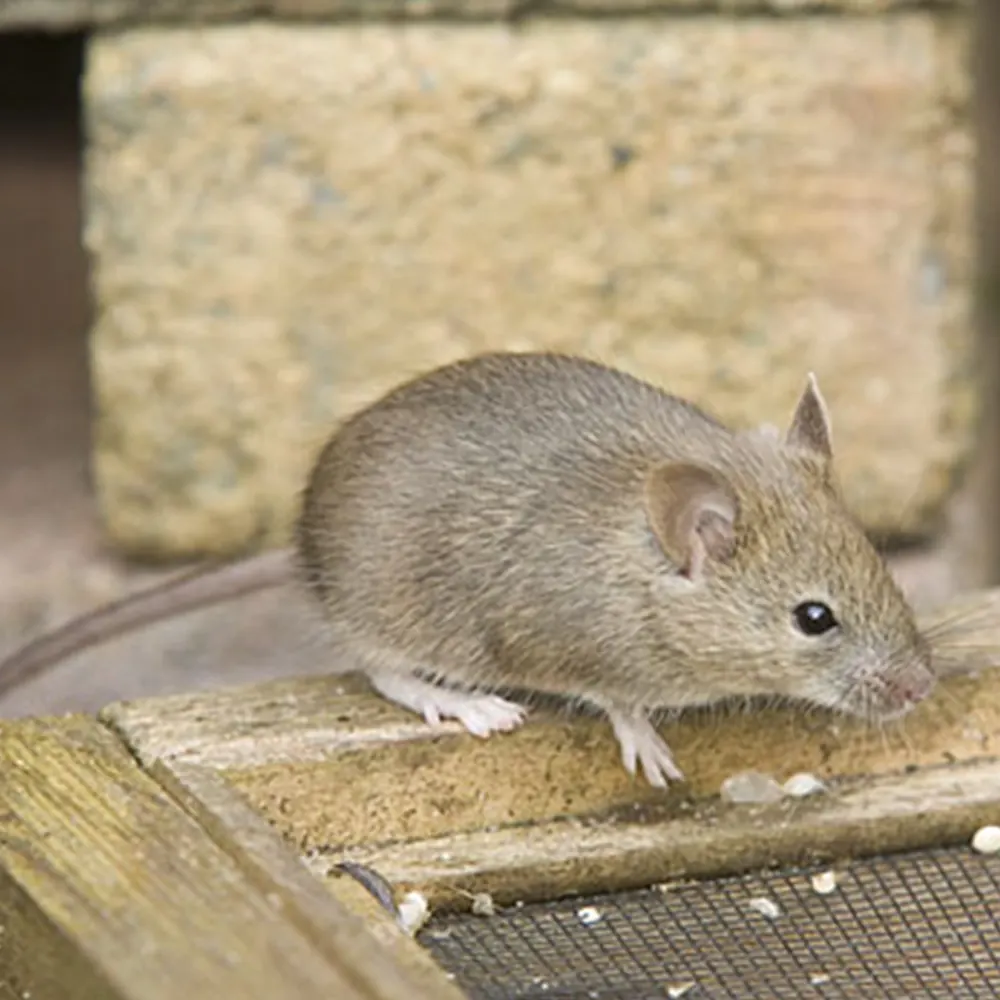
Mouse control in Johannesburg South usually means house mice in pantries, garages and storerooms, and, in suburbs next to the veld, field mice coming indoors when winter arrives. We find the gaps they use, trap and bait in the right places, and help you seal the house so the next lot can't follow.
How mice get into southern homes
A mouse can squeeze through a gap about the width of a pencil. In the older houses of Turffontein, Rosettenville and Regents Park, there are plenty of those: gaps under old wooden doors, worn weatherstrips, holes where geyser pipes and cables come through walls, and air bricks with broken grilles. In the newer homes and complexes further south, the gaps are often around garage doors, the space behind a built-in stove, and the holes left when a dishwasher or washing machine was plumbed in.
Suburbs that border open land have an extra source. Homes near the Klipriviersberg, the Klip River and vacant veld see field mice move in from the grass when the cold nights start and seed and cover run short. These mice look slightly different from house mice, but the problem is the same: droppings, damage and contamination in the places you keep food.
Mouse or rat?
It matters, because the treatment is different. Mouse droppings are small, like grains of rice, and scattered widely; rat droppings are much bigger and tend to be in piles. Mice nibble small holes in packets and leave shredded paper and fabric nests in drawers, behind appliances and in boxes in the garage. They're also more curious than rats, which makes them easier to trap once you know their routes. If the droppings you're finding are large, our page on rats in the south is the one to read.
Where we find them most
- Behind and under the stove, fridge and dishwasher, where it's warm and crumbs collect
- In the pantry, especially behind bags of maize meal, pet food and cereal
- In garage boxes, old furniture and stored camping gear
- In the ceiling above the kitchen, close to the geyser
- In storerooms and back offices of shops along the main roads
Why a few mice matter
It's easy to shrug off a mouse or two, but they breed quickly, and a pair that moves into the pantry in June can become a colony by spring. They contaminate food with droppings and urine, chew through wiring behind appliances, and shred insulation, paper and fabric for nests. In a shop or storeroom, the cost of spoilt stock and a failed inspection is far bigger than the cost of dealing with them early. Anything they've nibbled should go in the bin, and the shelf should be washed down.
Our approach
We start by looking for the trail: droppings, gnaw marks, nests and the smears they leave along skirting boards. That shows us the routes. Inside, we use traps along those routes, which work quickly and avoid a mouse dying in a cupboard. Outside, and in roof spaces where it's safe, we use lockable bait stations that children and pets can't open. Then comes the part people skip: proofing. We point out every gap we find and explain how to close it, from steel wool and sealant around pipes to a proper brush strip under the garage door.
For small shops and food businesses we can set up scheduled monitoring, with a record of each visit and every station. That matters when an inspector asks what you're doing about rodents.
The common mistake
Setting one trap in the middle of the kitchen floor and waiting. Mice don't cross open floors if they can help it; they run along walls and behind objects. A trap needs to sit against the wall, on the route, with several set at once. One trap catches one mouse. Several on the right routes clear the house.
A tip for southern pantries
Move maize meal, pet food and bird seed out of paper bags and into sealed plastic or metal containers. These are the foods mice go for first, and in many southern homes they're stored in bulk. Take away that supply and the mice have far less reason to stay.
What mouse control costs, and why
For most homes, mouse control is one of our smaller jobs. The price goes up with the size of the property, the number of traps and stations needed, whether the roof space is involved, and how many follow-up visits it takes. Businesses on a monitoring contract are quoted by site. See our guide to what pest control costs for the starting point. If you've seen one mouse and found a few droppings, a handful of traps against the walls may be all you need.
Kitchens that attract mice also attract cockroaches, so it's worth reading about cockroaches in Johannesburg South kitchens. More locally, see pest control in Mulbarton or our southern suburbs pest control page. We also deal with mice in Soweto homes, and the wider picture is on mouse control in Johannesburg.
Jason van Heerden, who owns and runs Combat Pest Control, has 25 years in the trade. We're SAPCA registered and registered under Act 36 with the Department of Agriculture, we offer service within 24 hours, and if the mice return within three months, so do we. Phone 084 200 2700 or send us a photo of the droppings on WhatsApp.
Questions we get asked
What does mouse control cost?
For a typical house it's one of our smaller jobs. The price depends on the number of traps and stations, whether we treat the roof space and how many follow-ups are needed.
Can I get rid of mice myself?
Sometimes, yes. If you've seen one or two, set several snap traps against the walls along their route. If you keep finding droppings after a week or two, call us.
Why do mice come in when it gets cold?
Field mice and house mice living outside look for warmth and food once the winter nights drop. Kitchens, garages and roof spaces near the geyser are the obvious choice.
Are the traps and bait safe for my children?
Yes. Traps go behind appliances and in places children don't reach, and bait sits inside lockable stations that can't be opened.
How small a gap can a mouse fit through?
Roughly the width of a pencil. That's why gaps around pipes, under doors and behind appliances need sealing, not just the obvious holes.
Do mice carry diseases?
They can contaminate food and surfaces with droppings and urine, which is why any food they've touched should be thrown away and the area cleaned.
How quickly will the mice be gone?
Most homes see a big drop within a week or two of trapping and baiting, provided the main entry points are closed.