
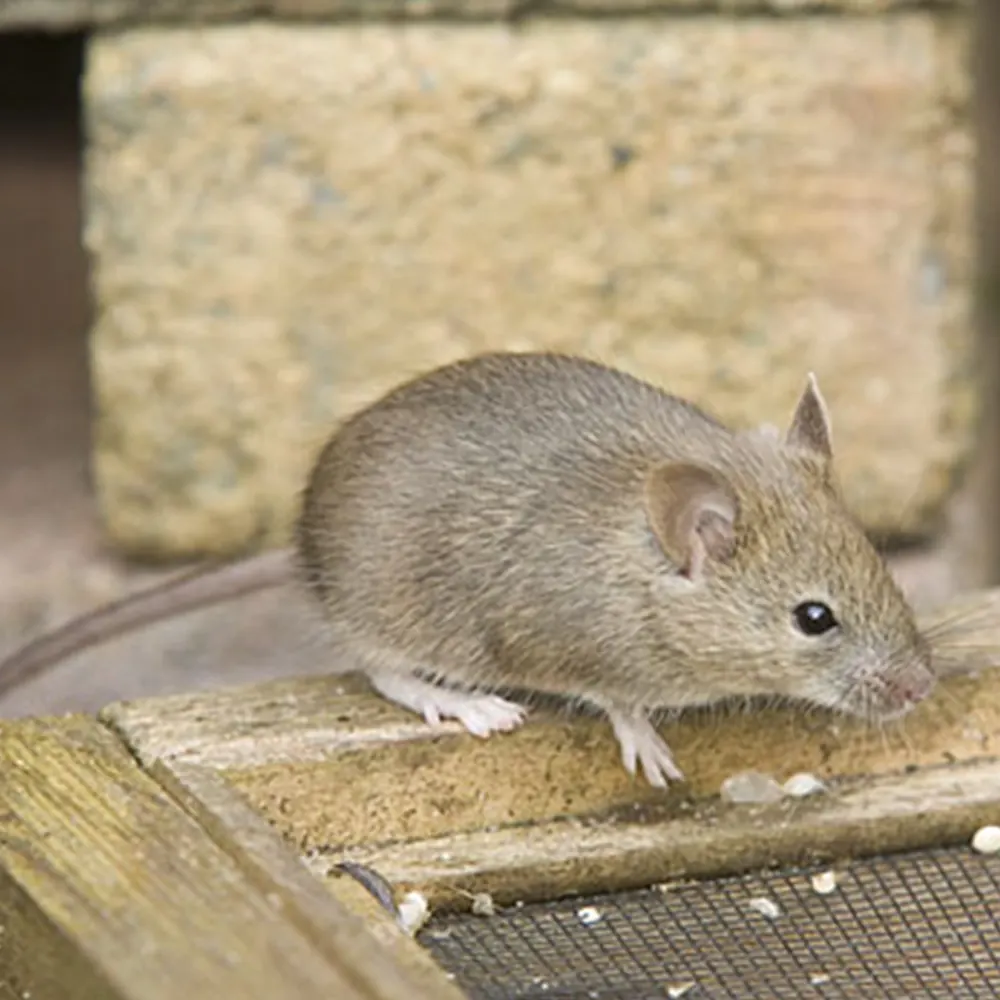
Mouse control in Midrand works best when you combine trapping and baiting with sealing the tiny gaps mice use. House mice in Midrand turn up in townhouse kitchens, office ceilings, server rooms and storerooms. We find where they nest, set traps and secure bait stations, then show you which gaps to close.
Small rodent, big Midrand problem
Mice need far less than rats. A gap the width of a pencil, a few crumbs a day and a quiet void to nest in are enough. That makes modern Midrand buildings surprisingly good for them. Townhouse complexes have kitchen units with hollow kick plates, plumbing ducts that run between units, and garages full of boxes. Office parks have suspended ceilings, cable trays, raised floors and tea kitchens. Warehouses have racking, pallets and packaging. None of that needs to be dirty to support a family of mice.
Mice also arrive with stock. A carton of dry goods, a bag of birdseed or a box of decorations brought in from the garage can carry them straight into a pantry. And on the edges of Midrand, where new developments back onto grassland, field mice move into buildings in autumn as the grass dries out and the nights get colder.
How to tell mice from rats
- Droppings: mouse droppings are small, about the size of a grain of rice, and scattered in large numbers. Rat droppings are much bigger.
- Noise: mice make light scratching and quick pattering, often in the walls and kitchen units, not just the ceiling.
- Damage: small holes in packets, shredded paper or insulation used as nesting material, nibbled soap and candles.
- Smell: a stale, musty smell in a cupboard or store usually means an established nest.
If the droppings look larger and the noise is heavier, you may be dealing with rats instead, and our page on Midrand rat treatments is the better guide.
Where we find mice in Midrand buildings
Townhouses and flats
Behind the kick plates under kitchen cupboards, inside the back of the stove, in the dishwasher and fridge motor space, and in the garage among stored boxes. In complexes the plumbing ducts let mice move between units, so neighbours often notice them at the same time.
Offices
In ceiling voids above the kitchen, under desks where people eat lunch, inside cable trays and in printer and server rooms, where they chew cabling. A mouse in an office is a reputation problem as well as a hygiene one.
Stores and warehouses
Inside pallets, cartons and shrink-wrapped stock, and in the gap between racking and the wall. Mice can live their whole lives inside a stack of stock that is never moved.
Our method
- Inspect and map. We find the nests and runways by following droppings, rub marks and gnawing.
- Trap indoors. Snap traps and multi-catch traps along walls and behind appliances, checked on our follow-up visit.
- Secure baiting. Lockable, tamper-resistant bait stations where they are suitable, kept away from food preparation areas.
- Tracking powder in wall voids and ducts where it suits the building.
- Proofing advice. Steel wool and sealant in pipe holes, brush strips on doors, mesh over vents. Mice will find any gap you leave.
For larger business sites we also offer scheduled monitoring with a service record, so you can show auditors that rodents are under control. Our rodent programmes for Midrand businesses explain how that works.
What people get wrong with mice
Setting one trap in the middle of the kitchen floor and waiting. Mice run along edges, not across open floors, and they breed fast enough that one trap rarely keeps up. Several traps, placed tight against walls and behind appliances, work far better. The other mistake is ignoring the garage, which is where most household mouse problems actually start.
A local tip
When you move into a new Midrand townhouse or office, check where the plumbing and electrical conduits come through the walls under the sink and behind the stove. Builders often leave these openings unsealed, and they are the most common way mice travel between neighbouring units.
What mouse control costs, and why
It depends on how many rooms are affected, how established the mice are, how many traps and stations are needed, and how many visits it takes. One mouse seen once in a flat is often something you can handle with a few traps yourself. An established population in an office or warehouse needs a structured programme. See our pest control prices in Johannesburg for a starting point; this page also lists a guide "from" price.
Many complexes in Halfway Gardens and nearby deal with mice alongside cockroaches. Over in Sandton, mouse control for Sandton offices and homes follows the same method, and you can read about mice across the city on our Johannesburg mouse page, or see everything else we treat on the Midrand overview.
Jason van Heerden, owner of Combat Pest Control, brings 25 years of experience to every job. We are registered with SAPCA and with the Department of Agriculture under Act 36, offer service within 24 hours, and guarantee our mouse treatments for 3 months. Phone 084 200 2700, or WhatsApp us a picture of the droppings.
Questions we get asked
How much does mouse control cost?
It depends on the size of the property, how many rooms are affected and how many visits are needed. A small flat costs much less than an office or warehouse programme. We quote after an inspection.
Can mice get through very small gaps?
Yes. A house mouse can squeeze through a gap about the width of a pencil, which is why sealing pipe holes and door gaps matters so much.
Are mice dangerous?
They can contaminate food and surfaces with droppings and urine and chew electrical wiring, which can be a fire risk. Throw away any food they have reached.
Do cats keep mice away?
A cat may catch a few, but it rarely clears an established population, and mice simply move to areas the cat cannot reach, like wall voids and kitchen units.
How quickly will the mice be gone?
Light activity often clears within a week or two. Established populations in offices or stores take several visits and proofing to stop new mice coming in.
Do I need to empty my kitchen cupboards?
Not entirely, but clear the cupboards where you have seen droppings so we can get to the kick plates and the back of the units, and put open food into sealed containers.