
Bird proofing in Johannesburg stops pigeons, Indian mynas and sparrows roosting and nesting where they cause damage, mess and bird mites. We assess where the birds land and get in, then fit the right deterrent for each spot: spikes on ledges, netting over courtyards and loading bays, and mesh or sealing for roof gaps and solar panels.
Why birds become a problem
A few birds in the garden are part of living in a city with this much tree cover. The trouble comes when they move onto the building. Pigeon droppings are acidic, stain paving and paintwork, block gutters and make walkways slippery. Nests in roof spaces and gutters bring bird mites into the house, block downpipes and leave nesting material piled against roof timbers. Mynas are noisy, aggressive and build bulky nests of grass and plastic in any gap they can find. In shops, warehouses and food factories, birds inside the building are a serious hygiene and audit issue.
The solar panel problem
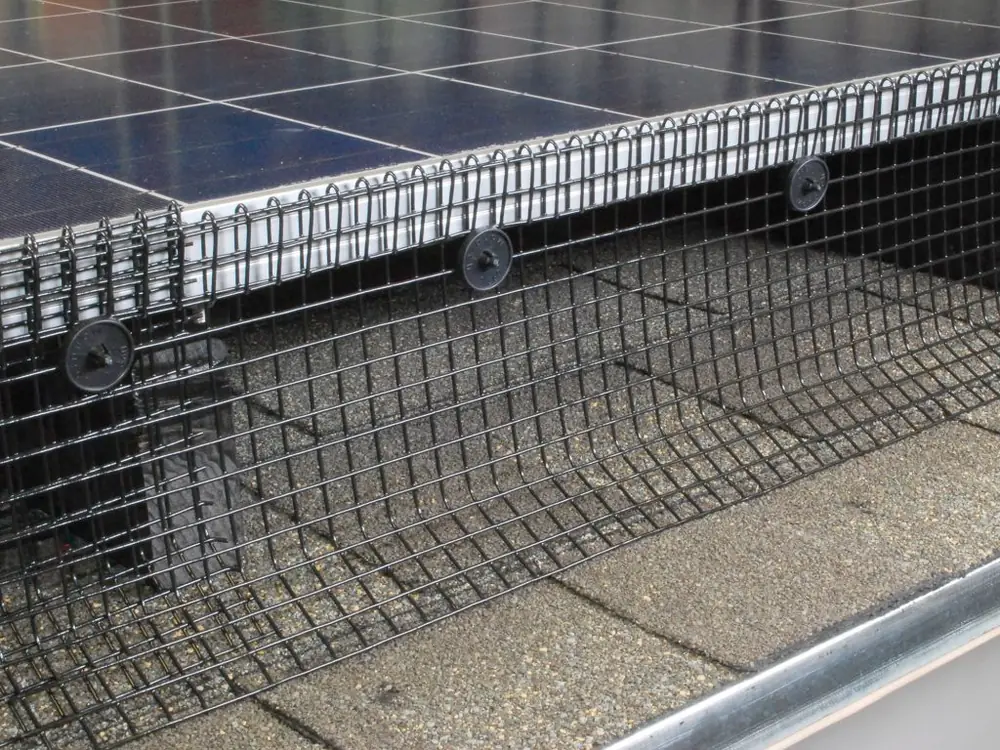
The rush to rooftop solar across Johannesburg has handed pigeons a huge number of perfect roosts. The gap between the panels and the roof is sheltered, warm and hidden from predators, and once a pair moves in, others follow. The result is droppings and nesting material piling up under the panels, blocked gutters, noise above the bedroom and, sooner or later, bird mites. The fix is a mesh skirt fitted around the edge of the array to close the gap without drilling into the panels. It's best done when the birds are cleared out and before the next nesting season.
The proofing options we use
Spikes
Blunt-tipped spikes along ledges, parapets, window sills, beams and signage stop birds from landing. They don't injure the birds; they just leave them nowhere comfortable to stand. Spikes work well on narrow, defined perches.
Netting
Netting closes off larger spaces: courtyards, light wells, loading bays, the underside of canopies and open roof structures in warehouses. Properly tensioned, it's almost invisible from below.
Sealing and mesh
Gaps under roof tiles, open fascias, broken air vents and the void under solar panels are closed with mesh or sealing so birds can't get in to nest. On most homes this is the part that matters most.
How a bird proofing job runs
- Survey. We look at where birds roost, nest and get in, and how much access we'll need: ladders, a roof walk, or a platform for high commercial work.
- Clear first. Active nests and heavy droppings are removed and treated, and if bird mites are present we deal with those at the same visit.
- Fit the proofing. The right method for each area, chosen so it lasts on the Highveld, where hail, strong sun and summer storms are hard on cheap materials.
- Check and adjust. Birds test new proofing. A follow-up check catches any spot they've found a way around.
Signs you need proofing, not just cleaning
Hosing off droppings every week is a sign the birds have chosen your building as a roost. Other signs: birds flying into the same gap under the roof at dusk, nesting material such as grass, twigs and plastic sticking out of gutters or from under panels, scratching and cooing above the ceiling early in the morning, staining down a wall below a ledge, and itchy bites indoors after nesting season. Once birds are roosting or nesting on a structure, they come back to it every year until it's physically closed to them.
What people get wrong
Trying fake owls, reflective tape and old CDs, then giving up when the pigeons ignore them within a week. Scare devices rarely work for long on birds that have already settled. The other mistake is sealing a gap while chicks are still inside, which leaves a dead nest in your roof and the mites that come with it. Check first, clear first, then seal.
Homes, complexes and commercial buildings
At home, most proofing is at roof level: the eaves, the gutters and the solar array. Complexes often have a whole row of identical gaps under shared roofs, so it makes sense for the body corporate to do the block in one go. Warehouses, factories and shopping centres usually need netting across open roof structures and spikes along beams and signage, often working at height and around trading hours.
What it costs and why
Bird proofing is priced by the area being protected and the method used. The real cost drivers are the length of ledges or perimeter to cover, the size of any area to be netted, the height and access, how many panels are in a solar array, and how much clean-up is needed first. A few metres of spikes over a doorway is a small job; netting a warehouse roof is a project. Our pest control price list shows where bird work starts, and we'll quote properly after a survey.
Related services
If birds have already nested and you're being bitten at night, start with bird mite control in Johannesburg, and see the page on bird mites in Bryanston homes for how it plays out in larger suburban roofs. Office parks and logistics buildings in the north fall under pest control in Midrand, and our bird proofing guide explains pigeon and myna behaviour in more depth.
Jason van Heerden owns and runs Combat Pest Control, with 25 years in the trade, SAPCA registration and Department of Agriculture registration. We offer service within 24 hours, and any nest or mite treatment done at the same visit carries our 3-month guarantee. To arrange a bird survey, call 084 200 2700, or WhatsApp us a photo of where the birds are getting in.
Questions we get asked
How much does bird proofing cost?
It depends on the area and the method: a few metres of spikes costs far less than netting a courtyard or meshing a large solar array. Height and clean-up also matter. The price guide shows the starting price, and we quote after a survey.
Does bird proofing hurt the birds?
No. Spikes, netting and mesh simply stop birds landing or getting in. They move on to somewhere else.
Can you stop pigeons nesting under my solar panels?
Yes. We clear out the nests and droppings, then fit a mesh skirt around the edge of the array to close the gap, without drilling into the panels themselves.
How long does bird proofing last?
Good spikes, netting and mesh last for years if they're properly fitted. We use materials that cope with Highveld sun and hail, and a follow-up check sorts out any spot the birds test.
Do fake owls or reflective tape work?
Not for long. Pigeons and mynas quickly learn that they are harmless. Physical proofing is what keeps them off.
Is it worth proofing a whole complex at once?
Usually, yes. Units under a shared roof tend to have the same gaps, and birds pushed out of one unit simply move next door.
What should we do before you come?
Note where birds roost and where they fly in and out, and tell us if you've had any bites indoors. Clear access to the roof hatch and any area we need to reach.