
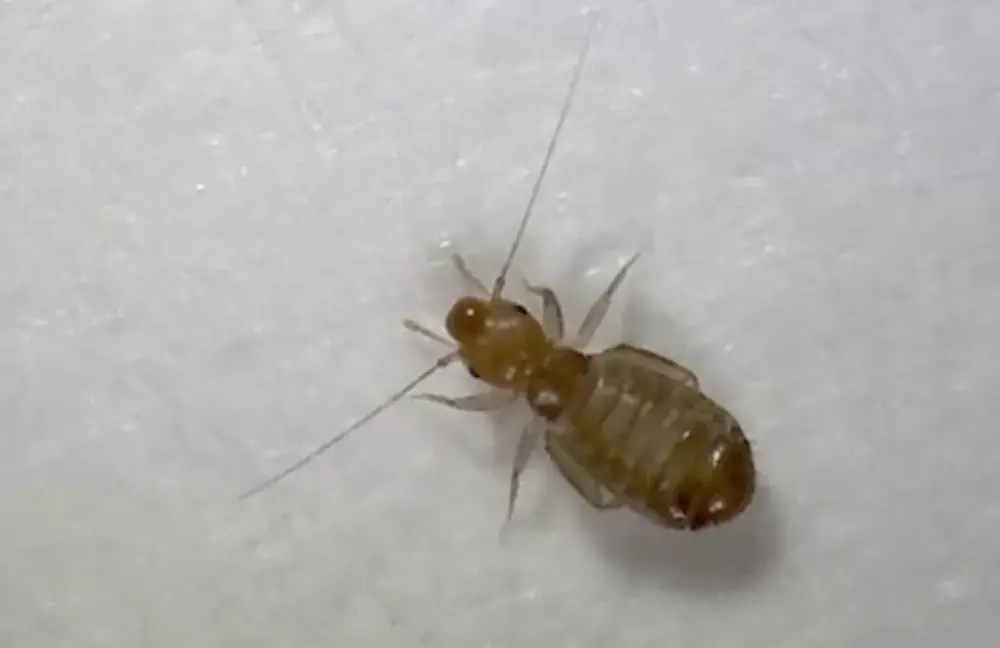
Booklice control in Johannesburg is half treatment and half fixing moisture. These tiny insects feed on microscopic mould, so they appear wherever books, papers, stored food or new plaster stay damp. We treat the shelves, cupboards and cracks they live in, and help you find and fix the humidity that lets them multiply.
What booklice are
Booklice, also called psocids, are tiny soft-bodied insects, about a millimetre long, pale grey or translucent, and easiest to see when they move. Despite the name, they are not lice. They don't bite people or pets, don't live on bodies and don't spread disease. They feed on the moulds and fungi that grow on paper, cardboard, wallpaper paste, starch-based glues and damp food.
That diet is the key to controlling them. Where there's no mould, booklice struggle. Where humidity stays high, they breed quickly, and a few can become thousands crawling across shelves, window frames and walls in a matter of weeks.
Where we find booklice in Johannesburg
- New and renovated homes: fresh plaster and screed release moisture for months, and new builds in estates often have booklice on walls and inside built-in cupboards in the first summer.
- Pantries and food stores: packets of flour, cereal, pasta and rice stored in a damp or poorly ventilated cupboard grow mould that booklice feed on.
- Books and papers: bookshelves against cold outside walls, boxes of documents in the garage, archives in offices and schools.
- After a leak or flood: burst geysers, roof leaks after storms and plumbing leaks inside walls leave damp areas that booklice find quickly.
- Bathrooms and window frames: condensation on cold winter mornings keeps sills and corners damp enough.
Why they show up in summer
For most of the dry Highveld winter, indoor air is too dry for booklice to thrive. The summer rains change that. Humidity climbs from October onward, roofs leak after hailstorms, and walls stay damp after heavy downpours. That's when people start noticing booklice in the pantry or on the bookshelf. In new houses, the problem can run all year until the building dries out properly.
Signs of booklice
You'll see tiny pale insects moving on shelves, paper, packaging or walls, often in large numbers. Food packets may look dusty, and close up you may see them inside packets of flour or cereal. Books may have faint grey mould or a musty smell. If you see insects of a similar size that jump, they may be springtails or fleas, so a close-up photo helps us tell the difference.
How we treat booklice
- Find the moisture. We inspect the affected rooms and cupboards for damp walls, leaks, condensation, poor airflow and mouldy materials.
- Remove what's infested. We help you decide what to throw away, usually open food packets and badly affected cardboard.
- Treat harbourage. We apply odourless, non-staining residual treatments into cracks, along shelf edges and inside cupboards where booklice hide and breed, away from food.
- Dry it out. We give practical advice on ventilation, dehumidifying and storage, because treatment alone won't hold if the area stays damp.
You can stay home during treatment. Keep children and pets away from treated cupboards until they're dry, and put food back only once the shelves have dried.
Food businesses and storerooms
In bakeries, food factories, pharmacies and dry-goods warehouses, booklice in packaging or stock can lead to rejected deliveries and failed audits. We inspect storage conditions, treat structural harbourage, recommend stock rotation and humidity control, and can provide a written report. Where a formal assessment is needed, our entomological inspections and pest reports cover stored-product insects in detail.
The mistake people make
Spraying the shelf and putting everything back exactly as it was. The insects you can see die, but the damp shelf, the mouldy packaging and the closed cupboard are all still there, and a new population builds up within weeks. The second mistake is assuming the house is dirty. Booklice are a sign of humidity, not hygiene.
A practical tip for Johannesburg homes
Run a dehumidifier or keep windows open in rooms with new plaster during the first rainy season after building or renovating. Store dry food in sealed glass or hard plastic containers, move bookshelves a few centimetres away from outside walls, and check the roof after the first big hailstorm of the season, because a small leak into the ceiling often starts the problem.
What booklice control costs, and why
The price depends on how many rooms and cupboards are affected, whether we're dealing with a home, a new build or a food business, and whether a follow-up is needed once the area dries out. A pantry and a couple of cupboards is a small job. Warehouses and food factories cost more and are often combined with an inspection report. You can see the guide "from" price on our pest control pricing page. To be honest, a mild booklice problem in a pantry can often be solved by clearing out old food, wiping the shelves and keeping the cupboard dry. The booklice guide goes deeper into their biology.
Booklice are often confused with young fish moths in the same cupboards; see our fish moth control across Johannesburg if the insects you're seeing are silver and fast. We handle every other household pest too, listed on our main Johannesburg pest control page.
Not sure whether it's booklice, fish moths or mites? A sharp close-up photo on WhatsApp usually settles it. When you're ready to book, phone 084 200 2700. We offer service within 24 hours, booklice treatments carry a 3-month guarantee, and Combat Pest Control is SAPCA registered and registered with the Department of Agriculture, with 25 years in pest control behind it.
Questions we get asked
How much does booklice treatment cost?
It depends on how many rooms and cupboards are affected and whether it's a home or a business. A pantry problem is a small job; food factories and warehouses cost more. We confirm the price after seeing the site.
Do booklice bite?
No. Booklice don't bite people or pets and don't live on the body. They feed on microscopic mould on damp materials.
Why do I have booklice in my new house?
New plaster and screed hold moisture for months, and mould grows on damp surfaces and in cupboards. Booklice feed on it. They usually ease off once the building has fully dried.
Do I need to throw out food from the pantry?
Throw away open packets where you've seen booklice. Sealed tins and jars are fine once wiped. Store dry food in airtight containers from now on.
Will booklice go away on their own?
Sometimes, if the area dries out completely. If the damp stays, they keep breeding, and treatment plus moisture control is the reliable fix.
Are booklice the same as head lice?
No. They're a completely different insect. They don't live on people and have nothing to do with head lice.
What should I do before you arrive?
Empty the affected cupboards or shelves, set aside infested food and papers, and note any leaks or damp patches you know about.