
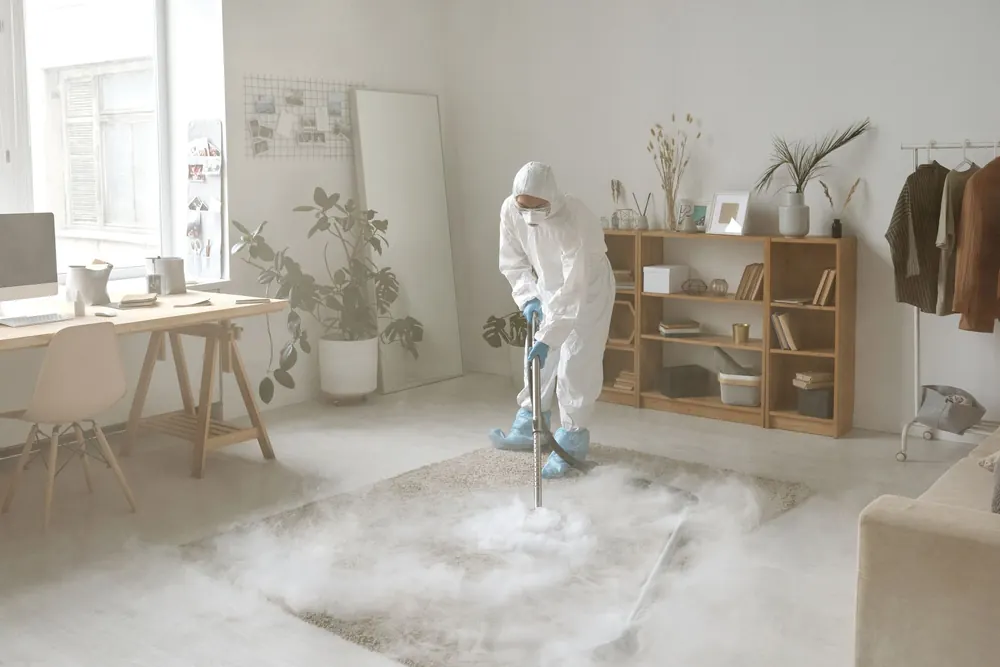
Entomological inspections in Johannesburg are formal pest inspections that end in a written report or certificate. For property sales we check for termites and wood borer in the structure; for food businesses, landlords and body corporates we report on pest activity and risks. If nothing active is found, you get a certificate. If something is, we explain the treatment.
Inspections for property sales
A termite or beetle certificate isn't part of every Johannesburg sale, but buyers, banks and conveyancers often ask for one, especially on older properties. The inspection looks for wood-destroying insects that can affect the value or safety of the building: subterranean termites, wood borer in floors, roof timbers, frames and built-in cupboards, and signs of past damage.
What we check:
- The roof space: trusses, purlins, ceiling joists and the top of the ceiling boards
- Timber floors, skirting boards, door and window frames and built-in cupboards
- Foundations, expansion joints and outside walls for mud tubes
- Garages, outbuildings, decks and pergolas
- The garden near the house for termite activity, stumps and buried timber
If there's no active infestation, we issue the certificate. If we find activity, the report says what it is and where, and we quote for the termite treatment or wood borer treatment in Johannesburg needed, so the transfer isn't held up longer than necessary.
Inspections for food businesses
Restaurants, food factories, bakeries, butcheries, warehouses and shops handling food need evidence of a working pest control programme for health inspectors, auditors and head office. An inspection here looks at:
- Rodent activity: droppings, gnaw marks, burrows and entry points around doors, drains and pipes
- Cockroaches and other crawling insects in kitchens, behind equipment and in drains
- Flies and stored-product insects in refuse areas and dry stores
- Proofing gaps, hygiene and storage practices that attract pests
You get a written report with findings and recommendations, and we can set up a scheduled monitoring contract with a service record for every visit so the next audit is straightforward.
Inspections for landlords, agents and body corporates
Letting agents and landlords use an inspection to establish the condition of a unit between tenants. Body corporates and estates use one to understand a pest problem across a complex before deciding on a whole-site treatment, rather than treating unit by unit. In both cases the report gives you a record of what was found, where and what we recommend.
How the inspection works
- Booking. We need access to the whole property, including the roof hatch, outbuildings and locked cupboards. For sales, the agent or seller usually arranges it.
- Inspection. A careful walk through the building and grounds, using a torch, probe and moisture checks where needed.
- Report. Written findings, photos where helpful, and recommendations.
- Certificate or quote. A certificate where there's no active infestation; a clear quote where treatment is needed.
The mistake that delays transfers
Leaving the inspection until the week before registration. If we find active termites or borer, the treatment has to be done before a clean certificate can be issued, and that takes time. Book the inspection as soon as the offer is signed. Sellers of older homes can also have it done before listing, so there are no surprises.
Reading the report
Our reports are written in plain language. Each finding says what was seen, where it was, whether it's active or historical, and what we recommend. For a sale, that tells the buyer, the seller and the agent exactly where they stand. Old, inactive borer holes in a floor are noted but don't stop a certificate. Live termite tubes in a cupboard do, until they've been treated. For businesses, the report lists risks such as door gaps, drainage problems or poor storage that could lead to pests, so you can fix them before an auditor finds them. Keep each report on file; a history of regular inspections is useful evidence in itself.
What sellers can do before we arrive
Make sure the roof hatch can be opened and there's a safe way to reach it, unlock the garage, outbuildings and cupboards, and move stored boxes away from walls in the garage and storerooms. Don't sand, paint or vacuum away dust or holes in timber before the inspection; it doesn't hide anything and it makes our job harder.
A Johannesburg tip for buyers
In the older suburbs, with original pine floors and timber roof structures, ask the seller whether there has been any termite or borer treatment in the past and whether there's a guarantee still running. A treatment certificate from a few years ago, with no new activity, is good news. Areas such as the inner north are covered by our Rosebank pest control team.
What it costs and why
The cost of an inspection depends on the size of the property, how many buildings are on it, how easy the roof space and floors are to reach, and what kind of report you need. A standard house for a sale is a set job; a food factory, a large estate or a multi-unit complex takes longer. Any treatment is quoted separately. Our inspection and treatment prices show where each starts.
The entomological inspections guide explains in more detail what inspectors look for.
Jason van Heerden, owner and operator of Combat Pest Control, has 25 years of experience. We're SAPCA registered and registered with the Department of Agriculture, and we offer service within 24 hours. Termite treatments that follow an inspection carry a 5-year guarantee with a certificate. Call 084 200 2700 to book an inspection, or email the property details through.
Questions we get asked
How much does an entomological inspection cost?
It depends on the size of the property, the number of buildings and how accessible the roof and floors are. A standard house for a sale is a set job; commercial sites take longer. Treatment, if needed, is quoted separately.
Is a termite certificate required to sell a house in Johannesburg?
Not for every sale, but many buyers, banks and conveyancers ask for one, especially for older homes. Check the offer to purchase, and book early if it's a condition.
How long does an inspection take?
A normal house usually takes a couple of hours, including the roof space. Larger properties and commercial sites take longer.
What happens if you find termites or wood borer?
We explain what we found and where, and quote for the treatment. Once it's done, we can issue the certificate.
Who should be present during the inspection?
Someone who can give us access to every part of the property, including the roof hatch, garage, outbuildings and locked cupboards.
Can you inspect a restaurant for a health inspection?
Yes. We inspect for rodents, cockroaches, flies and stored-product pests, give you a written report, and can set up regular monitoring with service records.
Do I need to prepare anything?
Clear access to the roof hatch, unlock outbuildings and cupboards, and move boxes away from garage walls. Don't clean up dust or holes in timber beforehand.