
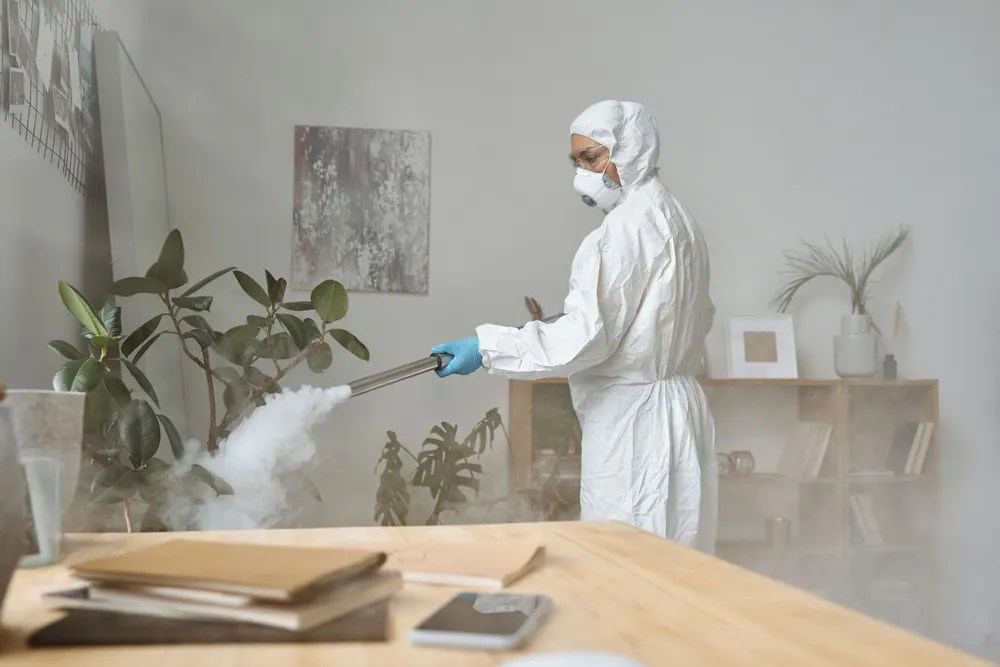
Pest control in Bryanston East mostly means dealing with roof rats coming in off the trees, subterranean termites working under established lawns, ants in kitchens before the rain, and mosquitoes and bird mites in summer. We inspect first, treat the actual source, and leave you with a clear idea of how to stop it coming back.
What Bryanston East is like for pests
Bryanston East is the settled, leafy side of an affluent suburb. Many homes sit on generous stands that were laid out decades ago, with big lawns, pools, staff quarters, thatched lapas and gardens that have had forty or fifty years to grow. Over time a lot of the larger stands have been subdivided into cluster complexes, so a street of single houses often has a gated group of townhouses in the middle of it.
That mix matters. Mature oaks, jacarandas and conifers form a continuous canopy that rats use like a road. Deep, irrigated lawns keep soil moist for termites. And complexes put many kitchens, roof spaces and refuse areas side by side, so a pest problem in one unit tends to show up in the next. Spruit green belts in the wider Bryanston area add a summer flush of mosquitoes on still evenings.
The five problems we see most
Roof rats in the ceiling
The classic Bryanston East call is scratching above the bedroom at two in the morning. Roof rats climb trunks and creepers, run along the top of boundary walls and slip under the eaves or through gaps around a thatched lapa roof. Fruit trees, bird seed and dog food left out overnight keep them fed. We bait the outside in lockable stations, trap inside the roof and point out the gaps that let them in.
Subterranean termites
Older gardens are full of buried tree stumps, old fence posts and timber edging, and termites live on all of it until they find the house. Look for brown mud tubes on a foundation, a garage wall or the back of a built-in cupboard. Our page on termite treatment in Bryanston explains how we treat the soil and bait the colony, and every termite treatment comes with a 5-year guarantee and a certificate.
Ants
Pharaoh ants and the small black house ants march across kitchen counters and into pantries, especially in the week before the first heavy storms. Spraying the trail splits the colony and makes it worse. We use baits that workers carry home.
Mosquitoes
Ornamental ponds, blocked gutters, bromeliads, pot-plant saucers and pool covers holding rainwater all breed mosquitoes within a week of a summer storm. Most of the fix is finding and tipping out standing water; we treat resting areas in shady shrubs and under eaves where the problem is bad.
Bird mites
Pigeons and mynas nest in roof spaces and behind gutters, and when the chicks leave, tiny mites wander into the house looking for a new host. People wake up with itchy bites and assume bed bugs. We remove the nest, treat the area and help you close the gap. See bird mite control around Bryanston for more.
How a visit works
We walk the property before treating anything: the roof space where it can be reached, the outside walls, the kitchen, the garden and the boundary. In a cluster complex we also look at the shared refuse area and the units on either side, because that's often where the problem starts. Treatments are odourless and don't stain, so nobody has to leave home; keep children and pets away from treated surfaces until they've dried.
For body corporates we can set up a scheduled programme with numbered bait stations and a written service record, which is far cheaper over a year than fighting outbreaks unit by unit.
The common mistake
People throw loose rat poison into the ceiling and hope. The rat eats it, crawls into a wall cavity and dies where nobody can reach it, and the smell lasts for weeks. Worse, the gap it used stays open for the next one. Bait belongs in a locked station on the route rats use outside, and traps belong in the roof.
A local tip for Bryanston East
Walk around the lapa. Thatch that has thinned where it meets the wall, and the gap between the thatch and the brickwork, is a favourite way in for rats and a favourite nesting spot for birds. Having a thatcher close that line often solves two problems at once.
What it costs and why
The size of the stand and the pest decide most of the price. A single cockroach or ant treatment in a townhouse is a small job, while a large house with a big garden, a lapa and staff quarters takes more product and more time. Rat work depends on how many stations are needed and whether a follow-up trap check is required. Termite work depends on the perimeter of the building and how much paving has to be drilled. Every page on our site shows a guide "from" price, and the full list is on our Johannesburg pest control price guide. If a problem is small enough to fix yourself, we'll say so.
For everything else we do in the area, start at our Bryanston pest control hub, or see the neighbouring Petervale page.
Jason van Heerden runs Combat Pest Control himself and has 25 years in the trade. We're SAPCA registered and registered with the Department of Agriculture under Act 36, we offer service within 24 hours, and general treatments carry a 3-month guarantee. Phone 084 200 2700, or WhatsApp us a photo of the droppings, tubes or bites and we'll tell you what you're dealing with.
Questions we get asked
How much does pest control cost in Bryanston East?
It depends on the pest and the size of the property. A townhouse ant or cockroach treatment is a small job; a large stand with a lapa and staff quarters costs more. The page shows a guide from-price, and we confirm after inspecting.
Why are rats in my roof when the house is spotless?
Because they come from outside. Roof rats in Bryanston East travel along trees, creepers and walls, and feed on fruit, bird seed and pet food in the garden, so a clean kitchen doesn't keep them out.
Can you treat our whole cluster complex?
Yes. We work with body corporates on a scheduled programme with lockable stations and a written record of every visit, which works better than treating one unit at a time.
I'm getting itchy bites at night but can't find bed bugs. What is it?
It may be bird mites. If birds have been nesting in the roof or gutters, the mites move indoors once the chicks leave. We find and remove the nest and treat the area.
Do I have to leave the house during treatment?
No. Our normal insect treatments are odourless and you can stay at home. Just keep children and pets off treated surfaces until they're dry.
How long does the guarantee last?
General treatments carry a 3-month guarantee, so if the treated pest returns in that time we come back. Termite treatments carry a 5-year guarantee with a certificate.
What should I do before you arrive?
Clear the area under the kitchen sink, make the roof hatch reachable and put pets inside. If you've seen droppings or mud tubes, leave them where they are so we can see them.