
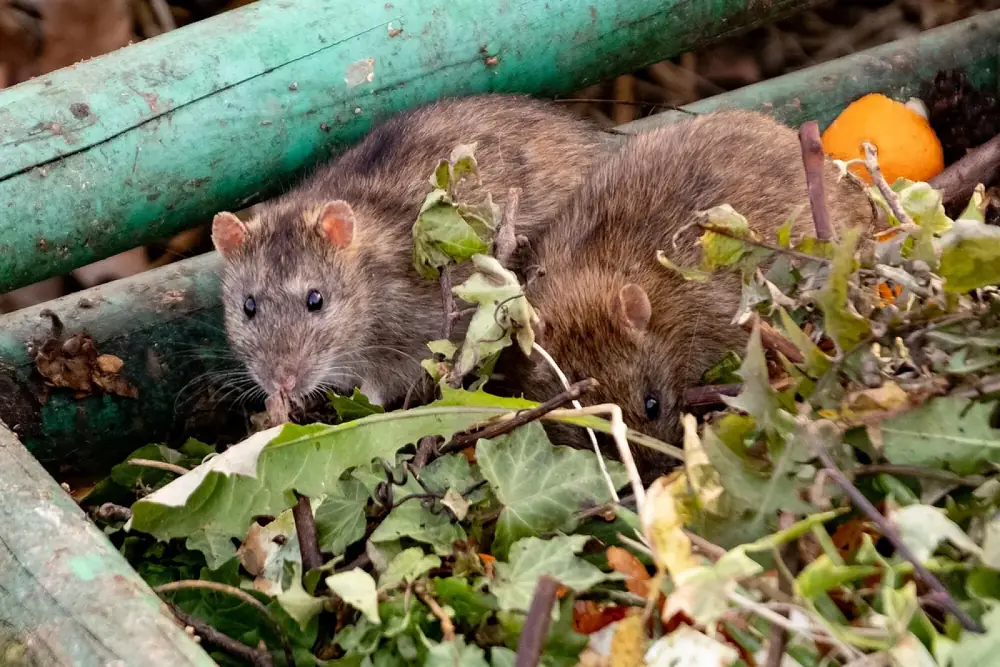
Rodent control in Bryanston works best as a whole-property programme rather than a one-off poisoning. We identify whether you have rats, mice or both, place lockable bait stations and traps where they travel, and then find and close the entry points, so the house, outbuildings and garden stay clear.
Why one approach doesn't fit every Bryanston property
Bryanston has two very different kinds of home, and rodents behave differently in each. On a large freestanding stand there are many places for them to live before they ever enter the house: compost bays, wood stacks, dense hedges, the space under a garden shed, a pool-pump housing, a staff room or store room at the back. In a cluster complex the property is smaller but the roof and walls are shared, so rodents move between units faster than any single owner can stop them.
That is why the first visit is always an inspection of the whole site. The aim is to understand how the rodents live on your property, not only where you heard them.
Rats or mice: why it matters
The two need different handling.
- Roof rats are climbers. They use trees, creepers, wires and walls to reach the roof, and they are cautious about anything new, so they can take a few days to accept bait stations.
- Brown rats are diggers that burrow under paving, sheds and compost and come in at ground level through drains and gaps around pipes.
- House mice are small and curious. They squeeze through very small gaps, explore new objects quickly and tend to stay within a few metres of their nest, often in a garage, pantry or kitchen cupboard.
Droppings tell the story: a mouse dropping is about the size of a grain of rice, a rat dropping closer to a raisin. If it is clearly rats in the roof, our page on rat control for Bryanston homes goes into that problem in more depth.
What a rodent programme involves
Outside: the perimeter
Lockable, tamper-resistant bait stations go along boundary walls, behind outbuildings and near burrows, where rodents travel but children, dogs and wildlife can't get at the bait. Stations are fixed in place and checked on follow-up visits.
Inside: traps and tracking
In ceilings, kitchens and storerooms we generally use traps rather than bait, so nothing dies out of reach in a wall cavity. Tracking powder in hidden voids helps us see which routes are active.
Proofing
Once activity drops, we walk you through the gaps: air bricks with broken grilles, gaps under garage doors, holes where pipes and cables enter, unsealed roof eaves and branches touching the roof. Closing these is what stops the next generation moving in.
Signs to look for around the property
Walk the outside as well as the house. Burrow holes under paving or at the base of a boundary wall, gnawed corners on shed doors, chewed irrigation drippers and droppings in the pump room all point to rodents living on the property rather than just visiting. Inside, watch for droppings in the garage, greasy rub marks along beams and shredded paper or insulation used as nesting material.
For complexes, offices and shops
Body corporates and managing agents in Bryanston's cluster developments get the best results from a site-wide service, with stations on the common property and access to affected units on the same day. Offices, shops and food businesses can go onto a scheduled monitoring contract with regular visits and a written record of every station, which is what auditors and health inspectors expect to see.
The most common rodent mistake
Buying a box of loose poison and scattering it in the ceiling. Rodents carry loose bait away and hoard it, pets and birds can find it, and a rat that dies inside a wall leaves a smell that lasts for weeks. Meanwhile the gap it came through is still open. Bait belongs in a locked station, and only as part of a plan that includes proofing.
A Bryanston tip
Many big gardens keep dog food, bird seed or chicken feed in a shed or outbuilding. Move it into a metal bin with a tight lid. It is one of the most reliable food sources for rodents on a large property, and removing it makes baiting work much faster.
What rodent control costs, and why
The quote depends on the size of the property, the number of stations, whether we work in the roof, how many outbuildings are involved and how many follow-up visits are needed. A single mouse problem in a cluster unit is quick to deal with. A large stand with rats in the roof, the garage and the staff quarters takes more stations and more visits, and a complex or business is quoted per site, often on a monitoring contract. Our guide prices for pest control show where rodent work starts. If you have seen one mouse once, a couple of snap traps may well be enough, and we will tell you so.
Rodent problems don't stop at the suburb boundary. We run the same programmes for rodent control in Randburg, for homes in Bryanston West, and across the city through rodent control in Johannesburg. Our Bryanston pest control page covers the other pests we treat locally.
Combat Pest Control is SAPCA registered and registered with the Department of Agriculture, and Jason van Heerden brings 25 years of experience to every job. We offer service within 24 hours, and rodent treatments carry a 3-month guarantee. Call 084 200 2700, or WhatsApp us a photo of the droppings so we can tell you whether it is rats or mice.
Questions we get asked
How much does rodent control cost?
It depends on the property size, the number of bait stations, roof work and follow-up visits. A small mouse problem in a unit is a modest job; a large stand with several outbuildings or a whole complex costs more. We quote after the inspection.
Is it rats or mice?
Check the droppings. Mouse droppings are about the size of a grain of rice; rat droppings are closer to a raisin. Heavy footsteps in the ceiling usually mean rats, light scratching in cupboards usually means mice.
Are bait stations safe around dogs?
Yes, much safer than loose bait. The stations lock, are fixed in place and are positioned where dogs don't normally go. Inside the house we generally use traps instead of bait.
How long until the rodents are gone?
Most homes see a clear drop within one to two weeks. Rats can be wary of new stations for a few days, and large properties with lots of cover may need several follow-up visits.
Will you seal the holes for us?
We find and show you every entry point and explain how to close it. Proofing advice is part of every rodent treatment, because baiting without closing the gaps only gives temporary relief.
Can our body corporate book one service for the whole complex?
Yes. We service the common property and affected units together, which works far better than individual owners treating separately, and we keep a written record of each visit.