
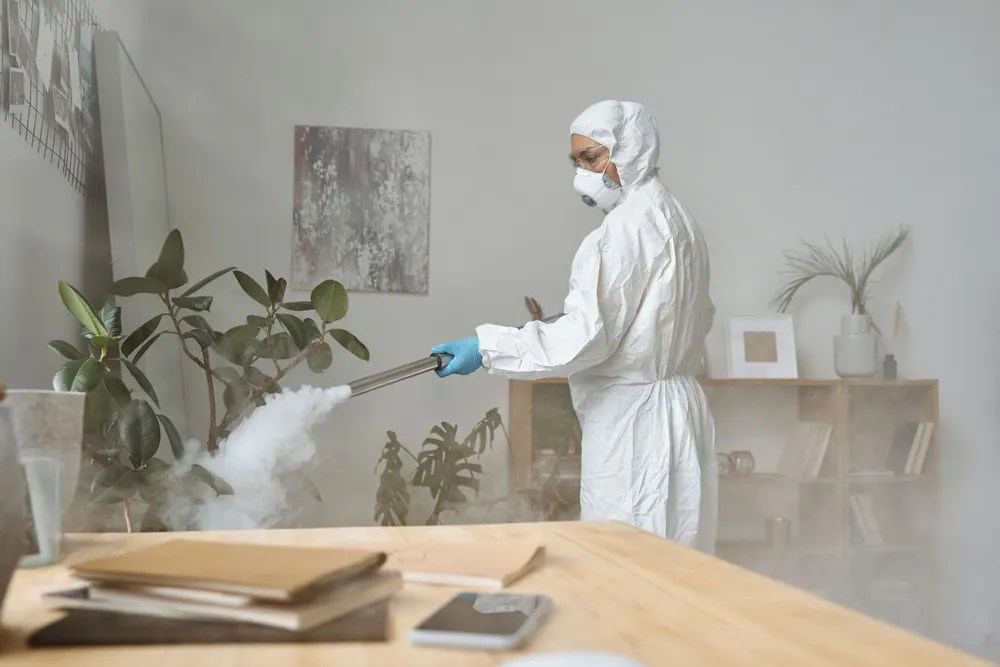
Pest control in Epsom Downs is shaped by its many townhouse and cluster complexes. The pests we treat most are German cockroaches, house mice, ants, bed bugs in rented and short-stay units, and subterranean termites in complex gardens. We treat the affected unit, check the ones around it, and help the body corporate stop the cycle.
How Epsom Downs is built, and why it matters
A large part of Epsom Downs is made up of complexes: rows of two-storey townhouses, simplexes around a shared garden, and small gated clusters behind a single boom. There are freestanding homes too, but density is noticeably higher than in the older parts of Bryanston. Units often share a roof void, a party wall, a sewer line and a central refuse area, and many complexes have been here long enough for gutters, seals and air bricks to need attention.
In that kind of building, a pest problem is rarely one owner's problem. Mice run along the top of party walls inside the roof. Cockroaches follow plumbing from one kitchen to the next. Bed bugs hitch a ride with a new tenant's furniture. Treating your own unit helps, but the best results come from treating together.
What we're called out for
German cockroaches in kitchens
Small, fast, light-brown roaches in the kitchen, mostly seen at night around the kettle, the microwave and under the sink. A female carries her egg case until it hatches, so numbers build quickly. We use gel bait inside hinges, motor housings and cracks, and if neighbouring units are affected we treat them on the same day.
House mice
Mice are a bigger issue than rats in many Epsom Downs complexes, because they fit through gaps the width of a pencil. Look for tiny droppings in the cupboard under the sink, chewed food packets and a faint musty smell. We bait in lockable stations, use traps indoors and seal the gaps around pipes and geyser cupboards. The mouse control in Bryanston page explains how it works.
Ants
Small brown and black ants come up through expansion joints and the gap between tiles and skirting, especially in ground-floor units with garden access. Bait, not spray.
Bed bugs
Units that change tenants often, or that are let to short-stay guests, are where we see bed bugs. Look for small blood spots on sheets, dark marks along mattress seams and bites in lines on the arms or neck. Bed bugs need a thorough, planned treatment of beds, headboards, skirting and furniture, followed by a second visit.
Termites in the garden
Communal gardens with buried timber edging, old tree stumps and wooden decks attract subterranean termites. If you see mud tubes on a garden wall or the base of a unit, get it inspected. Our termite control in the Bryanston area page covers the treatment, which carries a 5-year guarantee with a certificate.
Working with the body corporate
The single most useful thing a complex can do is put pest control on a schedule. We set up numbered, lockable bait stations around the perimeter and the refuse area, visit on a fixed cycle and leave a written service record each time. When an owner reports cockroaches or mice, the trustees already know what's been done and where. It's a better use of the levy than paying for emergency call-outs one unit at a time.
What to expect on the day
You don't have to leave your unit for an insect treatment; the products we use are odourless and won't mark tiles or carpets. Keep children and pets off treated surfaces until they're dry. Empty the cupboard under the sink and make the roof hatch reachable if we're dealing with mice. For bed bugs we'll give you a short list of preparation steps before the visit.
The mistake we see in complexes
Owners often buy a bug bomb for cockroaches. In a townhouse, the fog doesn't reach the places roaches live, and it drives them through the walls into the unit next door, which then does the same. Within a month everyone has them again. Gel bait, placed carefully and done together, breaks that loop.
An Epsom Downs tip
Look at the weep holes and air bricks at the bottom of your unit's walls. In older complexes many are broken or missing their mesh, and they're a direct route for mice into the cavity. A few small mesh covers, fitted before winter, can save a season of droppings in the kitchen.
What it costs and why
For a single unit, cockroach or ant treatment is one of the more affordable jobs we do. Mice cost a bit more because of trap checks and proofing. Bed bugs cost more again because they need two thorough visits. For a whole complex, the price depends on the number of units, the number of bait stations and how often we visit. You'll find a guide "from" price on this page and every service on our pest control cost guide. We'll give you a firm quote once we've seen it.
Epsom Downs falls under our pest control around Bryanston, and if you're towards the eastern side you may also find the Cramerview pest control page useful.
Combat Pest Control is run by its owner, Jason van Heerden, who brings 25 years of experience to the job. We're registered with SAPCA and with the Department of Agriculture under Act 36, we can be there within 24 hours, and general treatments carry a 3-month guarantee. Call 084 200 2700, or WhatsApp a picture of what you've found.
Questions we get asked
How much does it cost to treat a townhouse in Epsom Downs?
A single unit for cockroaches or ants is a modest job. Mice and bed bugs cost more because they need follow-up. A guide from-price shows on this page, and we confirm once we've seen the unit.
Can our body corporate get a monthly service?
Yes. We set up lockable bait stations around the complex, visit on a fixed schedule and leave a service record every time.
Why do I still have cockroaches after my neighbour's treatment?
If only one unit is treated, the roaches move to the untreated ones and come back later. Treating affected units on the same day works much better.
How do I know if it's mice or rats?
Mouse droppings are tiny, about the size of a grain of rice, and you'll see them in cupboards. Rat droppings are closer to a raisin. Mice also get into much smaller gaps.
What should I do before a bed bug treatment?
Wash bedding hot, declutter around the bed and don't move the mattress to another room. We'll send you a short preparation list before the visit.
Do I need to move out during treatment?
No, not for normal insect treatments. Keep children and pets off treated surfaces until they're dry.