
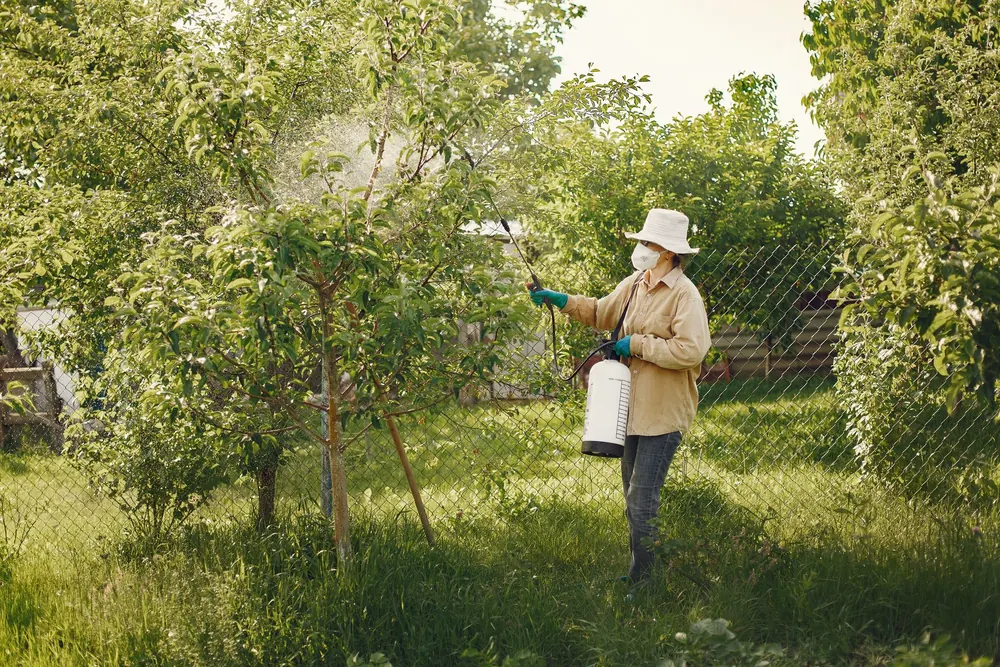
Soil poisoning in Johannesburg is the application of a registered termiticide to the soil under and around a building, creating a treated zone that subterranean termites can't cross without dying. We do it before slabs are cast on new builds, and around existing homes by trenching and drilling, with a 5-year termite guarantee and a treatment certificate.
Why soil treatment matters on the Highveld
Johannesburg's deep soils stay damp a little way down right through the dry season, and subterranean termite colonies live there, sometimes for many years. They forage outward through sealed mud tunnels looking for cellulose: roots, dead wood, building rubble and, eventually, the timber in a house. The termites don't come from the house. They come up into it from the ground. Treating the soil at the boundary between the colony and the building is what stops them, and it's why soil treatment is the standard protection for buildings in this part of the country.
Two kinds of soil poisoning
Before building: pre-construction treatment
On a new build or extension, the soil is treated after the foundations are dug and the fill compacted, but before the damp-proof membrane and slab go down. This puts the treated zone exactly where it's needed, under the whole floor area, and is the cheapest and most effective time to protect a building. It's covered in detail on our termite pre-treatments page.
After building: treating an existing home
Once a house is up, we can't get under the slab directly, so we treat around it. That means digging a narrow trench along the outside of the foundations where there's soil, and drilling through paving, patios and sometimes the slab at intervals where there isn't, then applying the termiticide so it forms a continuous treated zone. Internal points such as expansion joints, pipe entries and the base of built-in cupboards where termites have been active may also be treated.
When existing homes need it
- You've found mud tubes on walls, foundations or inside cupboards
- Termite swarmers have come out of a floor, wall or door frame after rain
- Timber in skirting boards, door frames or cupboards sounds hollow
- The original pre-treatment has worn off, or was never done
- An extension, new paving or a raised flowerbed has broken the old treated zone
- A previous termite problem was treated with a spray rather than in the soil
If you're seeing live activity, start with a full inspection through our Johannesburg termite control service, which confirms the species and whether soil treatment, baiting or both is the right approach.
How we do it
- Inspect and measure. We confirm what's needed, measure the building's perimeter and mark where soil is exposed and where paving or slab has to be drilled.
- Prepare. Narrow trenches are dug along soil edges, and drill holes are made at set intervals through hard surfaces.
- Treat. The registered termiticide is applied at the correct rate so it binds to the soil and forms a continuous zone.
- Close up. Trenches are backfilled with treated soil and drill holes are plugged.
- Certify. You receive a treatment certificate, and the work carries our 5-year termite guarantee.
You can stay at home during an existing-building treatment. Keep children and pets away from open trenches and treated soil until it has settled and dried.
Questions builders and owners ask us
Contractors mostly want to know what the site needs to look like when we arrive for a pre-construction job. The answer is simple: trenches open, fill compacted and the area dry enough that the product won't run off. Owners of existing homes usually ask how messy it is. There's some digging along garden beds and a line of neat, plugged holes in the paving, but no lifting of floors inside the house. Body corporates sometimes want a whole block treated at once, which makes sense where units share foundations and walls.
The mistake that breaks the barrier
Digging into treated soil after the job. A new flowerbed piled against the wall, a trench for irrigation, paving laid over the edge of the foundation, or a pool built close to the house can all cut through or bury the treated zone, and termites find that gap. If you're planning garden or building work, tell us; the affected section can be re-treated. Also avoid heaping soil, mulch or bark against walls above the damp-proof course.
A Highveld tip
Dig out old tree stumps, buried timber offcuts and building rubble in the garden. They feed termite colonies for years right next to the house, and removing them takes away the reason the termites are there in the first place.
What it costs and why
Soil poisoning is priced on the size of the job: for a new build, the slab area to be treated; for an existing home, the length of the perimeter, how much of it is paved and needs drilling, and any internal points. A simple rectangular house with soil beds around it costs less than a large, irregular home with paving and patios on every side. Our termite treatment guide prices show where soil treatments start, and we quote after measuring.
More on termites
Harvester termites in lawns are a different problem, often seen in suburbs such as those covered by termite control in Randburg, and need a different treatment. Our article on getting rid of termites in Johannesburg explains the options, and the soil poisoning guide goes deeper into how termiticides work in soil.
Combat Pest Control is owned and run by Jason van Heerden, with 25 years in pest control, SAPCA registration and registration with the Department of Agriculture. We offer service within 24 hours. Phone 084 200 2700 to book an inspection or a pre-treatment, or WhatsApp us a photo of the mud tubes you've found.
Questions we get asked
How much does soil poisoning cost?
It depends on the slab area for new builds, or the perimeter and amount of paving for existing homes. A small house with soil beds is a modest job; a large home with paving all round costs more. We quote after measuring.
How long does soil poisoning last?
A properly applied soil treatment protects the treated zone for years, and ours carries a 5-year termite guarantee with a treatment certificate. Digging or building work can break the treated zone.
Is soil poisoning safe for my family and pets?
Yes, when applied correctly by a registered operator. Keep children and pets away from trenches and treated soil until it settles and dries, and don't plant vegetables in treated soil.
Can you treat my house without lifting the paving?
Yes. We drill small holes through paving and patios at set intervals, treat through them and plug them afterwards.
Do I need soil poisoning for an extension?
Yes. An extension needs its own pre-treatment before the slab is cast, or termites can use the untreated section as a bridge into the old house.
Is soil poisoning the same as treating harvester termites?
No. Harvester termites in lawns are treated at the active nest openings, not with a building soil treatment.
Will I get a certificate?
Yes. Every soil treatment comes with a treatment certificate, which banks, inspectors and buyers often ask for.