
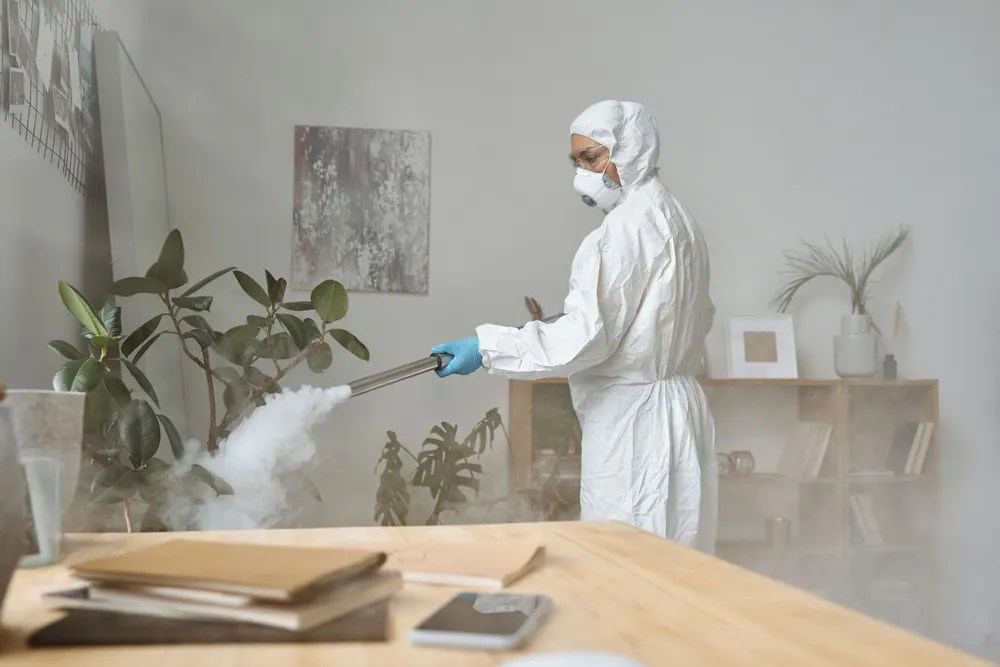
Pest control in Fontainebleau tends to start in the garden: harvester termites in shared lawns, ant nests under paving, rats in hedges, spiders on patios, and fish moths in cupboards. We inspect the whole property, including common areas in complexes, then treat the nests and entry points rather than just spraying what you can see.
Fontainebleau and its pests
Fontainebleau is a residential Randburg suburb north of the Randburg CBD, with Ferndale on one side. It mixes freestanding family homes with plenty of cluster and townhouse complexes, plus some businesses on the main roads. Many complexes share a central lawn, a pool and a run of garages, and that shared ground matters, because a pest problem in the common garden reaches every unit.
The suburb's gardens are mature but not as heavily treed as the older northern suburbs. The result is more sun on the lawns, which suits harvester termites and ants, and less of the extreme roof-rat pressure you see in the leafiest areas.
What turns up most
Harvester termites
Every dry winter, complex trustees call us about bare, brown patches in the common lawn, dotted with pencil-sized holes and loose soil. That's harvester termites cutting grass and carrying it underground. Treating the active holes stops the damage, and the lawn recovers with the spring rain. Our termite control across Johannesburg covers both harvester and the subterranean termites that attack building timber.
Ants under paving
Pugnacious and brown house ants nest under paving and patio slabs, then trail into kitchens and pet bowls. In complexes they travel along the foundation line from unit to unit. Baits carried back to the nest work; spraying the trail doesn't. More on our ant treatments in Randburg page.
Rats along the boundary
Rats live in dense hedges and behind garages and climb in through the roof. Complexes with communal bin areas see more of them. Lockable bait stations along the boundary and near the bins, checked and refilled on follow-up visits, keep numbers down.
Spiders on patios
Sac spiders, button spiders under garden furniture and the odd rain spider on the wall are common in summer. Most are harmless, but the sac spider bite is unpleasant. A residual treatment around doorframes, window frames and patios cuts them down. Our spider control for Randburg homes page explains which spiders matter.
Fish moths
Linen cupboards, garage boxes and bookshelves are where these turn up. A treatment of the voids and better ventilation solves it.
Our process
We start with a walk of the whole property: lawns, paving, roofline, bins, kitchen and cupboards. For complexes we include common areas. We identify the pest and the source, apply the right treatment (baits, direct termite treatment, odourless residual spray, bait stations), and give the owner or trustees a short summary of what we found and what to fix. Nobody needs to move out. Keep children and pets off treated surfaces until they're dry.
How to tell what you're dealing with
A few quick checks help you describe the problem when you call:
- Holes in the lawn with tiny soil heaps and cut grass pieces mean harvester termites, usually from May to September.
- Mud tubes on a garage wall or inside a cupboard mean subterranean termites, which are a building problem rather than a lawn problem.
- Fine sand pushed up between pavers usually means an ant nest underneath.
- Dark, rice-sized droppings near the bins or in the garage point to rats; smaller, thinner ones are mice.
- Small round holes in paper or clothing, with silvery scales nearby mean fish moths.
If you're not sure, take a photo and send it to us. Identifying the pest correctly is half the job, because termites, ants and rodents each need a different treatment.
The common mistake in complexes
Each owner treats their own patch at different times. Ants and termites in a shared lawn don't care about unit boundaries, so the problem bounces around the complex for years. A single, coordinated treatment of the common property plus any affected units is cheaper in the long run.
A Fontainebleau tip
Don't over-water the lawn to fight harvester termite damage. It won't drown the colony, which sits deep, and it encourages other problems. Mark the active holes with a stick or a stone so we can treat exactly where the termites are working.
What it costs and why
For a house, the main cost drivers are the pest and the size of the property. For a complex, it's the size of the common area and how many units need inside treatment. Harvester termite work depends on how much lawn is affected. You'll find guide "from" prices on every service page, and the full list is on our Johannesburg price guide. We'll quote after an inspection, and we'll tell you if the problem is small enough to manage yourself.
Fontainebleau falls under our Randburg pest control hub, and our Ferndale page covers the flats and complexes next door.
Combat Pest Control is run by its owner, Jason van Heerden, with 25 years in pest control behind him. We are registered with SAPCA and with the Department of Agriculture under Act 36. Expect service within 24 hours and a 3-month guarantee on general treatments. Call 084 200 2700 or send us a photo on WhatsApp.
Questions we get asked
How much does it cost to treat a complex lawn for termites?
It depends on how much lawn is affected and how many active holes there are. A small patch costs much less than a full common garden. Our price page lists guide prices, and we quote after seeing the lawn.
Will my lawn grow back after harvester termites?
Usually, yes. Once the colony is treated, the grass recovers with spring and summer rain. Badly stripped areas may need some new runners.
Can the body corporate book one treatment for everyone?
Yes, and it's the best way. We treat common areas and any affected units in one visit and give the trustees a written summary.
Are button spiders dangerous?
Black button spiders can give a serious bite, but they're shy and live under garden furniture, pots and rubble. Wear gloves when moving these and let us treat the spots they favour.
Why do ants keep coming back after I spray?
Spray kills the workers on the trail, not the queen in the nest. Baits work because workers carry them home and share them with the colony.
Is it safe for my cats?
Yes, when used correctly. Keep cats off treated areas until they're dry, and rodent bait is kept inside lockable stations.